Budapest Mayor Faces Charges for Defying Hungary's Pride Ban
Budapest Mayor Charged Over Pride March

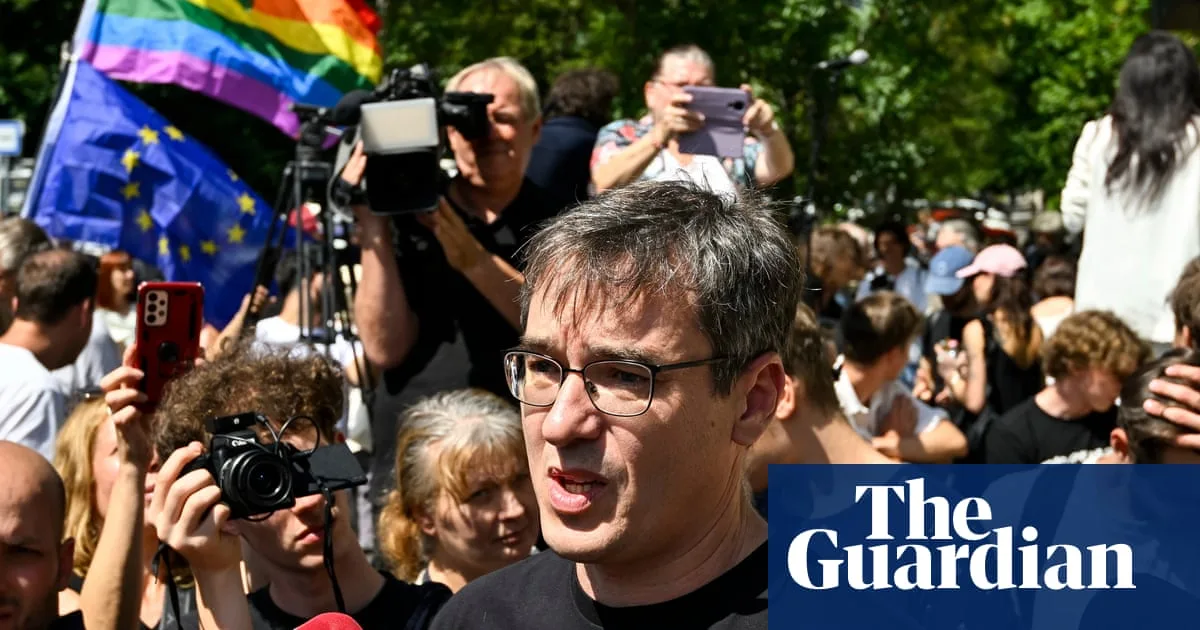
Prosecutors in Hungary have formally filed charges against the progressive mayor of Budapest, Gergely Karácsony, seeking to impose a fine for his role in organising a major Pride march that directly defied a government-imposed ban. The charges come months after hundreds of thousands of people heeded Karácsony's call to take to the streets in a powerful show of resistance against legislation targeting LGBTQ+ rights.

Defiance Against Government Legislation

The June march garnered international attention after the ruling Fidesz party, led by right-wing populist Prime Minister Viktor Orbán, backed controversial legislation that provided a legal basis for banning Pride events. The government cited a need to protect children, a justification that has been widely criticised both domestically and across the European Union.

This legislation, believed to be unprecedented in the EU's recent history, prompted Hungarian police to issue a ban on Budapest Pride. In response, Mayor Karácsony declared the event a municipal gathering in a strategic move to circumvent the requirement for official authorisation.

Record Turnout and Symbolic Resistance

A record number of participants transformed the march into a potent symbol of pushback against Orbán's government and its steady erosion of rights. The crowd included Hungarians from across the nation, alongside dozens of Members of the European Parliament and officials from various European countries, demonstrating broad solidarity.

On Wednesday, prosecutors stated that Karácsony had "organised and led a public gathering despite the police ban," proposing in a formal statement that "the court impose a fine on the defendant in a summary judgment without a trial." The statement did not specify the exact amount of the proposed fine, leaving that determination to judicial proceedings.

Political Context and Electoral Implications

The prosecutors' decision arrives less than three months before crucial parliamentary elections in Hungary. Orbán, who has faced sustained criticism for weakening democratic institutions, eroding media freedom, and undermining the rule of law, now confronts an unprecedented challenge from Péter Magyar, a former senior member of his own party.

While Orbán's government has systematically worked to roll back LGBTQ+ rights over several years, campaigners and analysts suggest that the administration is increasingly scapegoating LGBTQ+ communities as it attempts to shore up support among conservative voters, particularly given Orbán's trailing poll numbers.

Mayor's Defiant Response

Budapest's mayor, who has led the capital since 2019, responded swiftly and defiantly to the charges. Karácsony declared on social media, "I have gone from being a proud suspect to a proud defendant. Because it seems that this is the price we pay in this country when we stand up for our own freedom and that of others."

Karácsony, a prominent opposition figure known for displaying LGBTQ+ and Ukrainian flags on the city's administration building, vowed to continue to "stand up for freedom in the face of selfish, petty and despicable power." He added emphatically, "Because when people who want to live, to love, to be happy are betrayed by their own country, betrayed by their government, resistance is a duty."

Government Warnings and Enforcement

In the lead-up to Budapest Pride, government officials had warned organisers they could face up to a year in prison for proceeding with the event. The administration also announced plans to use facial recognition software to identify attendees, with potential fines reaching €500 per person.

However, in a notable development, police announced in July that they would not take action against the estimated 200,000 people who participated in the march, focusing enforcement efforts instead on the event's organisers and leadership.

European Political Reactions

The case has drawn significant attention from European political figures who see broader implications for democracy within the EU. Vula Tsetsi, co-chair of the European Green party, emphasised the wider significance of an elected mayor facing punishment for defending fundamental rights.

"This is not just about Pride; it is a test of whether the EU will stand for democracy," Tsetsi stated. Her sentiment was echoed by fellow co-chair Ciarán Cuffe, who remarked, "The Orbán regime's attempt to punish Gergely Karácsony without granting a trial underlines the authoritarian trajectory of Hungary under Orbán. European institutions must not look away when a member state criminalises peaceful assembly and democratic leadership."

The charges against Mayor Karácsony thus represent not merely a local legal matter but a focal point in ongoing debates about democratic norms, LGBTQ+ rights, and the rule of law within the European Union's framework.




