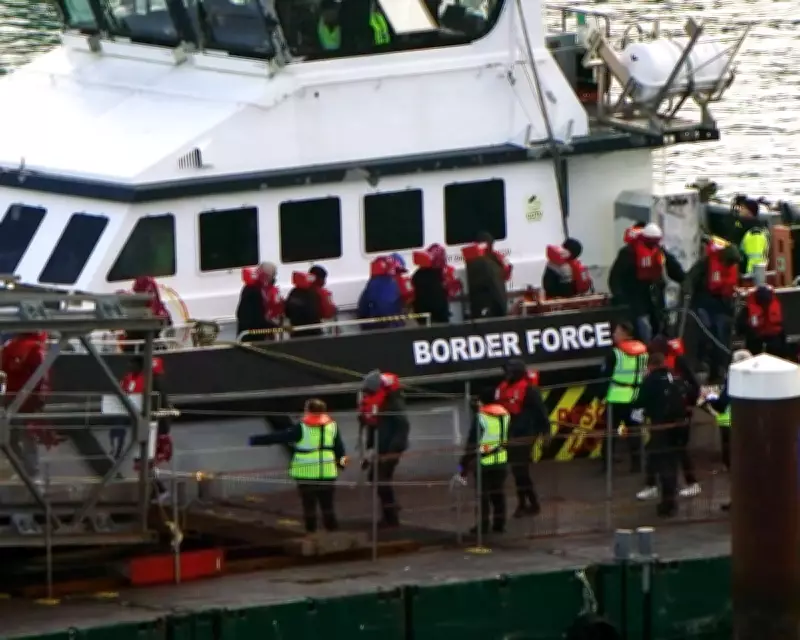
UN Experts Demand Immediate Halt to UK-France Asylum Agreement
A coalition of nine United Nations experts has issued a forceful call for the United Kingdom and France to terminate their controversial "one in one out" asylum system, warning that the arrangement may involve serious breaches of international human rights law. The experts, including seven special rapporteurs, dispatched a comprehensive 20-page letter to Downing Street and Paris on December 8, 2025, detailing their grave concerns and providing the two governments with a 60-day window to respond before making the correspondence public on Friday.
Detailed Case Studies Reveal Alleged Abuse and Mistreatment
The UN letter contains meticulous case studies documenting the treatment of individuals detained in preparation for forced removal to France under the scheme. These cases involve asylum seekers from Sudan, Gaza, Eritrea, Yemen, and Iran, many of whom are survivors of torture and human trafficking. The experts assert that detaining torture survivors as part of this process may itself constitute cruel, inhuman, and degrading treatment, a violation of fundamental human rights standards.
One particularly distressing account describes an Eritrean man who was not permitted to wear shoes during his removal, had a hood placed over his head, and was forced to the ground with guards' boots on his neck. In another instance, a woman from Yemen, who reported being enslaved since the age of three, was told by the Home Office that her testimony lacked credibility because she did not immediately disclose her trafficking history upon arrival in the UK.

Echoing Concerns from Asylum Seekers and Advocacy Groups
The concerns raised by the UN experts mirror those previously voiced by asylum seekers directly affected by the policy. Reports have emerged of individuals returning to the UK due to fears of smugglers in France, while detainees have staged peaceful protests against the scheme. These protests were met with responses from Home Office contractors involving riot shields, tear gas, and dogs, further escalating tensions.
Bella Mosselmans, director of the Global Strategic Litigation Council for refugee rights, strongly endorsed the UN experts' call to scrap the scheme. She emphasized that people impacted by these policies have courageously spoken out about the fear, detention, and harm they have endured. Mosselmans stated, "The UN has now echoed those lived experiences with a clear and urgent alarm. These UN experts have documented detailed, credible cases showing that this agreement exposes people to serious human rights violations – including threats to life, torture and other ill-treatment, and the denial of due process. Continuing to implement it despite those warnings is indefensible."
Questions Over Arbitrary Selection and Protection Gaps
The UN letter poses a series of critical questions to the UK and French governments regarding unpublished details of the scheme. It highlights the apparently arbitrary nature of selecting which small boat arrivals are detained and forcibly returned to France, as opposed to those allowed to have their asylum claims processed in the UK. Additionally, the experts inquire about protections against onward refoulement once individuals are sent back to France, ensuring they are not returned to countries where they may face persecution.
The letter explicitly states, "We are deeply concerned that the agreement between the [UK and France] … may result in serious violations of international human rights law," noting that they have received information concerning human rights violations affecting "children and those in vulnerable situations." Alarmingly, the experts report awareness of dozens of children caught up in the scheme despite being explicitly excluded, many of whom are survivors of trafficking.
Political Context and International Response
The "one in one out" asylum deal was agreed upon by UK Prime Minister Keir Starmer and French President Emmanuel Macron in July of the previous year, aiming to manage migration flows across the Channel. However, the UN experts' intervention casts a stark light on the human cost of this agreement, urging both nations to prioritize human rights in their migration governance measures.

In their concluding remarks, the experts respectfully call on the UK government to end the agreement with France and ensure that migration policies respect, protect, and fulfil human rights, rather than creating new vulnerabilities or exacerbating existing ones. The Home Office, French interior ministry, and the UN Refugee Agency have been approached for comment as the international community watches closely for their responses to these serious allegations.