UK's Temporary Refugee Status Plan Faces Legal Challenge from Law Society
The Law Society of England and Wales has issued a stark warning that Home Secretary Shabana Mahmood's decision to implement temporary refugee status could undermine the UK's legal obligations under the Refugee Convention. This policy shift, which takes effect from Monday, will require all refugees to have their status reviewed every thirty months, a move modelled on Denmark's strict immigration system.
Legal Concerns Over Refugee Convention Compliance
Mark Evans, the president of the Law Society, has expressed serious concerns that the new rules create prolonged uncertainty for individuals who have been officially recognised as needing protection from danger. He emphasised that these changes stand in direct tension with Article 34 of the Refugee Convention, which the UK signed in 1951. This article commits contracting states to facilitate the assimilation and naturalisation of refugees, including efforts to expedite proceedings and reduce associated costs.
Evans stated, "The rules announced today will create prolonged uncertainty for people who want to live free from danger and have been recognised by the government as needing protection. The changes stand in tension with article 34 of the Refugee Convention, under which the UK has agreed to facilitate as far as possible the assimilation and naturalisation of refugees."
Backlash and Political Context
Shabana Mahmood, who is closely associated with the Blue Labour wing of her party, has faced significant backlash from MPs, peers, and affiliated unions for pressing ahead with these hardline policies. This decision comes after Labour's third-place finish in the recent Gorton and Denton byelection, adding political pressure to the controversy.
Under the new policy, refugees will need to obtain renewed permission to stay or apply for a visa route like any other authorised migrant, which includes paying associated fees. This represents a major departure from previous practices and aligns with Keir Starmer's government's broader strategy to announce a series of stringent policies aimed at deterring people from travelling to the UK to claim asylum.
Humanitarian Impact and Advocacy Responses
Organisations working closely with refugees have voiced strong opposition to the proposals, arguing that they will retraumatise individuals who have fled war zones and suffered torture. Sophie McCann, the forced displacement and protection advocacy adviser at Médecins Sans Frontières UK, described the development as "another cruel development that will harm people who have fled the horrors of conflict, violence and persecution."
She added, "Embedding prolonged uncertainty and fear within the asylum system will create further psychological harm and inhibit refugees' – including our patients' – ability to heal from their experiences and rebuild their lives with dignity."
Natasha Tsangarides, an associate director at Freedom from Torture, highlighted the personal toll on refugees, stating, "This policy change will affect men, women and children who have been recognised by our government as needing protection from torture and war. They have fled countries like Iran and Sudan for standing up for the same freedoms we cherish in Britain. A grant of refugee status should be a moment of celebration – a gateway to a new life and the chance to put the horrors they have endured behind them. Now, they will have to relieve that trauma every 30 months."
Modelling on Denmark's System
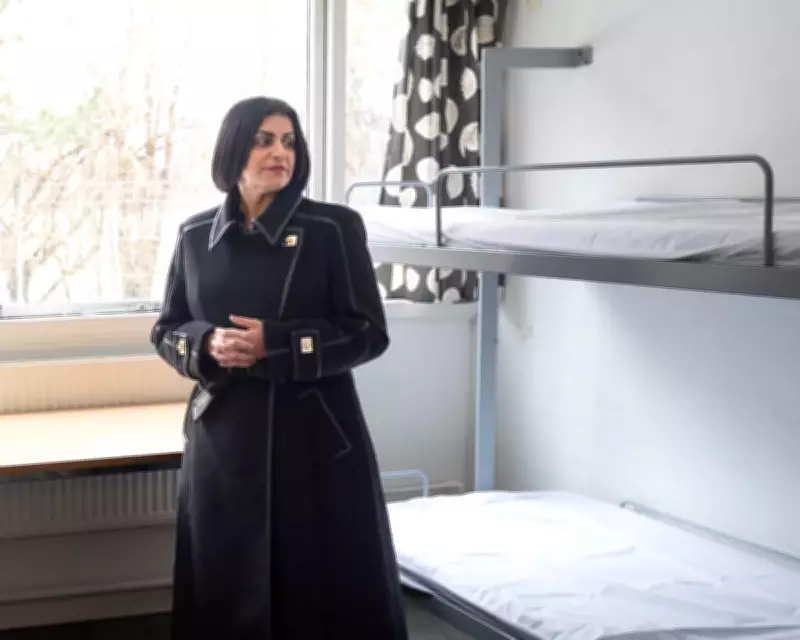
The policy shift is explicitly modelled on Denmark's strict immigration system, which Mahmood observed firsthand during a visit to a migrant return centre in Denmark in February. This approach aims to create a more controlled and temporary framework for refugee status, but critics argue it fails to account for the humanitarian and legal ramifications.
The Home Office has been approached for comment on these developments, but no response has been provided at this time. As the policy implementation date approaches, the debate over its legality and impact continues to intensify, with legal experts and advocacy groups urging a reconsideration to align with international obligations and human rights standards.