
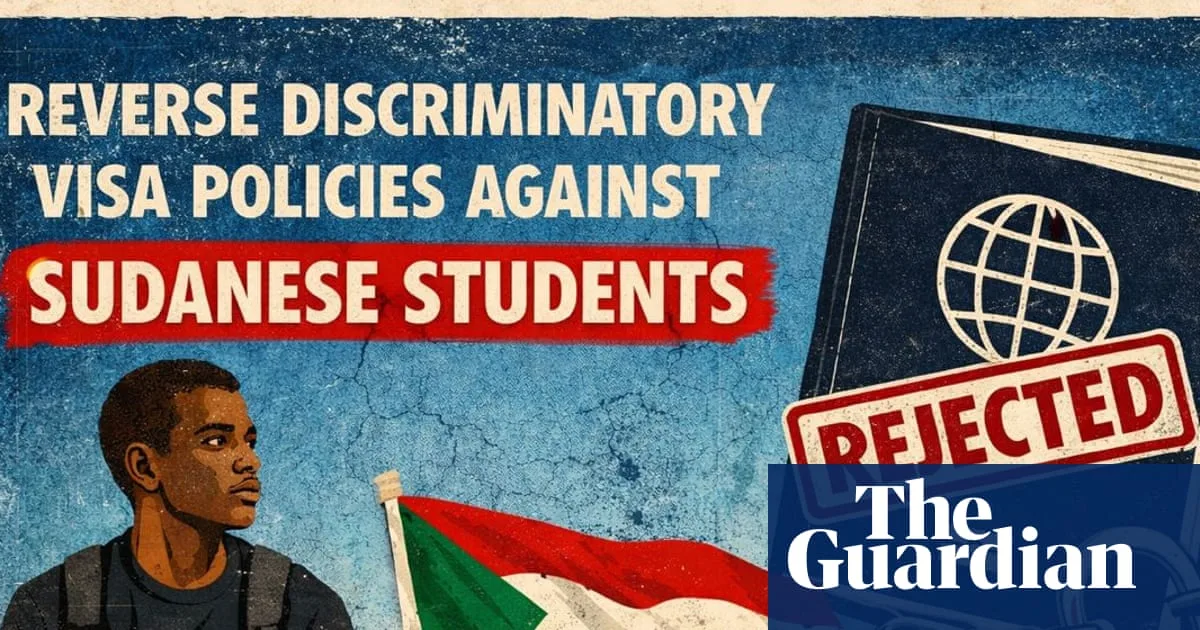
More than 200 Sudanese students have expressed shock and sadness after the UK home secretary, Shabana Mahmood, suspended study visas for applicants from Sudan, along with Afghanistan, Cameroon, and Myanmar. The decision, announced on Wednesday, targets what the Home Office describes as a spike in asylum claims from these nations, with claims from Cameroon and Sudan rising by over 330%.
Among those affected is Wijdan Abdallah Salman Ahmed, a 38-year-old molecular biologist who had secured a place for a master's in regenerative medicine at Queen Mary University of London and was being considered for a Chevening scholarship. Displaced by war in Sudan, she described the policy change as a devastating blow after years of struggle. 'It felt as though years of effort had suddenly collapsed because of a decision completely beyond my control,' she said.
Mohamed Hisham Alamin, a medical doctor accepted to study at the University of Oxford, also faces losing his place. He criticised the 'blanket ban' as a blunt instrument, noting that he and his colleagues had been preparing to contribute to global health research. The Chevening scholarship programme for the four countries has been closed indefinitely.
Opponents argue that the government's claims of exploitation are exaggerated, as only 120 Sudanese students applied for asylum in the year to September, out of over 110,000 total claims. The National Union of Students has urged Mahmood to reconsider, while Oxford University expressed serious concern for affected students.
A government spokesperson defended the move, stating that study routes are being widely abused. However, students like Ahmed insist they have no intention of seeking asylum, pointing to mandatory return conditions of scholarships. A campaign has been launched to lobby the government to abandon the suspension, with 210 Sudanese students identified as affected.




