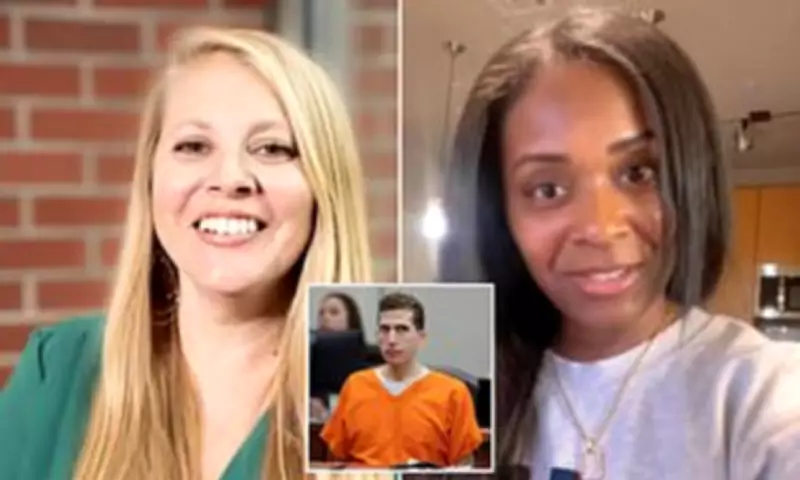
A Texas-based TikTok personality who leveraged her self-described psychic powers to falsely implicate a University of Idaho professor in the brutal 2022 murders of four students has launched a desperate legal appeal. Ashley Guillard, a 41-year-old resident of Houston, was ordered to pay a staggering $10 million in damages for defamation and has now formally contested the ruling.
Legal Battle Intensifies as Appeal is Filed
According to reports from the Seattle Times, Guillard filed a notice of appeal on April 6 with the 9th US Circuit Court of Appeals. This move follows a four-day civil defamation trial held in February, where Guillard represented herself against the lawsuit brought by 40-year-old professor Rebecca Scofield. The jury in the US District Court for the District of Idaho unanimously determined the $10 million figure, a decision Guillard immediately objected to.
False Accusations and Viral Content
In the aftermath of the murders, which were actually committed by Bryan Kohberger, Guillard published over 100 videos on TikTok. These posts erroneously framed Scofield, the head of the university's history department, as the true mastermind behind the killings. Guillard claimed the professor ordered the murders to prevent an affair she allegedly had with one of the victims, 21-year-old Kaylee Goncalves, from becoming public knowledge.

Two of the TikToks explicitly stated that Scofield ordered Goncalves's execution, despite the academic being entirely innocent. Guillard also maintained that the other victims—roommates Madison Mogen and Xana Kernodle, and Kernodle's boyfriend, Ethan Chapin—were part of the supposed hit. This content persisted even as Kohberger initially evaded police capture.
Emotional Testimony and Legal Proceedings
During the trial, Scofield offered tearful testimony to a federal judge, describing the immense psychological toll of the false accusations. 'It was like a stone on my chest that was not crushing me, it was dissolving me,' she said. 'I was unraveling underneath the weight of it.' Scofield added that she and her family felt personally targeted, with their children's lives seemingly threatened by the baseless claims.
Guillard took the stand in her own defense, arguing that her work as a psychic relied on intuition rather than facts. 'Claircognizance - we work with intuition, not fact. The facts are the job of law enforcement, not a psychic,' she maintained. Despite this, the jury found her liable for defamation.
Aftermath and Ongoing Developments
Following the verdict, Guillard sent a text message to The Idaho Statesman expressing her dissatisfaction. 'Unfortunately, because the verdict doesn't align with the evidence or facts of the case, I have to appeal,' she stated. 'I was hoping for a fair and impartial verdict so that we all could move on.' Scofield's attorneys have declined to comment on the appeal.
The San Francisco Court, which handles appeals from Idaho, has set a briefing deadline for July. Meanwhile, Bryan Kohberger, the actual perpetrator, pleaded guilty to the murders in an Ada County courthouse in July of last year and is currently serving four consecutive life sentences. The case highlights the severe consequences of spreading false information online, particularly in high-profile criminal investigations.