Supreme Court Begins Historic Hearing on Trump's Birthright Citizenship Order
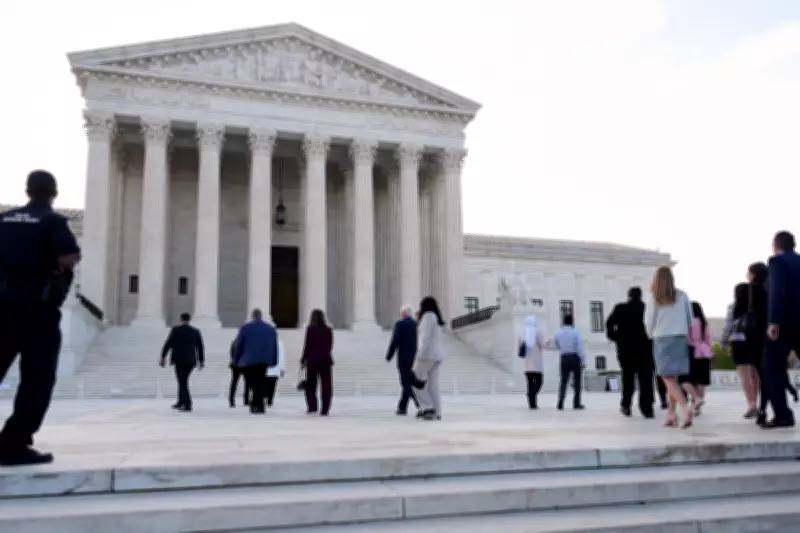
The United States Supreme Court has commenced hearing pivotal arguments regarding the constitutionality of President Donald Trump's executive order to terminate birthright citizenship for children born in the US to individuals residing in the country illegally or on a temporary basis. The order, signed by Trump on January 20, 2025, marks a significant component of his Republican administration's extensive immigration enforcement agenda.
Unprecedented Presidential Attendance and Legal Scrutiny
In a remarkable departure from tradition, President Trump attended the oral arguments, becoming the first sitting president to be present for such proceedings at the nation's highest court. This unusual move underscores the profound personal and political stakes involved. Every lower court that has reviewed the matter has deemed the order unlawful and blocked its implementation. A definitive ruling from the Supreme Court is anticipated by early summer.
The legal debate centres on the interpretation of the Fourteenth Amendment's Citizenship Clause, adopted post-Civil War to grant citizenship to freed slaves and their descendants. Solicitor General D. John Sauer, representing the Trump administration, argued that this clause was never intended to extend citizenship to children of temporary visitors or undocumented immigrants, who lack established allegiance to the United States.

Judicial Questioning Reveals Deep Divisions
Justices from across the ideological spectrum posed rigorous questions. Justice Samuel Alito raised humanitarian concerns regarding long-term residents facing removal, while Justice Brett Kavanaugh suggested that historical federal citizenship laws support a broad interpretation of birthright citizenship. Justice Clarence Thomas appeared most receptive to the administration's position, questioning the relevance of immigration debates to the original intent of the Fourteenth Amendment.
Chief Justice John Roberts expressed scepticism, challenging how exceptions for children of ambassadors or foreign invaders could logically apply to an entire class of undocumented immigrants. Justice Elena Kagan noted that parts of Sauer's argument relied on obscure historical sources, and Justice Neil Gorsuch pointed out the scant historical discussion on domicile, a key element in the administration's case.
Potential Impact and Broader Implications
If upheld, Trump's order would affect over 250,000 babies born annually in the US, according to research from the Migration Policy Institute and Pennsylvania State University. The administration insists the order would apply only prospectively, but Justice Sonia Sotomayor warned that the logic could enable future presidents to strip citizenship from US-born children years later.
The issue of birth tourism also surfaced, with Chief Justice Roberts inquiring about its prevalence. Sauer acknowledged a lack of definitive data, citing only media estimates. The arguments frequently referenced the 1898 Wong Kim Ark ruling, which affirmed birthright citizenship for US-born children of resident aliens, described by Justice Horace Gray as affirming an ancient and fundamental rule.
Political and Historical Context
The case has galvanised political divisions, with twenty-four Democratic state attorneys general opposing the order and twenty-five Republican counterparts filing briefs in support. Notably, all nine current justices were born in the US, though several have personal connections to immigration history, including Justices Thomas and Ketanji Brown Jackson, descended from enslaved people granted citizenship by the Fourteenth Amendment.
Legal experts, such as UCLA constitutional law professor Adam Winkler, suggest that while Trump's presence highlights the case's importance, it is unlikely to sway the independent-minded justices. The proceedings, likely to exceed the allotted hour, represent a critical juncture in US immigration policy, with ramifications extending far beyond the courtroom.