
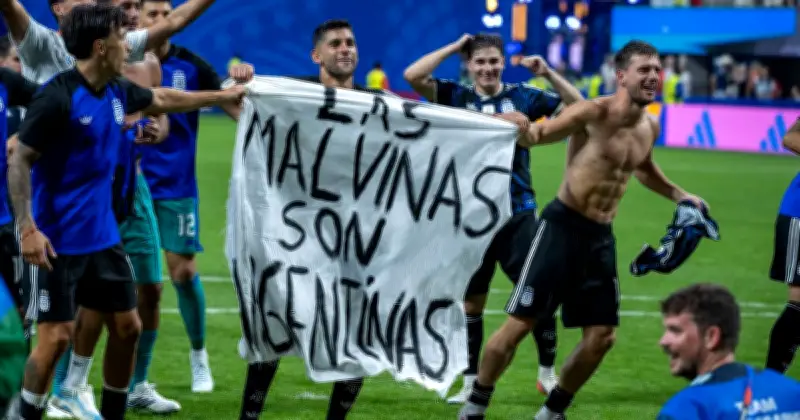
Sir Keir Starmer has backed calls for Fifa to investigate whether Argentina players broke rules by waving a banner supporting their country's claims to the Falkland Islands after their World Cup semi-final victory over England.
Argentina Players Wave Controversial Banner
Following the match on Wednesday night, several Argentine players celebrated by holding a banner reading “Las Malvinas son Argentinas,” which translates to “The Falkland Islands are Argentinian.” The incident has ignited a major political row, with Downing Street issuing a firm response: “The World Cup might not be ours, but the Falkland Islands definitely are.”
Cabinet minister Peter Kyle had earlier urged Fifa to investigate the incident, calling it a deliberate provocation. The Prime Minister's official spokesman confirmed that Starmer supports this call, stating that the government stands with the islanders and their right to self-determination.
Diplomatic Tensions Flare
The banner has been condemned by politicians across the spectrum, with many viewing it as an inappropriate politicisation of a sporting event. The Falkland Islands, known as Las Malvinas in Spanish, have been a source of tension between the UK and Argentina since the 1982 war. The UK maintains that the islands' residents voted overwhelmingly to remain a British Overseas Territory in a 2013 referendum.
Fifa has not yet commented on whether it will launch an investigation. However, the governing body's rules prohibit political statements at matches, and a breach could result in sanctions against the Argentine Football Association.
Starmer's Stance
Speaking to reporters on Thursday, Starmer said: “We are clear that the Falkland Islands are British. The players' actions were unacceptable, and we support a full investigation by Fifa.” The government has also contacted the Argentine embassy to express its displeasure.
The incident has overshadowed England's defeat, with fans and officials alike expressing outrage. The row is expected to be raised at the next UK-Argentina bilateral meeting, further straining relations between the two nations.




