

Spice Vapes Marketed to Children on Social Media Platforms
In a shocking undercover operation, a Daily Mail reporter posing as a schoolchild discovered how easily synthetic cannabinoids known as spice are being sold to minors on TikTok. Mere metres from security cameras and Transport for London guards at Forest Gate station in east London, a gangly teenage girl with fake eyelashes handed over three fluorescent pink and blue bottles advertised as THC vapes.
Laboratory testing revealed the bottles contained spice instead – a synthetic, highly addictive cannabinoid that can cause seizures, heart attacks, kidney damage, and psychosis. The dealer showed no hesitation in selling what she believed was a schoolchild these dangerous substances.
The Deceptive Nature of Spice Distribution
Dealers are shamelessly using spice as a ploy for Tetrahydrocannabinol (THC), the psychoactive compound responsible for marijuana's euphoric effects. Although both substances remain illegal, naive teenagers are more likely to purchase vapes marketed as THC, perceiving them as less harmful than synthetic alternatives.

Research indicates that approximately 70 percent of TikTok accounts advertising 'THC' products are actually selling spice. The undercover investigation identified at least 60 dealers advertising an estimated £20 million worth of spice across the social media platform.
This follows horrifying revelations from University of Bath research showing that a quarter of all vapes confiscated from schools in parts of England contained spice – the same drug that has killed hundreds of people in prison settings.
Children's Lives Devastated by Addiction
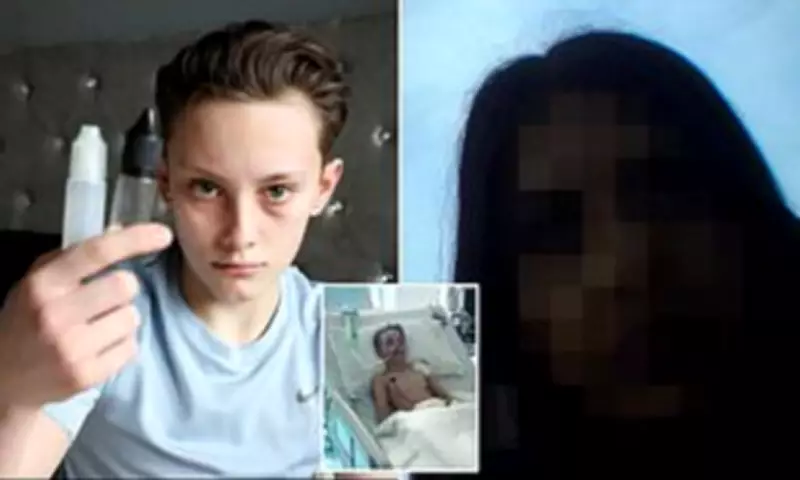
From state schools to exclusive private colleges, students are routinely passing out in classrooms and fighting for their lives in hospital from a drug that even former heroin addicts refuse to touch. Freddie Fenson, a 14-year-old from Dagenham, represents thousands of British school children ensnared by spice's terrifying effects.
'The first time I ever tried it was when I was 11, but I got addicted when I was 12… three or four months later I collapsed in the front room,' Freddie recounted. Despite bouncing around his father's living room during the interview, just months earlier he had been in a coma fighting for his life after what teachers initially believed was an asthma attack.
Even after spending two months in hospital recovering from his spice-induced coma and 'learning to walk again,' Freddie purchased another vape immediately upon discharge. 'You know it's a powerful drug because it put me in a coma but as soon as I got out I went straight back on it. No one in their right mind would do that but that's how powerful it is,' the teenager explained.
Widespread School Culture of Spice Use
Callum, now 20, described how his private sixth form was filled with students puffing on spice vapes 'in the back of class, in the toilets, in the changing rooms.' The accessibility proved overwhelming – 'I slept with it under my pillow. It was so easy and accessible, it doesn't appear on standard 5, 10, or 12-panel drug tests, there's no smell.'
The desperation for these substances has created a barter economy among teenagers, with students trading 'airpods for them, electronics, valuables,' and one teenager reportedly 'swapping the new iPhone for 100ml of the stuff.'
Freddie described how a friend 'passed out in assembly after we had a toke' and needed to be taken 'to hospital in a wheelchair' at 10 o'clock in the morning. Social pressure plays a significant role, with Freddie admitting, 'There was pressure to try spice at the beginning. All my friends at the time were older and I had to try it otherwise I would look weak.'
Lucrative Market Targeting Vulnerable Youth
A former drug dealer revealed that children are specifically targeted with 'low prices, pretty colours, candy-like flavourings and child-friendly packaging of brands like Fanta and Skittles.' The markup proves enormous, with 10ml bottles selling for £20 to £40 despite production costs of mere pennies.

Yet this former heroin user admitted he would never touch the 'extremely addictive' synthetic substance himself, stating that spice withdrawals appear worse than those from Class A drugs. 'I'm an ex-heroin user and the withdrawals of spice look way worse than heroin withdrawals, and those will make you wanna kill yourself without a doubt,' he confessed.
The financial temptation proves irresistible for some young people. Freddie revealed how an 11-year-old at his school 'stole £3,000 from his dad to pay for instructions to make these vapes' and now makes approximately '£400 a day selling them in school.' The child no longer attends school due to his lucrative business.
Parental Anguish and Systemic Failures
Freddie's father, Peter, wept as he described finding his son blue and collapsing on the floor after what appeared to be an asthma attack. 'He was dead when they arrived…it killed me,' Peter recalled, wiping away tears. Hospital staff induced a coma that lasted two weeks before the family discovered the true cause.
'When I found out what he had been vaping I was angry, seriously angry,' Peter stated. He believes schools and social services provided insufficient support, with blame often resting unfairly with parents. 'Schools aren't doing enough to try and find it on kids, but then also what can they do? They don't have metal detectors, they can't have sniffer dogs,' Freddie noted.
Peter desperately sought rehabilitation for his son but discovered no options existed for children his age, with one recommendation suggesting nicotine gum as an alternative. 'He's just surrounded by it, all his friends do it, and their parents do it…it's just too easy for these kids to get,' Peter lamented.
Regulatory Responses and Ongoing Challenges
Professor Chris Pudney, who led the University of Bath study, confirmed that 'spice vape liquid is extremely cheap and addictive' and 'trivially available on social media.' He emphasized that 'the advertisement of this material is illegal, and Ofcom have the power and statutory duty to compel social media companies to both remove this material and prevent it appearing.'
TikTok responded that they 'do not allow the trade or promotion of vaping products or illegal drugs on TikTok' and noted the account in question had already been removed before the Daily Mail approached them.
An Ofcom spokesperson stated that 'the sale and promotion of illegal drugs online can have devastating consequences' and that social media platforms must assess and mitigate risks under the Online Safety Act. The regulator has investigated nearly 100 platforms in the Act's first year, issuing 16 fines with more expected.
A government spokesperson for the Department of Health and Social Care expressed sympathy for affected families while highlighting urgent action including a public awareness campaign, banning single-use vapes, and the landmark Tobacco and Vapes Bill that will prohibit vape advertising to reduce youth appeal.
The Department of Education reinforced that 'children should never vape' and noted updated RSHE guidance requires teaching about harmful substances including vaping and drug-taking. The Metropolitan Police and WhatsApp have been approached for comment regarding their roles in addressing this escalating crisis.





