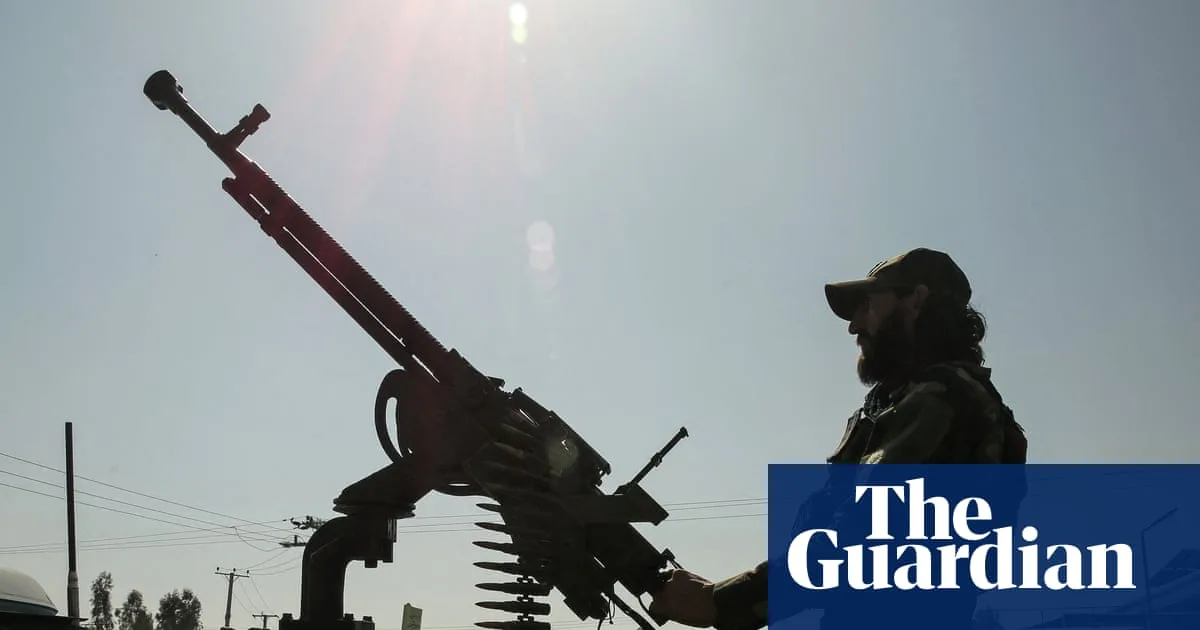
Seven people were killed and at least 85 wounded on Monday when mortars and missiles fired from Pakistan struck a university and civilian homes in northeastern Afghanistan, according to Afghan officials. Pakistan has vehemently denied accusations of deliberately targeting the university.
Renewed Violence After Peace Talks
The attacks represent the first major outbreak of violence since Chinese-mediated peace talks between the two nations earlier this month, underscoring the fragile nature of diplomatic efforts to de-escalate tensions. The incident reignites a deadly conflict that has plagued the border region for months, claiming hundreds of lives since late February.
The violence escalated after Afghanistan launched a cross-border attack on Pakistan in retaliation for previous Pakistani airstrikes within Afghan territory. Islamabad had earlier declared itself to be in an "open war" with Afghanistan, a statement that caused international alarm.
Casualties and Damage
Afghan deputy government spokesman Hamdullah Fitrat confirmed that Monday's barrage hit the city of Asadabad, capital of Kunar Province, along with other areas in the province. Najibullah Hanafi, Kunar's Information and Culture Director, reported seven dead and 85 wounded. Mr. Fitrat added that the injured included women, children, and students at the Sayed Jamaluddin Afghani University, condemning the attacks as "an unforgivable war crime, barbarity, and provocative act."
Afghanistan's Ministry of Higher Education stated that approximately 30 students and professors were among the injured at the university, which sustained extensive damage to its buildings and grounds.
Pakistan's Denial
In response, Pakistan's Ministry of Information and Broadcasting dismissed Afghan media reports and official statements concerning the university strikes as "a blatant lie." A statement from the ministry asserted: "Pakistan's targeting is precise and intelligence based. No strike has been carried out on Sayed Jamaluddin Afghan University. The claims are frivolous and fake."
Pakistan maintains that Afghanistan harbours militants responsible for deadly attacks on its soil, specifically citing the Tehrik-e-Taliban Pakistan (TTP). This group, while distinct from the Afghan Taliban that seized control of Afghanistan in 2021 following the withdrawal of US-led forces, is allied with them. Kabul consistently refutes these allegations.
Background of Conflict
The recent flare-up follows a period of relative calm in March, when both sides agreed to a temporary truce for the Muslim holiday of Eid al-Fitr. This truce had been established after a controversial Pakistani airstrike on 17 March, which Afghanistan claimed targeted a drug treatment facility in Kabul and killed over 400 civilians. Pakistan denied targeting civilian facilities and disputed the death toll. Despite the Urumqi talks, sporadic cross-border fighting had persisted.
Just days before Monday's attacks, Afghan Foreign Minister Amir Khan Mutaqi had described the recent negotiations in China as "positive." He stated: "You are all aware of our recent problems with Pakistan. The latest negotiations were held in Urumqi under the mediation of China, and these negotiations were positive." Mr. Mutaqi emphasised that the issues between the two countries "are very sensitive between neighbours and between two Islamic neighbouring countries and should not be treated irresponsibly."
The United Nations' office for the coordination of humanitarian affairs in Afghanistan reported earlier this month that the conflict has displaced 94,000 people overall, highlighting the severe human cost of the ongoing hostilities.






