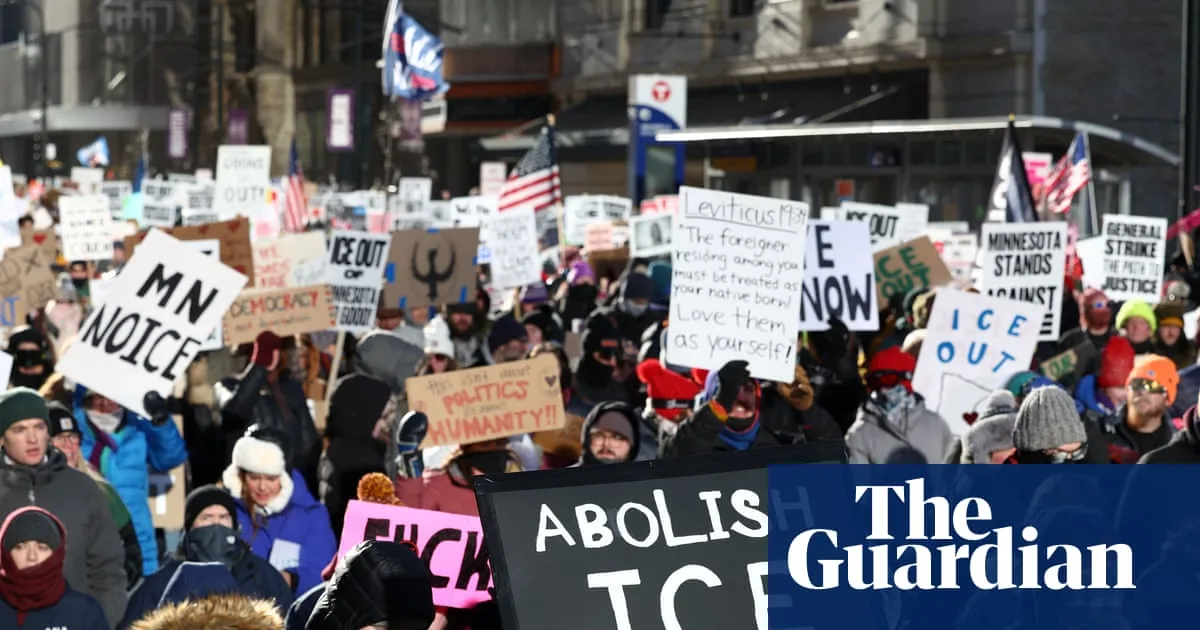
This weekend witnesses a significant escalation in nationwide activism against US Immigration and Customs Enforcement (ICE), with organisers planning more than three hundred separate demonstrations across every state and Washington DC. The coordinated actions, collectively branded "ICE Out of Everywhere," represent a powerful response to a recent spate of fatalities linked to federal immigration agents, igniting widespread public outrage and demands for systemic reform.
A Response to Recent Tragedies
The mobilisation has been spearheaded by the national grassroots organisation 50501, which cites several high-profile incidents as catalysts for the unprecedented wave of protest. These include the fatal shootings of Alex Pretti and Renee Good in Minneapolis earlier this month, the homicide of Geraldo Campos within a Texas immigration detention facility, and the shooting of Keith Porter Jr by an off-duty ICE officer in Los Angeles. Activists argue these cases are not isolated but symptomatic of a broader, alarming pattern characterised by excessive force, detention abuses, and the increasing militarisation of immigration enforcement.
"The national day of action is about fighting back against the escalations that the Trump administration has taken against the American people over the past year," explained Hunter Dunn, a national press coordinator for 50501 and an organiser in southern California. "Reports about the killings of Porter and Campos, the ones not captured on camera, and so many others have pierced the veil for many people who until now were unaware of how bad things had gotten."
Diverse Forms of Protest and Direct Action
The planned demonstrations encompass a wide array of tactics designed to apply both political and economic pressure. From solemn vigils honouring those killed or detained by ICE to overpass banner displays, sidewalk protests, and community training sessions, the movement is multifaceted. A key focus is educating the public on how to monitor ICE activities and effectively lobby elected officials to oppose the current administration's stringent immigration policies.
In major metropolitan areas and smaller towns stretching from California to Maine, protests are scheduled outside ICE detention centres, field offices, and congressional district offices. Additionally, demonstrators will gather at airports to target airlines, such as Global Crossing Airlines, that participate in federal deportation flights. The protestors' core demands include a legislative block on funding for the Department of Homeland Security until ICE and Customs and Border Protection (CBP) agents are withdrawn from local communities.
Applying Economic and Corporate Pressure
Beyond political advocacy, the movement is implementing targeted economic campaigns to disrupt the networks perceived as supporting ICE operations. The "No Housing for ICE" initiative urges a public boycott of hotels that provide lodging to immigration enforcement personnel during operations. Activists plan to protest outside cooperating hotels, leave negative online reviews, and directly appeal to management to sever any contracts with ICE.
Similarly, the "#DontServeICE" campaign focuses on local businesses, calling on restaurants, retailers, and other establishments to refuse service to federal immigration agents. Protests are also directed at major corporations like Target and Home Depot, where ICE has previously detained shoppers and employees. Protesters are demanding these companies publicly denounce such immigration enforcement actions.
Building on a Growing Movement
This weekend's actions are not an isolated event but the culmination of weeks of sustained protest, particularly following the ICE shooting of Renee Good in her vehicle on January 7th. Momentum surged on January 23rd when tens of thousands marched in Minnesota, demanding ICE leave the city and prompting hundreds of local businesses to close in a "No work, no school, no shopping" shutdown. This was followed by a national shutdown call on January 30th, which saw thousands participate in hundreds of actions nationwide, from student walkouts in Knoxville, Tennessee, to business closures in Seattle.
"Today's actions are a handoff from everything that has already been building up," Dunn noted. "In Los Angeles, we are picking up from where yesterday's actions left off. This is a combined push as ICE harms our communities."
Unanswered Demands and a Call to Persist
Despite the growing scale of the protests, organisers stress that their fundamental demands remain unmet. These include calls for ICE officers to be held legally accountable for civilian deaths and for substantive, independent oversight of the agency. The movement shows no signs of dissipating, with leaders urging continued public engagement.
"We are thankful that people are continuing to take action and that the groundswell is continuing to happen in our states and across this country," said minister Janae Bates Imari, a co-executive director of the Minneapolis interfaith organising group Isaiah, during a press conference. "It felt like the cold and the fear from our own federal government threatened us, but we have not let it stop us. We need more people to continue to show up until ICE leaves."
The weekend's events underscore a deepening national conflict over immigration policy and enforcement, positioning grassroots activism as a formidable counterforce to established federal authority.