On a bright morning in August 2022, Ángel Montenegro, a 31-year-old construction worker, was waiting for a bus in Cuautla after a night out with friends. A white van pulled up, and several men dragged him and a co-worker inside. The co-worker was released shortly after, but Montenegro vanished, leaving only his cap and a tennis shoe behind.
A National Crisis of Unprecedented Scale
Montenegro is one of more than 130,000 individuals officially listed as missing or disappeared in Mexico, a staggering figure that underscores a humanitarian catastrophe devastating countless families. According to a recent report by the public policy analysis firm México Evalúa, disappearances have surged by over 200% in the past decade, highlighting a crisis spiraling out of control.
The Role of Criminal Expansion
Armando Vargas, a security analyst at México Evalúa, explains that this surge mirrors the territorial expansion of drug cartels and their diversification into illicit activities beyond drug smuggling. "It's a problem that has become uncontrollable at the national level," Vargas stated, noting that disappearances "capture the lethal violence" plaguing Mexico.

Criminal groups often force recruitment and eliminate rivals by making bodies disappear—burying them in unmarked graves, burning them, or dissolving them in acid—to avoid detection. This tactic "invisibilizes the violence," keeping cartels under the radar while they engage in organ trafficking, sex trafficking, human trafficking, and migrant smuggling.
Government Failures and Political Controversy
In 2018, the Mexican government established a National Search Commission to track the disappeared, creating a public platform to record cases. However, the commission was underfunded, and the platform became a political liability. Ahead of the 2024 elections, then-President Andrés Manuel López Obrador conducted an opaque review, slashing the official count to just 12,377, sparking outrage among activists and human rights experts.
Current President Claudia Sheinbaum has been dismissive of the report, calling the platform problematic and promising a new report. Yet analysts argue the true number is likely higher, given widespread violence and governmental weaknesses in investigations. In 2022, the United Nations reported that over 96% of crimes in Mexico went unsolved, hampered by corruption and incompetence.
Families Forced to Search Alone
With little government support, families like Patricia García's have taken matters into their own hands. García, Montenegro's mother, joined a collective of 12 women who search weekly for buried bodies using metal rods. In November 2022, they found six bodies in a field where Montenegro's phone last pinged; four months later, they found five more. None were her son.
"You're left in broken pieces," García said. "It's like when a vase shatters: you can glue it back together but the cracks are always there." Her relentless search, balancing family care with the gruesome task, reflects the emotional toll on thousands of Mexicans.
A Call for Justice and Accountability
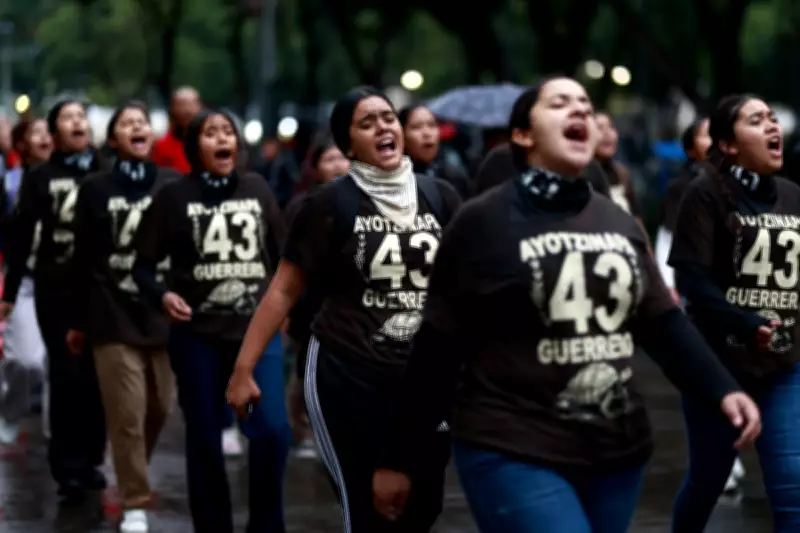
The crisis continues unabated, with criminal groups expanding their control as institutional neglect persists. Vargas emphasized, "Criminal power advances in parallel with institutional neglect," leaving vast regions under cartel dominion. As demonstrations, like the recent rally in Mexico City demanding justice for the 43 missing Ayotzinapa students, show, public pressure for action remains high.
Without robust governmental intervention, the disappearance epidemic threatens to worsen, perpetuating a cycle of violence and despair for families across Mexico.