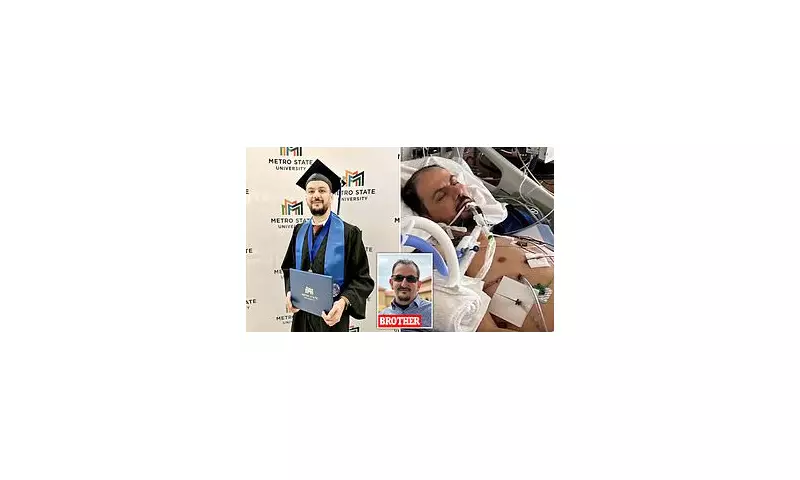
A Libyan man seeking asylum in the United States, who suffers from an excruciatingly painful and rare genetic skin condition, has been detained by Immigration and Customs Enforcement (ICE) agents in Minnesota, sparking fears for his life.
A 'Death Sentence' Looms for Man with Debilitating Condition
Hani Duklef, a 32-year-old IT specialist from Woodbury, Minnesota, was taken into custody over the weekend. His family and legal team argue that deporting him to Libya, where specialist medical care is unavailable, would be tantamount to a death sentence. Duklef has Recessive Dystrophic Epidermolysis Bullosa (RDEB), a condition that causes his skin and internal tissues to blister and tear from minimal friction.
His brother, Mohamed Duklef, told local news that the disease makes even swallowing solid food a dangerous and agonising ordeal. "If you make friction, if they fall, the skin will peel off," he explained. A narrowed oesophagus has previously led to a month-long stay in intensive care when food became lodged.
Years of Legal Waiting Followed by Sudden Detention
Hani Duklef originally arrived in the US on a visitor visa in 2014 to seek treatment for his condition, settling in Minnesota, one of the few places equipped to manage RDEB. After his visa expired in 2015, he remained to pursue an asylum claim, which he had filed legally while his status was still current.
His attorney, David Wilson, stated that Duklef had followed all laws, held work permits, and waited patiently for over a decade for an asylum interview. "In all my years of practice... I’ve not had people who have followed the law and filed an asylum application while they’re in status suddenly become detained," Wilson said, calling the detention a departure from previous norms.
The arrest occurred when ICE agents ran his licence plate while he was driving near New Richmond, Wisconsin. He was initially held at the Whipple Federal Building in Fort Snelling, where his family described conditions as "inhumane" and "traumatising," with detainees on concrete floors and one bathroom for dozens.
Medical Crisis and Fight for Release
Photographs from his detention showed Duklef on a bed with ankles shackled, with visible blistering on his legs. The shackles and inability to eat the provided solid food created immediate health risks. After pleading for medical care, he was transferred to M Health Fairview Southdale hospital.
Medical records confirm he requires a soft-only diet and daily dressing changes with specific bandages, stressing that any friction or pressure must be eliminated. Despite this, ICE is reportedly seeking to transfer him to a detention facility in El Paso, Texas, where his complex medical needs may not be understood.
"Stress is the enemy of this disease," Mohamed Duklef said. "It can cause blisters to appear. He's surrounded with fear and uncertainty." The family's goal is to secure his release on bond in Minnesota to continue treatment while his asylum case is pending. Wilson hopes for a decision within 24 to 48 hours, arguing ICE "doesn't know what to do with someone with such a significant medical history."