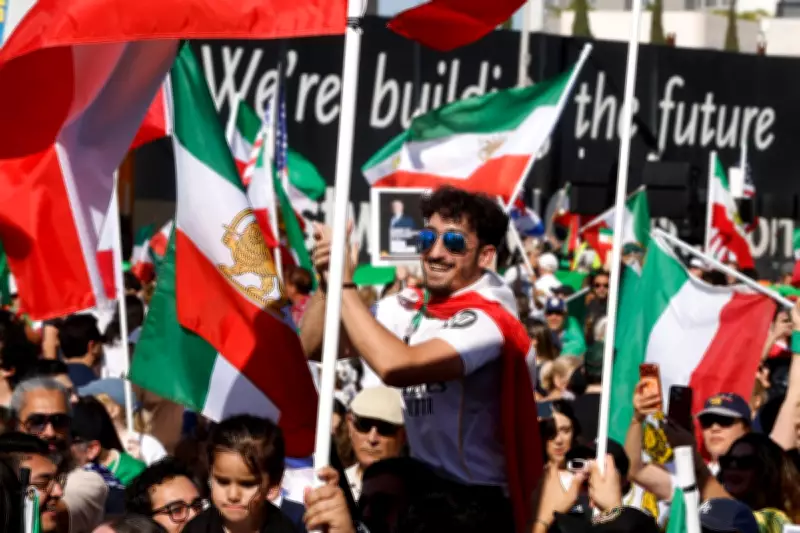
Iranian-Americans Watch War with Fear for Relatives Back Home
Over the weekend, many in the Iranian-American community found themselves fixated on their television screens, witnessing the devastating news of U.S. and Israeli bombs raining down on Iran. This diaspora group is caught in a profound emotional conflict, with some clinging to dreams of a brighter future for their ancestral land, yet simultaneously gripped by terror that their loved ones might become casualties of the escalating warfare.
A Tyrant Falls, But Anxiety Rises
The conflict saw a significant early development with the death of Ayatollah Ali Khamenei, the long-time ruler known for brutally suppressing dissent. In the United States, this event sparked celebrations among some, with people taking to the streets to cheer the downfall of a leader they viewed as oppressive.
"We are happy, we are happy that he is gone and he can't kill our innocent people anymore," expressed Ava Farhadi, a 33-year-old electrical engineer based in Indiana. Her family had participated in anti-government protests earlier in the year, which were met with a severe crackdown by the regime. While her immediate family emerged unscathed, Farhadi recounted that friends and close loved ones were among the thousands killed when Khamenei's armed forces opened fire on peaceful demonstrators.

The Impossible Situation for the Diaspora
Despite a sense of relief over Khamenei's demise, a deep-seated worry pervades the community. The primary concern is for the safety of families still residing in Iran and the uncertainty surrounding the country's future trajectory.
Shahed Ghoreishi, a 34-year-old foreign policy analyst whose parents fled Iran, described this as an "impossible situation" for many. They despised Khamenei and are glad he is gone, yet their relatives remain in grave danger as the conflict unfolds.
Communication Blackouts and Helplessness
Ghoreishi highlighted the immense difficulty in contacting relatives still in Iran due to unreliable phone and internet connections. This often makes it impossible to ascertain their well-being. His mother, for instance, has been unable to sleep because she cannot reach her sister, who recently underwent back surgery.
"It's eerie, it's very eerie to see these terrible scenes of Iranians crying over dead relatives and their destroyed homes," he said. "And you're like, wait, does that family live on that street? How close are they to that bomb? Then you try to geolocate where your family lives and where the bombs are dropping on TV at the same time."
He spent the weekend in a state of helplessness, endlessly scrolling through news and social media, yet skeptical that the current violence would lead to lasting positive change. "I don't see a clear strategy and I see a lot of violence, and those two things make me pessimistic for this moment," Ghoreishi admitted. "I'm willing to be surprised. I'm desperate for Iran to have a bright, stable future. So I am hopeful long term, but in this immediate moment, I don't see a clear solution after the bombs."
The Iranian-American diaspora thus finds itself in a painful limbo, celebrating a tyrant's fall while agonizing over the safety of kin and the chaotic aftermath of military intervention, with hope for stability tempered by the grim realities of war.