Fox News Host Confronts Homeland Security Chief Over Controversial Terminology
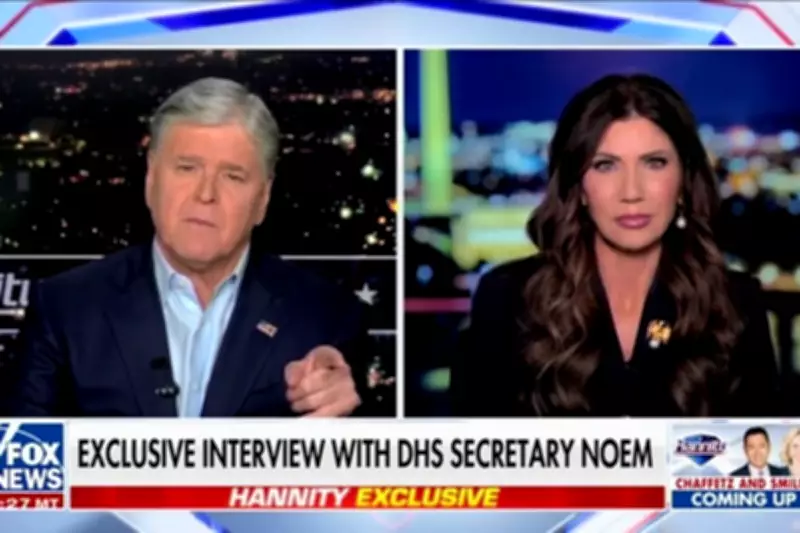
In a notable primetime exchange, Fox News anchor Sean Hannity directly challenged Homeland Security Secretary Kristi Noem on Thursday evening regarding her characterisation of Alex Pretti as a "domestic terrorist." The confrontation occurred amidst intense scrutiny over Noem's response to the fatal shooting of Pretti, a 37-year-old ICU nurse and US citizen, during an immigration enforcement operation in Minnesota.
Questioning the Premature Designation
Hannity, a close confidant of former President Donald Trump, pointedly asked Noem if it was "premature" to label Pretti a domestic terrorist, given that video evidence appeared to contradict the Department of Homeland Security's initial account. The DHS had originally stated that Pretti approached federal officers with a handgun, prompting agents to fire over safety fears. However, emerging footage suggested "the weapon may have been stripped before that happened," as Hannity noted during the broadcast.
Noem attempted to deflect the question, citing the "chaotic" nature of the situation and emphasising that her department was relying on information from Customs and Border Protection agents present at the scene. "We were using the best information we had at the time, seeking to be transparent with the American people," she asserted, while avoiding a direct answer about the appropriateness of the terrorism label.
Mounting Political Pressure and Internal Tensions
The televised grilling arrives as Noem faces mounting political pressure, with Democrats calling for her impeachment and some Republicans demanding her dismissal. Her appearance on Hannity's show followed President Trump notably skipping over her during a monthly Cabinet meeting, signalling potential sidelining within the administration. Reports indicate that border czar Tom Homan has assumed a more prominent role in Minnesota operations, alongside Border Patrol chief Greg Bovino.
Further complicating matters, Trump aide Stephen Miller—architect of the administration's deportation campaign—initially described Pretti as a "would-be assassin," later attributing his remarks to DHS information. Miller has since conceded that "some protocols were not followed" during the incident.
Deflecting Blame and Dodging Accountability
When Hannity pressed Noem on why she believed the term "domestic terrorism" was appropriate for both Pretti and another shooting victim, Renee Good, the Homeland Security chief again sidestepped the query. Instead, she shifted blame to the previous administration, stating, "We cannot distract from the fact of how we got here... we had a Biden Administration that allowed an invasion over our southern border."
Hannity drew a distinction between the two cases, suggesting Good's situation was "clear-cut" because she allegedly accelerated her vehicle into an ICE officer, while Pretti's case was "a bit different." Noem maintained that investigations were ongoing and emphasised the FBI's leading role in the probe.
Escalating Rhetoric and Shifting Narratives
Despite the controversy, the administration appears to be consolidating around a hardened narrative. Following the release of new videos showing Pretti kicking a government vehicle eleven days before his death, President Trump took to Truth Social to label him an "insurrectionist" and "agitator." Trump described Pretti's actions as "crazed and out of control," while praising the ICE officer involved as "calm and cool."
This rhetorical escalation suggests that MAGA-aligned anger toward Noem may subside as the administration fully embraces the portrayal of Pretti as a violent radical whose killing was justified. Nevertheless, the Hannity interview highlights ongoing tensions within the administration's approach to immigration enforcement and public communication following contentious incidents.
The episode underscores the delicate balance officials must strike between defending aggressive enforcement actions and responding to evidence that contradicts initial accounts, all while managing political fallout from both opponents and allies.