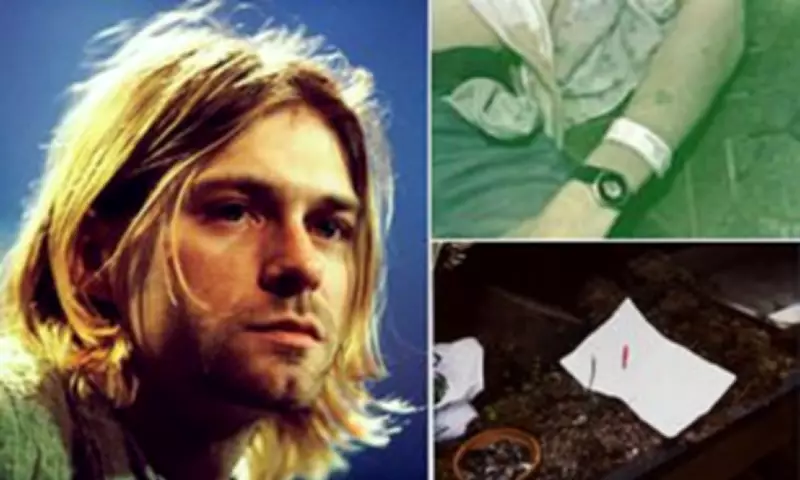
In a startling development that challenges the official narrative surrounding one of music's most tragic losses, new allegations have surfaced regarding the investigation into Kurt Cobain's death. The Nirvana frontman was discovered with a fatal gunshot wound to the head on April 8, 1994, at his Seattle, Washington residence, with authorities quickly ruling his death a suicide.
Explosive New Claims from Within the Police Department
Journalist Ian Halperin, author of the controversial book Case Closed: The Cobain Murder: The Killing and Cover-Up of Kurt Cobain, has released an update containing explosive claims from an unnamed former Seattle police detective. According to Halperin, this source privately disclosed that the investigation into Cobain's death was seriously mishandled, stating they felt "a sense of righteous indignation for years" before deciding to speak out about what they describe as "a serious wrongdoing."
Specific Allegations of Investigative Failures
The former detective made several specific claims that challenge the suicide determination. First, they asserted that Cobain's heroin levels were so extraordinarily high that it would have been physically impossible for him to fire the shotgun himself. Halperin elaborates that toxicology reports showed Cobain had injected approximately three times what would be considered a lethal dose for a typical user, with experts estimating it was roughly 70 times the dose for an average person.

Second, the source highlighted that no fingerprints were found on the weapon, a Remington Model 11 20-gauge shotgun discovered in Cobain's arms. Third, they claimed the last five lines of the alleged suicide note did not match Cobain's handwriting, with Halperin stating he hired handwriting experts who confirmed this discrepancy.
"Just on that, the case should not have been labeled a suicide," the source told Halperin. "A proper investigation should have been conducted, a thorough investigation to find out how, in fact, Cobain died. It was never done."
Pattern of Concerns Within Law Enforcement
These new allegations align with concerns previously expressed by other law enforcement figures. Norm Stamper, Seattle Chief of Police from 1994 to 2000, has expressed regret over how Cobain's case was handled, stating in 2015 that he "would reopen this investigation" if given the opportunity. While not directly accusing anyone, Stamper previously suggested investigators should not have immediately discounted the possibility of murder.
The unnamed former detective echoed Stamper's concerns, telling Halperin: "Too much politics was involved. Not enough facts. Many people were able to advance themselves at others' expense. As a result, many cases were treated unfairly." The source went further, claiming they were among several people within the department who believed the entire investigation was "one big cover-up."
Previous Reviews and Official Position
In 2005, retired Seattle Police Captain Neil Low was asked by his chief to audit the Cobain case and later described the investigation as "botched," stating he believed investigators failed to properly treat the death as a potential homicide. "I just am not buying that Kurt did that to himself," Low told the Daily Mail in a previous interview.
Despite these concerns, the Seattle Police Department maintains its official position. When asked about potential mishandling of Cobain's death, an SPD spokesperson told the Daily Mail: "Kurt Cobain died by suicide in 1994. This continues to be the position of the Seattle Police Department."
Halperin's Investigation and Motivation
Ian Halperin, who made his name in 2009 with Unmasked: The Final Years of Michael Jackson which correctly predicted the singer's health decline and death, told the Daily Mail that copycat suicides motivated his investigation into Cobain's case. "I've been in discussion with some of the families of the copycat suicide victims, and they deserve justice," he said.
Halperin cites Stamper's admission as "proof" that the case should be reopened. Stamper appeared in the controversial documentary Soaked in Bleach, stating: "We should in fact have taken steps to study patterns involved in the behavior of key individuals who had a motive to see Kurt Cobain dead."

The unnamed former detective offered their own theory to Halperin: "I was a detective for many years, and in this case it's quite easy to put two and two together. The killers incapacitated Kurt by forcing him to take a large dose of heroin. Then, they shot him in the head. To me, there's no other explanation. I studied this case thoroughly."
As these new claims emerge nearly three decades after Cobain's death, they raise persistent questions about one of rock music's most enduring mysteries and whether the full truth about what happened in that Seattle greenhouse above a garage has ever been properly investigated.