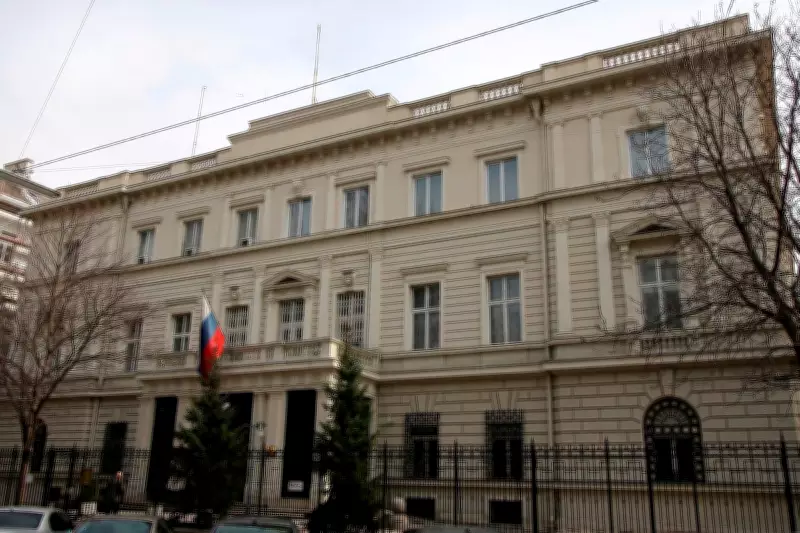
Austria has expelled three Russian Embassy employees suspected of espionage involving antennas installed on diplomatic buildings, the Foreign Ministry confirmed on Monday. The move follows a report by Austrian public broadcaster ORF, which alleged that the three diplomats engaged in spying activities using antennas on the roofs of the Russian Embassy in Vienna and a diplomatic compound in the Donaustadt district. These installations reportedly allowed Russia to intercept data transmitted via satellite internet by international organizations based in Vienna.
International Organizations Targeted
Vienna hosts several major international bodies, including United Nations agencies such as the International Atomic Energy Agency, the Organization of the Petroleum Exporting Countries, and the Organization for Security and Cooperation in Europe. The suspected espionage activities targeted these organizations, raising serious security concerns for Austria.
Government Response
Foreign Minister Beate Meinl-Reisinger stated, “Espionage is a security problem for Austria. In this government, we have changed course and are taking decisive action against it. We have made this unequivocally clear to the Russian side, also with regard to the array of antennas at the Russian embassy. One thing is clear: it is unacceptable for diplomatic immunity to be used to engage in espionage.”

According to ORF, the Russian ambassador was summoned to the Foreign Ministry in April regarding the diplomats’ activities. Austria requested that Russia lift their immunity to allow prosecutors to investigate, but Moscow refused, leading to the expulsions. The diplomats have already left Austria.
Legal Reforms
Meinl-Reisinger announced that Austria is tightening its espionage law to prevent such cases. Current legislation only punishes espionage by foreign services if it targets Austrian interests. Proposed changes would extend protections to international organizations based in Austria. The Russian Embassy in Vienna did not respond to a request for comment but posted on Telegram that it noted Austria’s “outrageous” decision and warned of a strong response, stating that “Vienna bears full responsibility for the further deterioration of bilateral relations, which are already at a historical low.”
Since Russia’s full-scale invasion of Ukraine in February 2022, Western European nations and Russia have repeatedly expelled each other’s diplomats. Austria, an EU member with a policy of military neutrality, initially hesitated but has recently expelled more Russian diplomats.