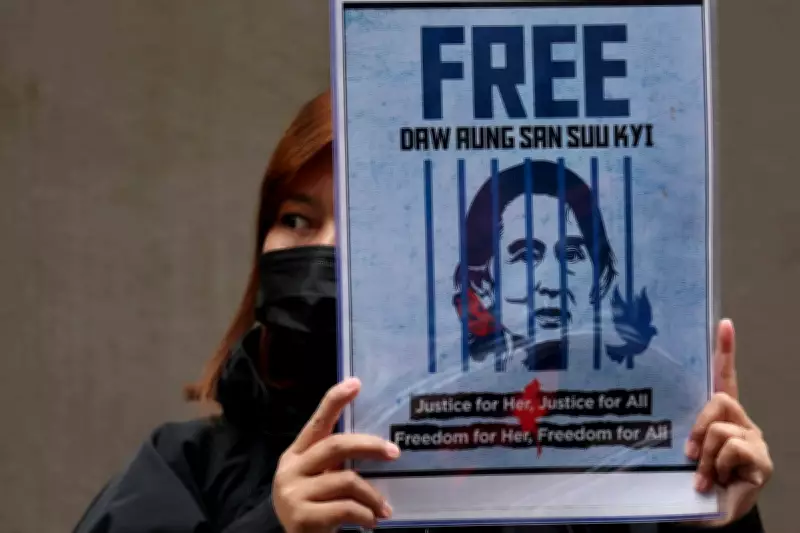
Thailand's foreign minister, Sihasak Phuangketkeow, has raised significant concerns regarding the welfare of imprisoned Nobel Peace Prize laureate Aung San Suu Kyi during a meeting with Myanmar's newly appointed president, Min Aung Hlaing. The discussions, held on behalf of the Association of Southeast Asian Nations (Asean), highlighted the international community's unease over the conditions of the 80-year-old former civilian leader.
Assurances from Myanmar's Leadership
President Min Aung Hlaing assured the Thai minister that Suu Kyi is being 'well looked after' while in detention. This statement comes amid widespread skepticism, as Suu Kyi has not been seen in public since her trials concluded in December 2022. Her son has expressed grave concerns about her deteriorating health in prison, noting a lack of access to adequate medical care and family visits.
Recent Developments in Suu Kyi's Case
Last week, Suu Kyi's 27-year prison sentence was reduced by one-sixth as part of a mass amnesty declared by the Myanmar junta. Despite this reduction, she remains incarcerated, and there is no indication of an imminent release. The amnesty, which applied to thousands of prisoners, has done little to alleviate international concerns about the fairness of her trial and the conditions of her confinement.

Broader Diplomatic Engagement
The meeting also addressed the possibility of Myanmar's return to Asean, a regional bloc from which it has been largely isolated since the 2021 military coup. Thailand offered its support for ending the ongoing civil war and seeking a détente between the junta and various armed resistance groups. However, the junta's refusal to engage with the opposition has stalled progress.
Foreign Secretary David Lammy has made an impassioned plea for Suu Kyi's release, calling on the international community to intensify pressure on the Myanmar regime. The UK government has consistently condemned the coup and the subsequent crackdown on pro-democracy activists.
The welfare of Aung San Suu Kyi remains a focal point of international diplomacy, with Asean member states grappling with how to balance engagement with the junta and support for democratic principles. The coming weeks will be critical in determining whether the junta's assurances translate into tangible improvements in Suu Kyi's conditions or a path toward her eventual release.