Albanian Asylum Seekers Pay Corrupt Police for Fake Evidence in UK Claims
Albanian asylum seekers are paying corrupt police officers to obtain official letters that falsely support their applications for protection in the United Kingdom, according to a recent investigation. Migrants from Albania frequently assert they have faced threats from criminals in their homeland as grounds for seeking asylum in the UK. Since these applications often fail without substantiating evidence, organised criminal networks have intervened by exploiting corrupt officials on their payroll to provide fabricated documentation.
TikTok Gang Advertises Fraudulent Services
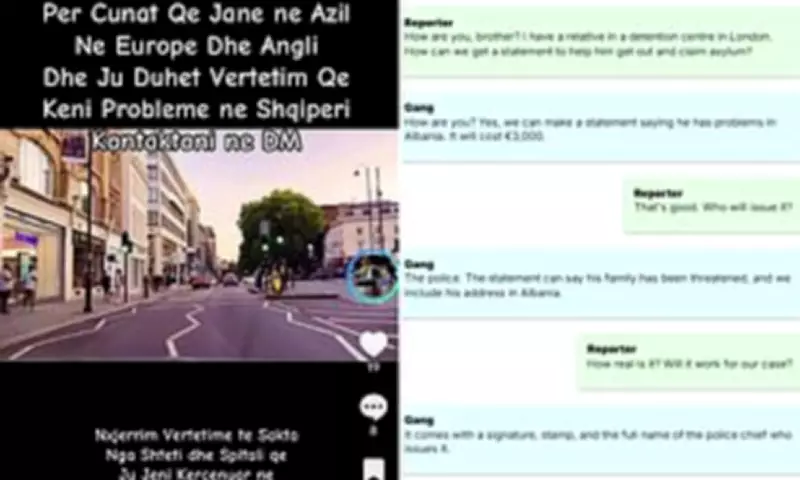
One criminal gang, operating through a TikTok account named 'Pune të ndryshme Europe' (Different Jobs in Europe), has been openly promoting its services to Albanian migrants seeking to submit deceptive asylum claims. A post from the account explicitly stated, 'For boys claiming asylum in Europe and the UK who need statements saying they are having problems in Albania, contact us via DM.' It further added, 'We can obtain real statements from the state or hospitals saying you have been threatened in Albania. For more info, DM.'
Using an Albanian mobile number, an undercover reporter posed as a relative of someone detained in a UK detention centre who required a police statement to bolster an asylum claim. Within minutes, the gang responded, offering a letter for €3,000 (approximately £2,616). They assured the document would include details of threats in Albania, along with a signature, official stamp, and the full name of the issuing police chief.

Sample Letter Reveals Elaborate Forgery
When requested to provide evidence of a previously produced letter, the gang sent a sample purportedly issued by the police chief in Korçë, an eastern Albanian city. The letter described a fabricated incident where a married couple reported being assaulted by armed individuals, complete with specific dates and locations. It concluded by stating investigations had been initiated, and the statement was issued at the request of the interested parties.
An expert on Albanian organised crime, who wished to remain anonymous, commented on the situation, stating, 'I am not surprised at all to see these statements are being sold to people claiming asylum in the UK. It is deeply concerning how these criminal groups have recruited officials within the Albanian State Police to issue such documents.' The expert noted that bogus asylum seekers had previously paid Albanian newspapers to publish fake stories of persecution, which were then submitted to the Home Office as part of claims.
Home Office Rejects Majority of Albanian Claims
In 2022, over 17,000 Albanians applied for asylum in the UK, but following an agreement to expedite returns, this number dropped sharply to 2,648 by 2024. The Home Office now regards Albania as a safe country and rejected 97% of all claims in 2024, though some may have been successfully appealed on review. Despite the increased difficulty in securing asylum, many continue to attempt through various methods, such as claiming involvement in blood feuds, trafficking, domestic violence, or discrimination based on sexual orientation.
The TikTok account involved has since been removed from the platform. TikTok's policies prohibit content that promotes human trafficking and smuggling, including facilitating such services. Albania's Ministry of Interior questioned the authenticity of the letter, suggesting it did not meet official drafting standards and could not have been created by the State Police. A Home Office spokesperson emphasised ongoing reforms to address illegal migration, stating, 'The Home Secretary has set out the most sweeping reforms on illegal migration in modern times, stripping away incentives drawing people here through unlawful routes and stepping up the return of individuals with no right to remain.'
This investigation follows previous exposés, including one where a freelance interpreter, Eglantina Legisi, was found offering services to secure bail for illegal immigrants through fake guarantors for payments of £3,000. These revelations highlight persistent challenges in the UK's immigration system and the lengths to which some will go to exploit it.