
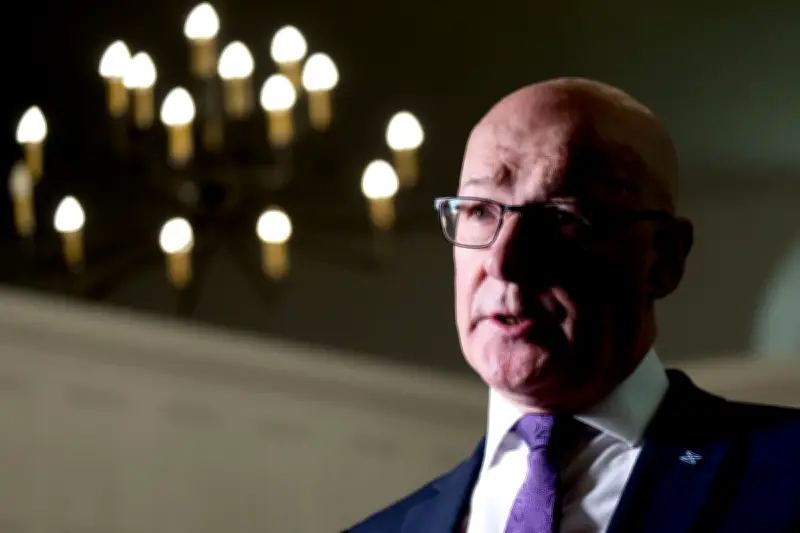
Scottish First Minister John Swinney has stated that Sir Keir Starmer made the “right decision” to resign as Prime Minister, asserting that the Labour leader failed to deliver the change he promised voters two years ago. Speaking after Starmer’s emotional resignation statement outside 10 Downing Street, Swinney said the departure marks the sixth prime minister in 10 years, underscoring the UK’s “inability to sustain stable government.”
Swinney Calls for Fundamental Change, Not Just New Leadership
Swinney insisted that what is needed is a “fundamental change of direction” rather than merely a change of personnel in Downing Street. He emphasized that the next prime minister must improve living standards, which he described as the core issue eroding public trust in political leaders. The First Minister also advised Andy Burnham, the most likely successor, to make a “careful choice” for Scottish Secretary, criticizing current officeholder Douglas Alexander for having “soured” relations between the Scottish and UK governments.
“Sir Keir Starmer has made the right decision. It was past time for him to face reality and the fact he now has allows some hope that things can change,” Swinney told the Press Association. He added that on a political level, Starmer recognized what many had long seen: that his government was failing and did not deliver the transformation and improvement in living standards people sought.
Starmer’s Resignation and Legacy
Starmer announced his resignation after a weekend at Chequers with his family, where he considered his future. In his statement, he acknowledged that his party questioned whether he was “best placed” to lead Labour into the next general election. He said he “heard the answer of my parliamentary party to that question” and would “accept that answer with good grace.” He will remain Prime Minister until his successor is in place before the end of Westminster’s summer recess.
Scottish Labour leader Anas Sarwar, who called for Starmer to step down in February, thanked the outgoing leader for his work to change the Labour Party and the country. Sarwar highlighted achievements such as ending 14 years of Tory government, returning 37 Scottish Labour MPs, securing shipbuilding on the Clyde, ending austerity, and lifting half a million children out of poverty. He said that legacy cannot be taken away from Starmer.
Implications for UK Governance and Scottish Relations
Swinney’s comments reflect ongoing tensions between the Scottish and UK governments. He stressed that the next prime minister must fulfill rhetoric on devolving more power from Whitehall, calling it the “first big test” for Burnham. He also urged Burnham to remove Douglas Alexander as Scottish Secretary, citing a soured relationship. The First Minister’s remarks highlight the constitutional challenges facing the next UK leader, particularly regarding Scotland’s role within the union.
The resignation of Starmer, who became Prime Minister two years ago, adds to a period of political instability in the UK. Swinney noted that the frequent changes in prime minister demonstrate the UK’s inability to sustain stable government. As the Labour Party prepares for a leadership contest, the focus returns to delivering the change voters expect.




