Nepal's Historic Election Pits Political Old Guard Against Impatient Youth
As Nepal prepares for crucial parliamentary elections on 5 March, the Himalayan nation stands at a crossroads between its established political elite and a restless younger generation demanding change. Nearly 19 million voters, including approximately 800,000 first-time participants, will cast ballots to determine the composition of the 275-seat House of Representatives.
Violent Protests Set the Stage for Political Transformation
This week's election follows six months of interim governance after violent Gen Z-led demonstrations last September forced Prime Minister KP Sharma Oli's resignation. The protests, which resulted in 77 fatalities, exposed profound youth frustration with systemic corruption and scarce employment opportunities in a country where one in five young adults remains jobless.
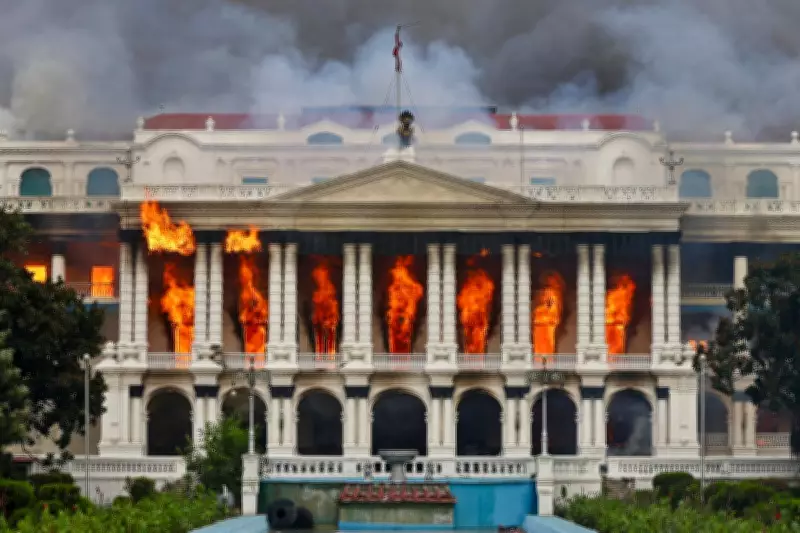
The unrest escalated dramatically when authorities blocked 26 social media platforms including Facebook, Instagram, and X on 4 September 2025, a move widely perceived as an attempt to suppress dissent. Subsequent clashes between security forces and protesters turned deadly, with over 2,500 buildings torched including government offices, courts, media houses, and Kathmandu's Hilton hotel.

Three-Way Battle for Leadership Emerges
The prime ministerial contest has crystallized into a three-way competition between former Prime Minister Oli, Nepali Congress leader Gagan Thapa, and former rapper-turned-Kathmandu mayor Balendra Shah. The winner will become Nepal's sixteenth prime minister in under two decades, highlighting the chronic political instability that has plagued the nation since monarchy abolition in 2008.
Shah, popularly known as "Balen," has positioned himself as the standard-bearer for youth-led political transformation. The 35-year-old centrist candidate has cultivated a substantial following through social media outreach while largely avoiding traditional press channels. His Rastriya Swatantra Party (RSP) has pledged to create 1.2 million jobs to address Nepal's severe unemployment crisis and reduce forced labor migration.
Youth Unemployment Fuels Political Discontent
With youth unemployment reaching 20.6 percent—the highest rate in South and Southeast Asia according to World Bank data—economic concerns dominate the electoral landscape. Nepal's failure to generate sufficient employment opportunities has created what analysts describe as a "portrait of governmental failure" across successive administrations.
Major political parties have responded with ambitious job creation promises. The Nepali Congress has committed to generating 1.5 million positions while halving worker outflow within five years. Meanwhile, over 3,400 candidates from 63 parties are contesting seats, with nearly 40 percent under age 35—reflecting a population where two-thirds are similarly young.
Contrasting Visions for Nepal's Future
Gagan Thapa, the 49-year-old leader of the Nepali Congress, presents himself as offering "the right mix of energy and experience." He has vowed to eliminate corruption within five years and increase governmental accountability, positioning his party as a reformist alternative despite its participation in the previous coalition government.
Former Prime Minister Oli, despite facing widespread public resentment over the deadly protests, retains support within his Communist Party. The 74-year-old veteran emphasizes policy stability as essential for economic development, warning against rapid political changes that might disrupt progress.
Security Concerns and Democratic Participation
Interim Prime Minister Sushila Karki, appointed through a Discord-organized youth activist process following Oli's resignation, has appealed for peaceful participation in the electoral process. "I sincerely appeal to you to go to your polling station and vote on Thursday, even if you have to leave other work," Karki stated in a televised address.
Security remains a significant concern, with the army overseeing voting procedures to address fears about 750 weapons stolen from police during September's protests that remain unaccounted for. The interim administration has pledged investigations into protest-related violence while organizing these landmark elections.

A Nation Poised Between Tradition and Transformation
As Nepal celebrates Holi—the festival marking spring's arrival and the triumph of good over evil—on Wednesday, many citizens view the subsequent day's election as equally symbolic. "We will celebrate Holi on Wednesday and we will celebrate democracy on Thursday," remarked 19-year-old student Aadarash Thapa, a participant in last year's protests. "It is spring and it is time for a new government."
Whether Nepal chooses continuity with established political forces or embraces the disruptive energy represented by candidates like Balendra Shah, this election represents a defining moment for a nation grappling with generational change, economic challenges, and democratic renewal.