Exiled Leader Returns for Historic Bangladesh Vote
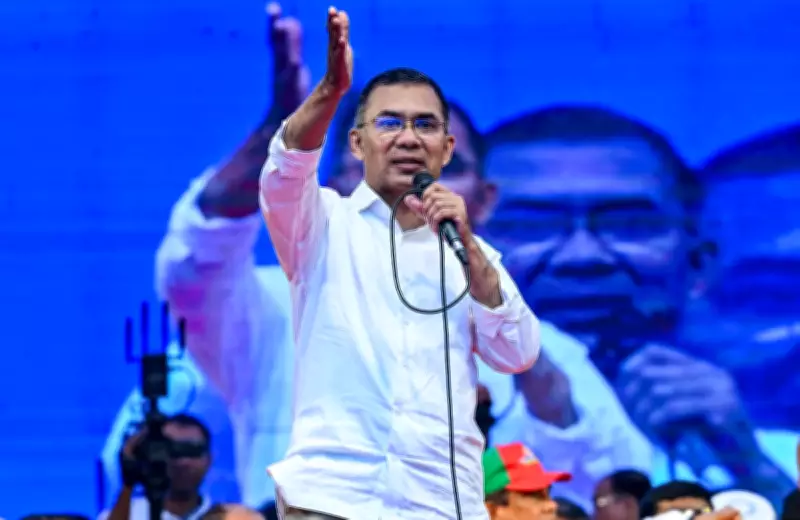
Tarique Rahman, the leader of the Bangladesh Nationalist Party (BNP), has pledged to usher in a new era of clean politics as Bangladesh holds its first free and fair election in nearly two decades. Speaking to supporters on the final day of campaigning, Rahman promised a "top down, no tolerance" approach to corruption if his party is brought to power.
End of Exile and Political Comeback
After 17 years in self-imposed exile in London, Rahman returned to Bangladesh on Christmas Day to contest the election as the main contender to become the next prime minister. The 60-year-old leader took over the BNP from his mother, former prime minister Khaleda Zia, who died just five days after his return in December.
"Physically, I may have been out of the country but for all those years I was always connected to my people in Bangladesh," Rahman told the Guardian before polls opened. "As soon as the opportunity came to serve my people, I came back."

First Election Since Hasina's Fall
The elections mark a pivotal moment for Bangladesh, coming after the fall of autocratic prime minister Sheikh Hasina in the summer of 2024. Hasina's 15-year rule ended following a student-led uprising that left an estimated 1,400 people dead according to UN reports, after her government responded with a violent crackdown.
Since August 2024, Bangladesh has been led by an interim government headed by Nobel laureate Muhammad Yunus, tasked with restoring democracy and preparing for credible elections. However, the country has remained in turmoil amid declining law and order and economic stagnation.
Addressing Corruption and Economic Challenges
Rahman acknowledged that Bangladesh faces significant challenges, having long ranked among the world's most corrupt countries. "We saw in the last regime that corruption was encouraged," he said. "Our economy was left destroyed. It will take time, but if we establish real accountability in every part of the government and send a message down the chain, that will eventually control corruption."
While polls suggest the BNP is likely to win a sizeable majority over their rival Jamaat e-Islami, Rahman did not dispute that "mistakes" had been made during the previous BNP regime between 2001 and 2006 under his mother's leadership. "I will not deny that. If we do, it will not help anything," he stated.
Security and Voter Enthusiasm
With 127 million registered voters, authorities have deployed more than 900,000 police, army and security personnel to ensure a secure polling day. Thomas Kean, Crisis Group's senior consultant on Bangladesh, emphasized the election's significance: "This is the first credible election the country's held in 17 years so it's incredibly significant. People are eager to have the chance to vote after so long."
In Dhaka, young voters expressed excitement about participating in democracy firsthand. Yasmin Sorupa, 30, who planned to vote for the BNP, said: "I am excited, this is the first time I am freely taking part in an election. In the past, I could never cast my vote because when I went to the polling station, somebody had already cast it."
Personal Transformation and British Influence
Associates say Rahman's time in London, where he lived in Kingston with his wife and daughter, mellowed him and influenced his political outlook. His experiences of British life left an imprint on his policies, from advocating for more tolerance in Bangladeshi politics to his determination to introduce weekly rubbish bin collections.
Legal Battles and Controversies
Rahman's political journey has been marked by legal challenges. He was jailed in 2007 as part of an anti-corruption drive by a military-backed caretaker government on charges he denies. After being released to seek medical treatment in London in 2008, he faced multiple terror and corruption convictions during Hasina's rule, which he alleges were politically motivated.
Following Hasina's fall in 2024, the courts overturned his convictions, finally allowing his return. "It's been more than 18 years and they've failed to prove anything," Rahman said. "Don't you think that's good enough, long enough to prove that I did nothing wrong?"

Dynastic Politics and Islamist Challenge
Not all Bangladeshis have welcomed Rahman's return. Both his parents served as prime ministers, and to many, he represents the continuation of dynastic politics that has dominated Bangladesh since independence in 1971. Many had hoped the July uprising would end the grip of two families over the country's politics.
Even if the BNP wins a majority, analysts warn that the resurgence of the Islamist Jamaat e-Islami party presents significant challenges. The party, along with hardline Islamist allies who believe in introducing sharia law, is likely to gain their largest vote share in history and form a formidable opposition.
Addressing Extremism and Women's Rights
Human rights groups have raised alarms about a recent surge in moral policing of women, including incidents of girls being prevented from playing football and enforcement of modest dress codes. Rahman acknowledged there were "some extremist people who are trying to do these things" but said it didn't have "any relation with Islam or religion."
He attributed such extremism to the "absence of democracy ... People were not allowed to express themselves for so long, it has built up frustration and in some cases, extremism." Rahman insisted that if democracy is properly practised and economic opportunities are created, people will move away from radical thought.
Geopolitical Challenges with India
One of the biggest challenges facing Bangladesh's new government will be rebuilding relations with neighboring India. Under Hasina, India was Bangladesh's closest ally, but ties severely deteriorated after her government fell and have become outwardly hostile in recent months.
Rahman acknowledged there were "issues" with India and said he would only want "a relationship of mutual respect, mutual understanding." When questioned about whether Bangladesh could rebuild friendship with India while Delhi continues to give safe haven to Hasina and hundreds of her party members, Rahman responded cautiously: "That depends. It has to be on them too."
Looking to the Future
As voting commenced across Bangladesh, Rahman emphasized his commitment to putting the country on a "new path" after years of political turmoil and democratic backsliding. The election represents not just a political contest but a crucial test for Bangladesh's democratic institutions and its future direction as a nation.