
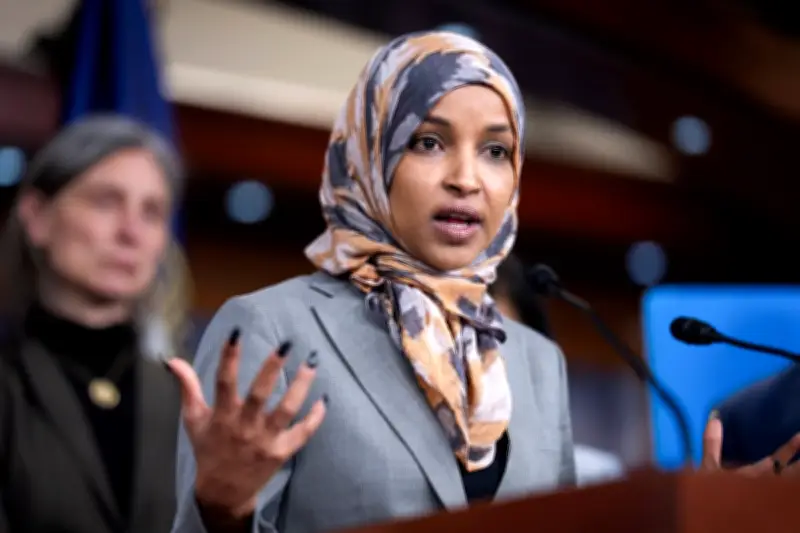
Democratic congresswoman Ilhan Omar introduced a resolution on Wednesday urging the United States to join the International Criminal Court (ICC), marking the first congressional pushback against the Trump administration's pledge to 'systematically disable' the war crimes tribunal through sanctions and diplomatic pressure.
Resolution Details and Context
Omar's bill came two days after Marco Rubio, the US secretary of state, vowed to dismantle the court. 'The ICC is a crucial tool for justice in places where victims have nowhere else to turn,' Omar said. 'If we truly believe in human rights and the rule of law, we should strengthen international justice – not undermine it. The United States should lead by example and show that no one is above the law.'
European lawmakers have also rallied in defense of the war crimes tribunal and rejected the Trump administration's assertion that the ICC poses a threat to US sovereignty. 'We stand firm in our support for the International Criminal Court. Attacks or threats against the court, elected officials, personnel or those cooperating with the court are simply not acceptable,' an EU spokesperson, Anouar El Anouni, said on Tuesday.
Bipartisan Support History
The ICC briefly enjoyed bipartisan support after Russia's 2022 invasion of Ukraine, despite Donald Trump's actions against the court during his first term. The late senator Lindsey Graham praised it as 'a venue to bring bad actors to justice in those areas where the Rule of Law is absent,' while sponsoring a resolution urging a war crimes investigation. Omar introduced similar legislation in April 2022.
'I am reintroducing that resolution and I urge my colleagues who believe in justice and human rights to join me,' Omar said in a statement to the Guardian. It is unclear if her latest bill will receive broader Republican and Democratic support.
Legal Challenges and Reactions
Omar's resolution came as two US advocacy groups sued the Trump administration, arguing that Trump's 2025 executive order had forced them to halt constitutionally protected work with the ICC's investigation into alleged Israeli war crimes in the West Bank and Gaza.
Rubio claimed that the ICC was a threat to 'every aspect of [America's] political and legal system,' but at times Democrats on Capitol Hill have defended the court. Last year, Senate Democrats successfully blocked an ICC sanctions measure, though the caucus has remained divided on Trump's approach to the ICC.
Legal experts told the Guardian that Rubio had mischaracterized the intentions and jurisdiction of the international court, which cannot prosecute crimes on US soil because the US is not a party to the Rome Statute, the 2002 treaty that created the ICC.
The permanent war crimes tribunal has been recognized by 125 countries. It was created after the successes of ad hoc tribunals established to prosecute atrocities committed in the former Yugoslavia, Rwanda, Cambodia and Sierra Leone.




