Nepal's Gen-Z Election: A Clash of Generations in Jhapa-5
In the bustling city of Damak, nestled within Nepal's Jhapa-5 constituency, a dramatic political battle is unfolding that could redefine the nation's future. This election pits Balendra Shah, a 35-year-old former rapper turned mayor of Kathmandu, against KP Sharma Oli, a four-time prime minister and seasoned political heavyweight. With 46% of Nepal's population under the age of 24, this contest serves as a critical test of whether the aspirations and frustrations of the youth are being genuinely addressed by the political establishment.
The Rise of Balen Shah: From Rapper to Political Icon
Balendra Shah, widely known as Balen, first gained fame as a popular rapper whose lyrics often critiqued the ruling elite. His transition to politics culminated in a resounding victory in May 2022, when he was elected mayor of Kathmandu. However, it was the gen-Z uprising in September of that year that catapulted him to national prominence. The protests, sparked by corruption and a social media ban, were met with police brutality and live fire, resulting in over 70 deaths and the downfall of Oli's communist government.
Balen emerged as a unifying figure for Nepal's youth, who are deeply disillusioned with a political system they perceive as broken and unrepresentative. Despite being offered an interim leadership role after the protests, he declined, opting instead to challenge the status quo through democratic means. "He could have accepted an unelected position of power after the protests but instead he chose the democratic path," said Parbat Basnet, a 24-year-old business graduate and leader of the gen-Z movement in Damak.

The Veteran Challenger: KP Oli's Unyielding Stance
KP Sharma Oli, a veteran politician with a long history in Nepal's Communist Party (UML), remains defiant in the face of this youth-driven challenge. His campaign in Jhapa-5, a traditional stronghold, has been met with mixed reactions. In rare comments, Oli defended his government's response to the gen-Z protests, claiming that the movement was hijacked by criminals and constituted a conspiracy to topple his administration. "This was a conspiracy to topple my government. Yes it was a matter of sorrow, I was very sad that people died," he stated, while denying any wrongdoing or fleeing after his resignation.
Oli's support base remains loyal, particularly in rural areas of Jhapa-5 where he has secured victories in the past. However, the energy surrounding this election is markedly different, with even older voters beginning to demand accountability from their leaders. "Earlier, leaders were treated like gods. Now people are demanding accountability," Basnet observed.
Campaign Dynamics and Voter Sentiment
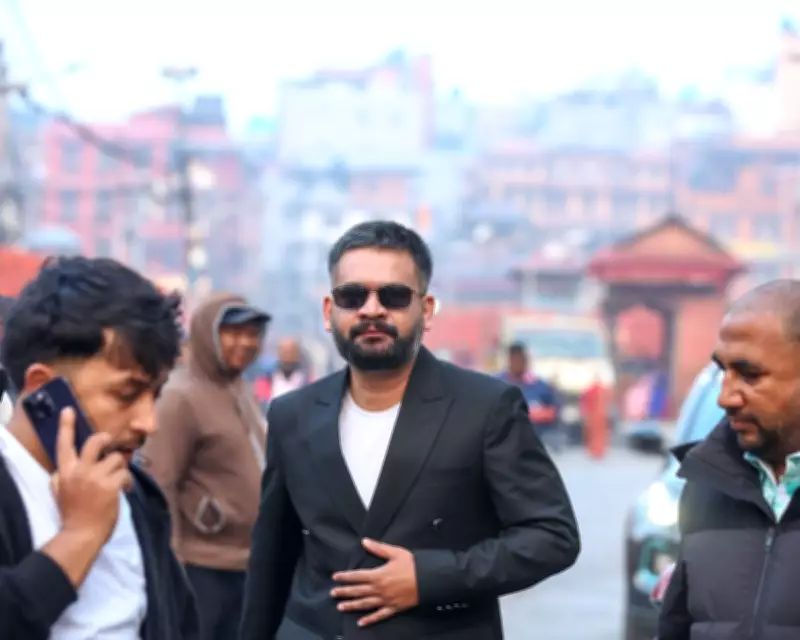
Balen's campaign style is unconventional, characterized by brief interactions with voters and a heavy reliance on social media, where he commands millions of followers. Dressed in his signature black suit and sunglasses, he draws massive crowds, with supporters often clamoring for selfies and touch. Yet, his reluctance to engage in detailed policy discussions has raised concerns among some voters. "He walks from place to place but doesn't speak at all," noted Buddhimaya Kerung, a 47-year-old resident of Gaurigunj.
Moreover, Balen's volatile social media history, including impulsive posts criticizing foreign powers like America, India, and China, has sparked worries about his foreign policy approach. Nepal's delicate position between India and China adds complexity to these concerns. Despite this, many young voters, like Sarita Baral, 23, see him as a bold leader who represents change. "Balen is different from other politicians, doesn't make big promises and he seems brave," she said.
The Stakes for Nepal's Future
This election is more than just a local contest; it is a referendum on Nepal's political direction. The gen-Z movement has injected a new vigor into the electoral process, challenging the entrenched cycle of weak coalition governments that have plagued the country for decades. With 31 prime ministers in 35 years, voter fatigue is palpable, but the enthusiasm for Balen suggests a potential shift.

For the youth, the polls represent a chance to translate their protests into sustained political change. Basnet emphasized a cautious optimism: "If he does well, I will support him. If he fails, I will question him. We must never stop questioning our leaders." As Nepal heads to the polls, the outcome in Jhapa-5 will be closely watched, signaling whether the old guard can withstand the rising tide of a new generation demanding transparency, job opportunities, and an end to corruption.