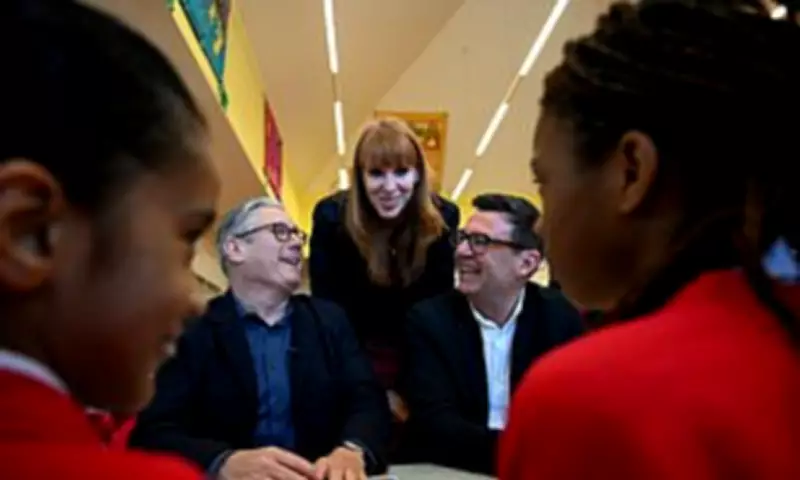
Keir Starmer engaged in an awkward display of unity with his potential leadership rivals today, as the Labour Party braces for a potential disaster in the upcoming local elections. The Prime Minister, alongside Deputy Leader Angela Rayner and Manchester Mayor Andy Burnham, smiled for cameras during a visit to a primary school in Greater Manchester, less than a month before polls open on May 7.
Internal Tensions Threaten Labour's Stability
However, these friendly public scenes starkly contrast with the raging tensions simmering at the highest levels of the party. Both Angela Rayner and Andy Burnham are widely perceived to be "on manoeuvres," actively positioning themselves to potentially succeed Sir Keir should his leadership falter. Labour is preparing for a severe electoral setback, with a swathe of council seats, as well as the Scottish and Welsh Parliaments, up for grabs.
Electoral Threats from Reform and Greens
The Reform Party is poised to make sweeping gains, capitalising on voter dissatisfaction, while the Green Party could also inflict significant damage on Labour's traditional support base. This confluence of challenges presents a moment of extreme danger for Prime Minister Starmer, although international developments, such as the easing of tensions following Donald Trump's actions toward Iran, have provided a slight, temporary reprieve from political pressure.

Starmer's Defiant Stance on Leadership
Sir Keir insisted this morning that he has no intention of resigning, even if the election results prove as disastrous as some fear. "We will go in and fight these elections," he declared. "But I was elected in July of 2024 with a five-year mandate to change this country, and I intend to carry through that mandate. I will be judged at the next election on whether I've delivered, and I know that I'll be judged on whether living standards have improved, whether our public services are better, particularly the health service, or whether people feel safe and secure as a country in a more volatile and dangerous world."
Recent Leadership Challenges and Strategic Moves
As recently as February, Sir Keir came perilously close to being ousted due to the Mandelson scandal, with his Cabinet rallying around him only at the last possible moment. In a strategic move to mitigate the fallout from a potential Labour meltdown, the Prime Minister has scheduled the King's Speech for May 13, just six days after the local elections. This timing means MPs will not gather in Parliament for nearly a week following the polls, thereby limiting opportunities for internal plotting and dissent.
The State Opening of Parliament could also provide Sir Keir with a crucial opportunity for a political "reset," as the government outlines its legislative agenda for the coming session. Prorogation is typically scheduled one to two weeks prior to the State Opening, likely around April 29. The current parliamentary session will have lasted approximately 22 months, significantly longer than the standard annual session, during which ministers aim to push through as many legislative changes as possible following the King's Speech.
Polling Data Highlights Cabinet Vulnerabilities
A recent poll conducted by More in Common has revealed alarming vulnerabilities within the Labour Cabinet. The survey, which utilised MRP (Multilevel Regression with Post-stratification) methodology based on voting intention data from over 15,000 Britons, suggested that a staggering 16 out of the 22 Labour MPs who form the Prime Minister's top team would lose their seats if a general election were held immediately.
According to the research, twelve of these Cabinet ministers would lose their constituencies to Reform UK, three would be defeated by the Green Party, and one would fall to an independent candidate. This data underscores the profound challenges facing the Labour Party, not only in the upcoming local elections but also in terms of its broader electoral viability and internal cohesion as it navigates a period of intense political scrutiny and potential upheaval.