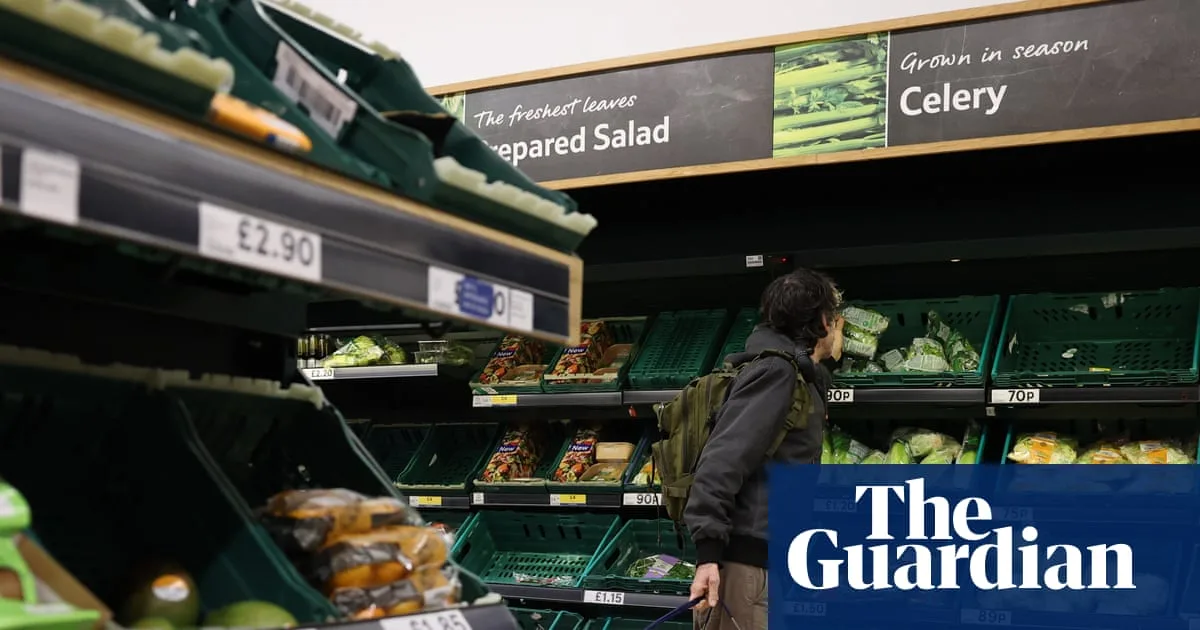
Salad Prices to Rise as Middle East Chaos Drives Up Energy Costs
Salad Prices to Rise Due to Middle East Energy Crisis

Britons have been cautioned that salad items could become casualties of the escalating turmoil in the Middle East as energy expenses continue to climb. According to experts, fresh produce such as cucumbers, tomatoes, and lettuce are poised for the most immediate price increases, owing to their cultivation in heated greenhouses and their short supply chains.

Oil Prices Surge Amid Geopolitical Tensions

The warning comes as oil prices have once again surged, with market analysts expressing concerns that the standoff between Iran and the United States shows no signs of a swift resolution. Brent crude traded at over $108 per barrel this morning, marking its highest level in approximately three weeks.

Cabinet ministers have indicated that British consumers will continue to feel the repercussions of the instability well into next year. Darren Jones, a Cabinet minister, stated yesterday that the fallout from 'what Donald Trump has done' would have a 'long tail,' even if the Strait of Hormuz were to reopen immediately.

Wide Pickt banner — collaborative shopping lists app for Telegram, phone mockup with grocery list

Impact on Fuel and Supply Chains

The conflict has already driven up prices at the pump for petrol and diesel, while also exerting pressure on jet fuel costs. However, the full effects have yet to permeate the supply chain. The Middle East is a vital source for products like fertiliser and CO2, which are essential for agriculture, industry, and medicine.

Karen Betts, chief executive of the Food & Drink Federation (FDF), told the Times that 'anything grown in a greenhouse' would be among the first items to see price rises. The Ofgem price cap on energy bills does not extend to businesses, leaving them exposed to immediate higher costs.

Dr. Liliana Danila, chief economist at the FDF, noted that growers had indicated they 'would either finish the production cycle early or that they would go and buy abroad to still fulfil their contracts.' She added that some greenhouse farmers 'had gone to retailers to ask for price renegotiation since they couldn't deal with the rising energy costs.'

Government Response and Long-Term Outlook

Speaking on the BBC, Mr. Jones downplayed the prospect of shortages but acknowledged that prices would rise. 'You are going to see prices go up a bit as a consequence of what Donald Trump has done in the Middle East,' he said. 'That's probably going to come on line not just in the next few weeks, but in the next few months. There's going to be a long tail from this.'

When pressed on the duration, Mr. Jones estimated that even after a resolution to unblock the Strait of Hormuz, economic impacts would persist for 'eight plus months.' He warned that people would see higher energy prices, food prices, and flight ticket prices as a result of the Middle East situation.

Prime Minister Keir Starmer told President Trump in a call yesterday that there is an 'urgent need' to reestablish the crucial shipping passage, through which about a fifth of the world's oil and gas typically passes. A Downing Street readout indicated that Sir Keir warned the restrictions were having 'severe consequences for the global economy and cost of living for people in the UK and globally.'

The Government's Middle East Response Committee is scheduled to meet again tomorrow, with stock levels of goods being closely monitored. However, officials insist that people should continue to fill their cars as normal, that jet fuel is still arriving for planes, and that there is sufficient CO2 available.

Pickt after-article banner — collaborative shopping lists app with family illustration