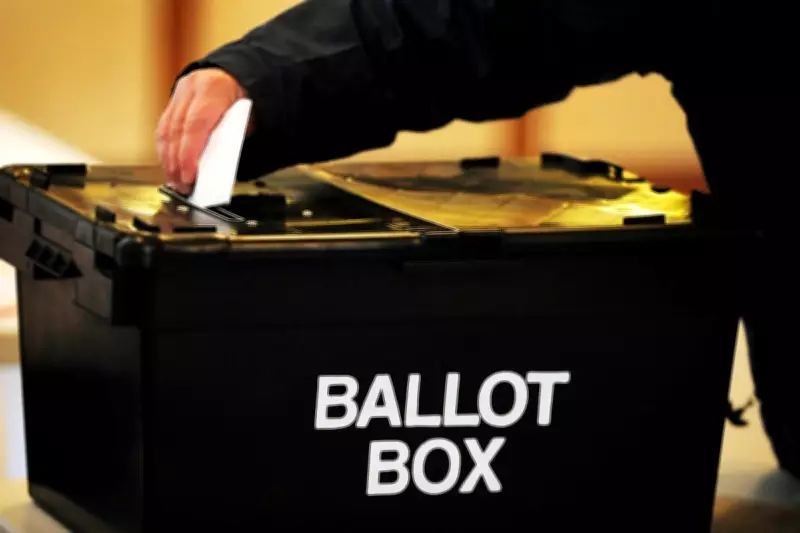
The latest political survey from Ipsos Scotland indicates a significant shift in voter intentions ahead of the crucial May election, with Scottish Labour experiencing a notable four-point surge in constituency support. Despite this Labour momentum, the Scottish National Party maintains a commanding lead and remains firmly on course for electoral victory when voters go to the polls.
Poll Methodology and Key Findings
The comprehensive survey, conducted between February 19 and 25, gathered responses from 1,096 individuals across Scotland. The results paint a complex picture of the political landscape just over nine weeks before the election, revealing both stability and volatility among different voter segments.
Party Performance Breakdown
The SNP continues to dominate the political field with 36% of the constituency vote, representing a modest one-point increase since Ipsos's previous December poll. On the regional list, however, the party experienced a slight two-point decline to 26% support.

Scottish Labour's performance shows marked improvement across both ballots. The party gained four points in constituency voting to reach 20%, while increasing by one point to 19% in regional list preferences. This represents the most significant movement detected in the latest survey.
Reform UK's previously strong polling surge appears to have faltered slightly, dropping two points to 16% in constituency areas and three points to 14% in regional preferences. The Conservative decline continues unabated, with Holyrood's current second-largest party falling two points to 9% in constituencies and one point to 11% in regional voting.
The Liberal Democrats demonstrated modest gains, increasing by one point to 10% in constituencies and three points to 10% in regional preferences. Meanwhile, the Scottish Greens experienced a decline of two points to 7% in constituencies and one point to 16% in regional list support.
Voter Uncertainty and Loyalty
Perhaps the most revealing aspect of the poll concerns voter commitment levels. A substantial 40% of respondents indicated they have not definitively settled on which party they will support on May 7, suggesting significant potential for last-minute shifts in political allegiance.
When examining party loyalty, Reform UK voters demonstrate the strongest commitment, with 72% stating they would not consider switching their support. SNP supporters show similar solidity, with 64% indicating firm backing for their chosen party.
Labour and Conservative voters appear less certain about their choices, with only 56% and 52% respectively expressing definite commitment to supporting their current preferred parties in the upcoming election.
Potential Party Attraction
When questioned about which parties might attract their support, respondents indicated varied preferences. The Scottish Greens emerged as potentially appealing to 24% of those surveyed, while the Liberal Democrats attracted interest from 21% of respondents. Labour followed with 16% indicating potential support attraction.
Political Reactions and Campaign Messages
SNP Confidence and Independence Focus
Angus Robertson, Scotland's Constitution Secretary and the SNP's campaign director, interpreted the poll results as evidence that voters are "putting their faith in John Swinney." He contrasted the SNP's unified approach with what he described as Westminster parties "tearing themselves apart over scandal and infighting."
Robertson emphasized the SNP's policy achievements, stating: "Our NHS is starting to turn a corner under our plan, and the SNP Scottish Government offers the best cost-of-living support package available on these islands – that's the difference John Swinney's focused leadership brings."
The Constitution Secretary directly linked the election to the independence question, arguing: "Broken, Brexit Britain is in terminal decline and amid the chaos coming from Westminster, Scottish voters are increasingly concluding we need a fresh start with independence – that is on the ballot paper in May and only a vote for the SNP can secure that future."

Labour's Alternative Vision
Scottish Labour deputy leader Dame Jackie Baillie presented a contrasting narrative, describing Scotland as "being let down by a tired SNP Government that can no longer get the basics right." She positioned Labour as the only viable alternative, stating: "It's clear that only Scottish Labour can beat the SNP and fix their mess – restoring our NHS, improving our schools, tackling the housing emergency and making communities safer."
Baillie dismissed Reform UK's electoral prospects, asserting: "Reform has no answers to the challenges we face and no chance of beating the SNP." She framed the upcoming election as a fundamental choice between "more of the same with John Swinney and the SNP, or a better future with Anas Sarwar and Scottish Labour."
Electoral Implications
The poll results suggest a dynamic and competitive political environment as Scotland approaches the May election. While the SNP maintains a substantial lead that positions them for likely victory, Labour's four-point constituency surge indicates growing momentum that could translate into significant seat gains. The high level of voter uncertainty, affecting nearly half of respondents, means that campaign efforts over the coming weeks could prove decisive in determining the final outcome and composition of the next Scottish Parliament.