Hungary's Political Revolution: Life After Orbán Begins
In a dramatic political upheaval, Hungarian voters have delivered a resounding rejection of pro-Russian Prime Minister Viktor Orbán, ushering in a new era under incoming leader Péter Magyar. The pro-European reformer has pledged a fundamental transformation of Hungary's political culture, marking a decisive shift after sixteen years of Orbán's autocratic governance.
Jubilant Celebrations in Budapest
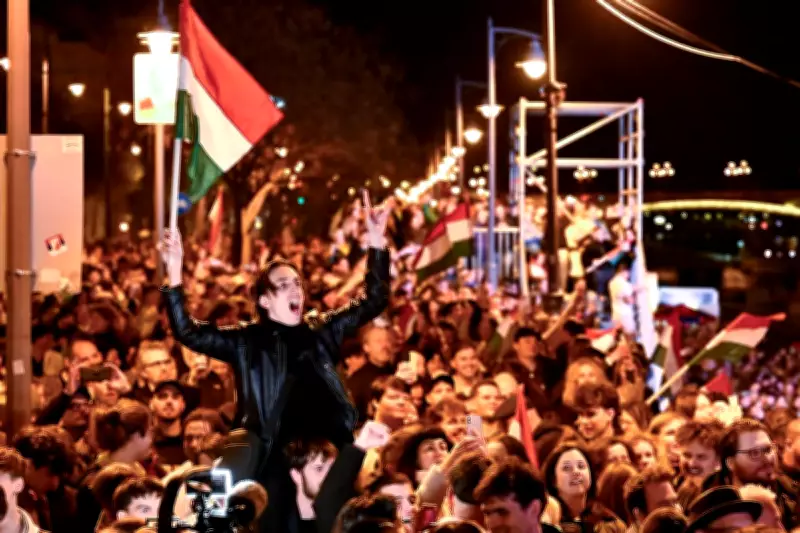
The streets of Budapest erupted in celebration late Sunday as election results confirmed Magyar's victory. Tens of thousands of Hungarians, many of them young people, gathered to express their hope that Orbán's departure would lead to a freer, happier nation firmly rooted within European democratic traditions.
"Finally I can say that I'm a proud Hungarian, finally after 16 years," declared Adrien Rixer, who returned from London specifically to cast his vote. "I really wanted to make my vote count, and I'm over the moon."

A Mandate for Change
Magyar's Tisza party secured a commanding two-thirds parliamentary majority, winning 138 of parliament's 199 seats. This sweeping mandate provides broad authority to dismantle Orbán's legislative framework, which had enabled:
- Stacking the courts with loyalists
- Manipulating the electoral system
- Cracking down on press freedom
- Discriminating against the LGBTQ+ community
During his campaign, Magyar promised to end Hungary's drift toward Russia and restore strong ties with European allies. He vowed to root out systemic corruption and create what he described as a "peaceful, functioning and humane" Hungary.
Mixed Reactions to Supermajority
While many Hungarians and European observers feared a simple majority would be insufficient to transform Orbán's entrenched system, some express unease about transferring such extensive power to the new government.
"It's hard to see that with two-thirds that it's going to be a fair government, but we will see," said celebrant Dániel Kovács. "Let's hope that it's going to be a promising four years."
Economic and Institutional Reforms
Magyar has accused Orbán's government of mismanaging Hungary's economy and social services while overseeing unchecked corruption that concentrated extreme wealth among a small circle of insiders. The incoming leader plans to establish an Office for the Recovery of National Assets to reclaim what he describes as ill-gotten gains accumulated by Orbán's allies.
Key economic promises include:
- Securing billions of euros in frozen European Union funding withheld over corruption concerns
- Introducing the euro currency by 2030, reversing Orbán's long-standing resistance
- Addressing economic disparities that left ordinary Hungarians behind
A Return to European Values
Budapest resident Imre Végh articulated a sentiment shared by many Hungarians who voted for change: "We are Europeans and we want to stay in Europe." He characterized Orbán's system as "illiberal" and contrary to Hungary's fundamental values.
As Hungary contemplates life after Orbán, the nation stands at a crossroads between its recent pro-Russian orientation and a potential return to mainstream European democratic traditions. The coming months will reveal whether Magyar's promised transformation can deliver the fundamental changes Hungarians have endorsed through their historic electoral decision.