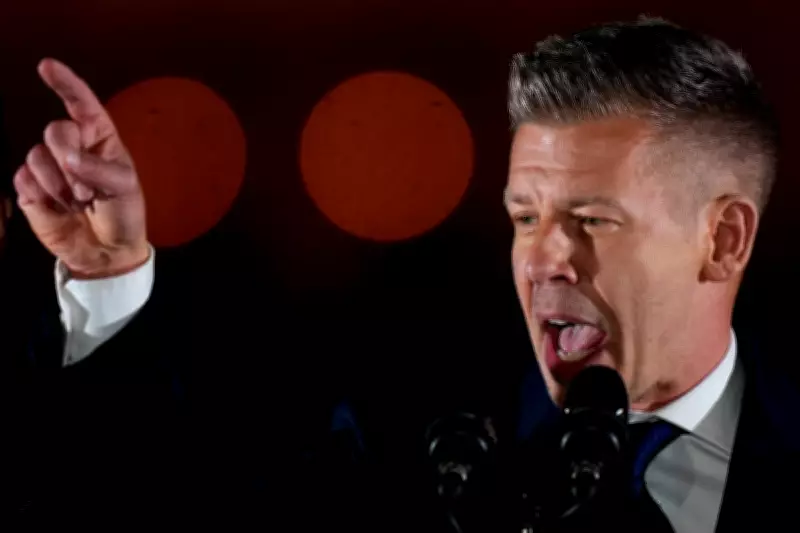
Hungary stands at the brink of a profound political transformation following a seismic election result that saw voters overwhelmingly reject the pro-Russian Prime Minister Viktor Orbán. The nation now looks toward the leadership of Péter Magyar, a pro-European reformer who has pledged a fundamental overhaul of Hungary's political culture and a restoration of its democratic foundations.
A Resounding Rejection and New Hope
Magyar's victory sparked widespread celebrations across Budapest on Sunday evening, drawing tens of thousands of people, many of them young Hungarians, into the streets. They hailed the outcome as a beacon of hope, believing Orbán's defeat will pave the way for a freer, happier Hungary that firmly re-establishes its place among European democracies.
Among the jubilant crowds was Adrien Rixer, who traveled from his London home specifically to participate in the historic vote. "I really wanted to make my vote count, and I'm over the moon," he declared with evident emotion. "Finally I can say that I'm a proud Hungarian, finally after 16 years."

Magyar's Reform Agenda
During his campaign, Magyar pledged to end Hungary's drift toward Russia and restore its ties with European allies. He promised voters that after 16 years of what many describe as autocratic governance and erosion of the rule of law under Orbán, he will root out systemic corruption and create what he calls a "peaceful, functioning and humane" Hungary.
Magyar's Tisza party secured exactly the mandate needed for such transformation when it won 138 of parliament's 199 seats on Sunday. This two-thirds majority gives the party broad authority to undo much of the legislation that allowed Orbán to:
- Stack the courts with loyalists
- Manipulate the electoral system
- Crack down on press freedom
- Discriminate against the LGBTQ+ community
The Challenge of Transformation
What those changes will look like remains to be seen. During his 16 years in power, Orbán ruled with the power of a two-thirds parliamentary majority, allowing him to pass a new constitution, rewrite the electoral system, and reshape the judiciary to his advantage.
Many Hungarians, and others across Europe who were closely watching the election, feared that a simple majority for Tisza would have been inadequate to truly transform Orbán's entrenched system. Others remain uncertain about what the authority of a two-thirds majority will bring, with some expressing unease about taking such extensive power from Orbán and delivering it to his opponent.
"It's hard to see that with two-thirds that it's going to be a fair government, but we will see," said reveller Dániel Kovács amid the celebrations. "Let's hope that it's going to be a promising four years."
Economic and Social Promises
Magyar accuses Orbán and his government of mismanaging Hungary's economy and social services, and overseeing unchecked corruption that he says has led to the accumulation of extreme wealth within a small circle of well-connected insiders while leaving ordinary Hungarians behind.
He has vowed to hold such abuses to account and plans to create an Office for the Recovery of National Assets to reclaim what he describes as Orbán's allies' ill-gotten gains. Magyar campaigned heavily on a promise to bring home billions of euros in European Union funding that has been frozen to Hungary over corruption and rule-of-law concerns under Orbán's administration.
Additionally, Magyar has pledged to introduce the euro to Hungary by 2030—something Orbán's government long resisted despite Hungary's EU membership. This represents a significant shift toward deeper European integration.
A Return to European Values
Imre Végh, a Budapest resident, articulated what many Hungarians expressed after the election results, saying that Orbán had built an "illiberal system" that was against Hungary's fundamental values.
"We are Europeans and we want to stay in Europe," he stated emphatically early Monday, capturing the sentiment of many who voted for change.

The election represents not just a change in leadership but a potential reorientation of Hungary's geopolitical alignment, its relationship with democratic institutions, and its commitment to European values after nearly two decades under Orbán's increasingly authoritarian rule.