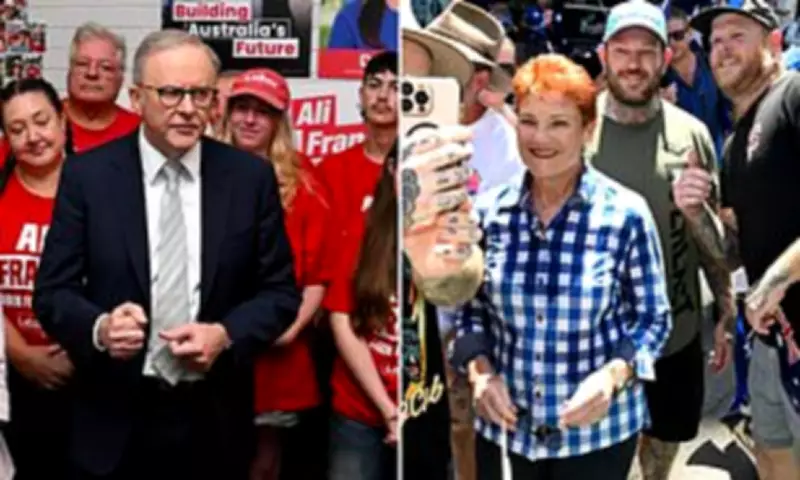
A significant gender divide is reshaping Australia's political landscape, with women emerging as the backbone of Labor's current electoral advantage, while male voters are decisively shifting toward One Nation and away from both major parties. The latest survey from Roy Morgan has uncovered this widening gap, revealing Labor's dominance among female voters even as it loses ground among men.
Female Voters Cement Labor's Lead
On a two-party preferred basis, Labor now commands a formidable lead among women, with 61 percent support—a notable increase of 3.5 points over the past week. In stark contrast, the Liberal-National Coalition trails at just 39 percent among female voters. This surge for Labor is not driven by its primary vote, which remained steady at 32.5 percent among women, but rather by rising support for progressive and minor parties whose preferences strongly benefit Labor.
Shifts in Primary Support Among Women
The Greens have gained traction, now holding 16.5 percent support among women, up by 1.5 points, while One Nation has jumped 2.5 points to reach 19 percent. Meanwhile, the Coalition's primary vote among women has plunged by 3.5 points to 21.5 percent, further cementing Labor's commanding lead. This ongoing weakening of Liberal and National support among women reinforces Labor's strong hold on a two-party preferred basis.

Male Voters Shift Toward One Nation
Among men, the political picture is starkly different. Labor and the Coalition are now tied on a two-party basis at 50 percent each, reflecting a significant four-point swing against Labor in just one week. Labor's primary vote among men fell by one point to 28 percent, as One Nation surged by 2.5 points to 29.5 percent, overtaking every other party to become the most popular single choice for male voters.
Coalition's Position Among Men
Coalition support among men edged up slightly to 23 percent, while Other Parties and Independents dropped two points to 10.5 percent. The data clearly indicates that male voters are abandoning Labor in favor of One Nation, rather than shifting back to the Coalition. This trend underscores a broader realignment in voter preferences, with One Nation gaining significant momentum among male demographics.
Overall Electoral Trends
Across the overall electorate, Labor's primary support remains steady at 30 percent. The Coalition continues to slide, down 1.5 points to 22.5 percent, with the Liberals at 19.5 percent and the Nationals at just 3 percent. One Nation recorded the largest weekly gain, rising three points to 24.5 percent, while the Greens' support jumped to 2.5 percent and Other Parties and Independents fell to 10.5 percent.
Two-Party Preferred Analysis
On a two-party preferred basis using voters' current intentions, Labor leads the Coalition 56–44, unchanged from last week. When using last federal election preference distributions, Labor's margin narrows but slightly improves, sitting at 54 percent to 46 percent. This indicates a stable yet competitive electoral environment, with Labor maintaining an edge overall.
Government Confidence Remains Low
Despite Labor's strong lead in the polls, government confidence remains notably low. The Roy Morgan Government Confidence Rating rose 4.5 points to 65.5 this week, still far below the neutral mark of 100. Only 26 percent of Australians believe the country is heading in the right direction, while a stark 60.5 percent say it's on the wrong path.
Confidence by Voter Groups
Confidence levels vary significantly among different voter groups. It is highest among Labor supporters, scoring 135 points, while Greens voters register at 88 points. Coalition voters sit at 32.5, and One Nation's supporters express the lowest confidence, just 10.5 points. This disparity highlights the polarized sentiments across the political spectrum, with One Nation backers particularly disillusioned.
The widening gender divide in Australian politics, as revealed by the Roy Morgan survey, underscores the critical role of female voters in sustaining Labor's electoral advantage. At the same time, the shift of male voters toward One Nation signals a potential realignment that could influence future election outcomes and policy debates.