

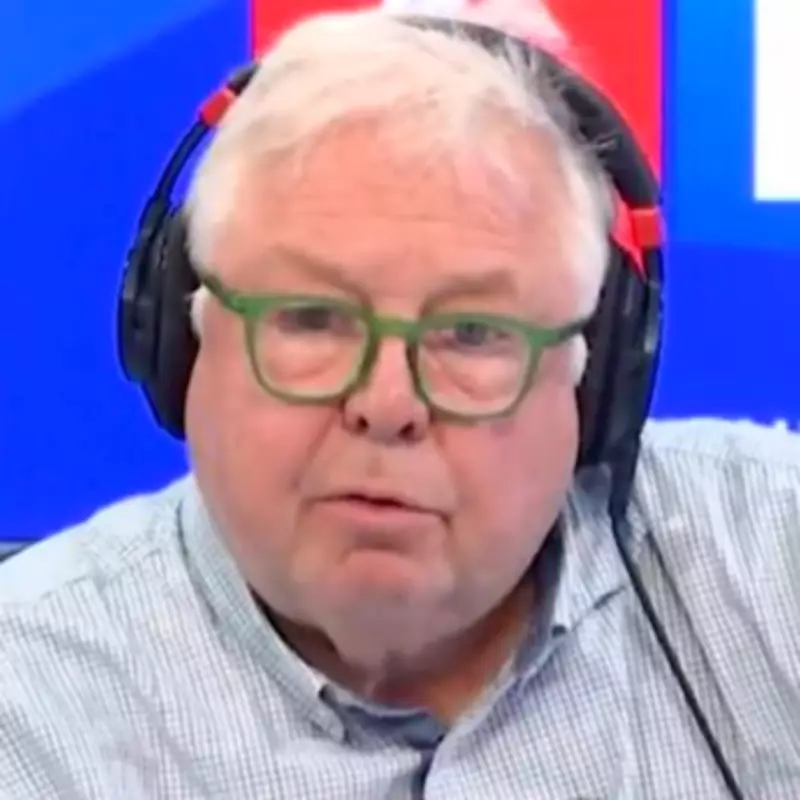
LBC Host Nick Ferrari Clashes with Minister Over Election U-Turn
In a fiery live radio exchange, LBC presenter Nick Ferrari has launched a scathing attack on the Labour government, branding it a "bloody shambles" over its decision to reverse plans to postpone local elections. The heated confrontation occurred during an interview with Health Minister Stephen Kinnock, who admitted the government's U-turn was "not ideal" but defended the administration's commitment to following legal advice.
Minister Defends Government's Position
Stephen Kinnock, speaking on LBC's morning programme, acknowledged that the decision to abandon plans to delay council elections in May was less than perfect. The original proposal would have postponed votes in 30 areas until 2027, affecting millions of voters across England. However, following a legal challenge from Nigel Farage's Reform UK party, the Ministry of Housing, Communities and Local Government performed a dramatic reversal yesterday.
"That legal advice has now changed. That is not ideal. I'm not going to stand here and pretend to you that it is," Kinnock stated during the interview. "But we're a government that works with the rule of law."

Ferrari's Scathing Criticism
Nick Ferrari responded with characteristic bluntness, accusing the Labour administration of making too many policy reversals since coming to power. The veteran broadcaster specifically cited U-turns on inheritance tax for farmers and compensation for WASPI women as examples of what he termed government inconsistency.
"This government is a bloody shambles," Ferrari declared during the heated exchange. His criticism extended to questioning whether Keir Starmer remained the right person to lead the Labour Party, particularly in light of recent challenges to his leadership following the Peter Mandelson and Jeffrey Epstein scandal fallout.
Kinnock's Defence of Starmer
Minister Kinnock robustly defended the Prime Minister, dismissing suggestions that Labour needed a change in leadership. "Keir Starmer is absolutely the right man to take us forward," he asserted. "Just think about the carousel of chaos that we had with the Tories. This is about government taking difficult decisions and sometimes the conditions change."
The health minister emphasized that the original decision to postpone elections had been made based on legal advice at the time, and that the government's subsequent reversal reflected updated legal guidance rather than political weakness.
Practical Consequences for Councils
The U-turn has created significant practical challenges for local authorities, with electoral administrators now facing what they describe as a "race against time" to organize elections that had been planned for postponement. City councils in Lincoln, Exeter, Norwich, Peterborough and Preston were among those where ballots had been scheduled for cancellation but will now proceed on May 7.
Laura Lock, deputy chief executive of the Association of Electoral Administrators, expressed deep concern about the situation. "We are extremely disappointed returning officers, electoral registration officers and electoral administration teams have lost months of essential planning time for reinstated May 7 elections," she stated.
Lock explained the particular complexity of local elections compared to general elections, noting that electoral teams now face "an uphill struggle to catch up to where they should be" after having paused planning to avoid unnecessary costs.
Government Response and Financial Support
In response to the challenges facing local authorities, Communities Secretary Steve Reed has announced plans to provide additional financial support. A £63 million fund will be made available to 21 local authorities undergoing structural changes to help them manage the reinstated elections.
"I recognise that many of the local councils undergoing reorganisation voiced genuine concerns about the pressure they are under as we seek to deliver the most ambitious reforms of local government in a generation," Reed told affected councils in a written communication.

The government's formal statement confirmed the policy reversal, with an MHCLG spokesman stating: "Following legal advice, the Government has withdrawn its original decision to postpone 30 local elections in May. Providing certainty to councils about their local elections is now the most crucial thing and all local elections will now go ahead in May 2026."
Political Fallout and Financial Implications
The U-turn carries significant political and financial consequences. The taxpayer will now be required to foot the bill for Reform UK's legal costs following their successful challenge to the original postponement plans. This adds to the pressure on Keir Starmer's administration, which has faced criticism over multiple policy reversals in recent months.
The episode highlights the ongoing tension between government policy-making and legal constraints, with ministers forced to balance political objectives against legal advice that can change as circumstances evolve. For electoral administrators and local councils, the sudden reversal means compressed timelines and increased pressure as they work to deliver democratic processes that had been temporarily suspended.





