

More than a year into Donald Trump's non-consecutive second term, the Democratic Party finds itself in a state of profound disarray, with its lawmakers now more unpopular than ever according to recent polls. The opposition's resistance to the Trump administration has faltered, leading strategists to issue urgent warnings about the need for a drastic change in strategy ahead of the crucial 2026 midterm elections.
A Fractured Party and a Leadership Vacuum
Political analysts point to a deeply "fractured" Democratic Party and a glaring absence of coherent leadership as the core reasons for the decline. Republican strategist Susan Del Percio, a never-Trumper, told The Independent that voters are left asking, "what are Democrats really doing?". She emphasised the need for the party to present a clear vision, stating, "How are you helping? What are you proposing? Give me something."
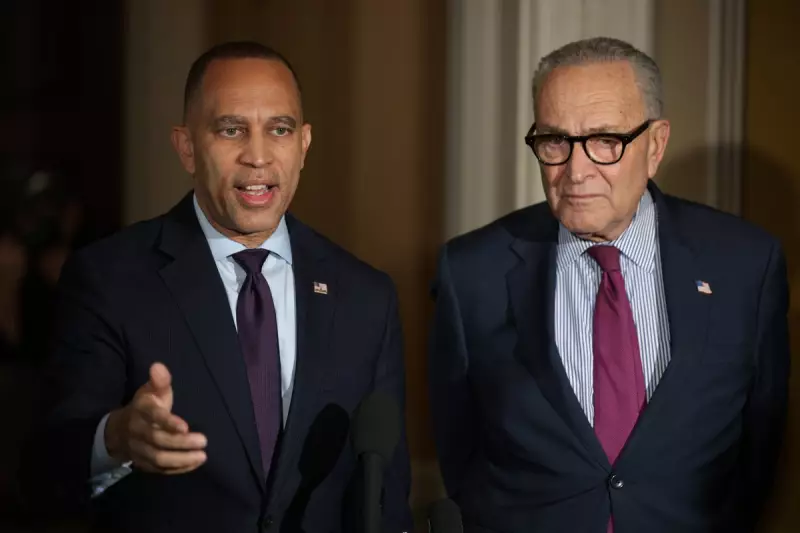
Criticism has been particularly sharp towards Senate Minority Leader Chuck Schumer and House Minority Leader Hakeem Jeffries. Del Percio went so far as to suggest that the best thing Schumer could do for Democratic leadership is to announce he will not seek re-election in 2028. Schumer's perceived weakness was epitomised by an incident in April 2025, where his claim to have sent Trump a "very strong letter" with questions about a Harvard funding freeze was widely mocked, including by comedian Jon Stewart on The Daily Show.

Historic Lows in Public Approval
The tangible result of this strategic failure is a dramatic slump in public support. A December Gallup poll recorded a mere 24 percent job approval rating for congressional Democrats, described as lower than any prior measurement. A Quinnipiac University poll from the same month showed an even more dire 18 percent approval rating, a record low for the organisation.
Democratic strategist Christy Setzer argues the public sees a party that is "not going far enough" and is "demoralised by the lack of action." She cited potential internal splits over issues like funding for Immigration and Customs Enforcement (ICE) as examples that baffle ordinary voters and undermine confidence in the leadership.
Trump's Consolidation of Power and Democratic Hopes for 2026
While Democrats flounder, President Trump has solidified support in unexpected quarters. Major tech giants like Google, Meta, and Amazon donated to his inaugural fund, with leaders including Mark Zuckerberg, Jeff Bezos, and Sundar Pichai attending the inauguration. Celebrity backing has also grown, with figures like rapper Nikki Minaj and actor Sylvester Stallone voicing support, a shift some attribute to a reaction against "cancel culture."
Despite the bleak landscape, Democrats are preparing for the 2026 midterms, hoping to capitalise on the historical trend where the president's party loses ground. The Cook Political Report has moved 18 House races in favour of Democrats as of 15 January 2026. Party chair Ken Martin has highlighted local victories and a focus on kitchen-table issues like healthcare, groceries, and jobs.
However, potential 2028 presidential hopefuls like California Governor Gavin Newsom and Illinois Governor JB Pritzker are already waging individual battles with the administration, a distraction strategists warn against. Del Percio's advice is stark: "I highly recommend: don’t talk about 2028 right now. I’d stick to 2026 if I were the Democrats." The party's immediate future hinges on unifying behind a compelling, voter-centric message, a task that so far has proved elusive.






