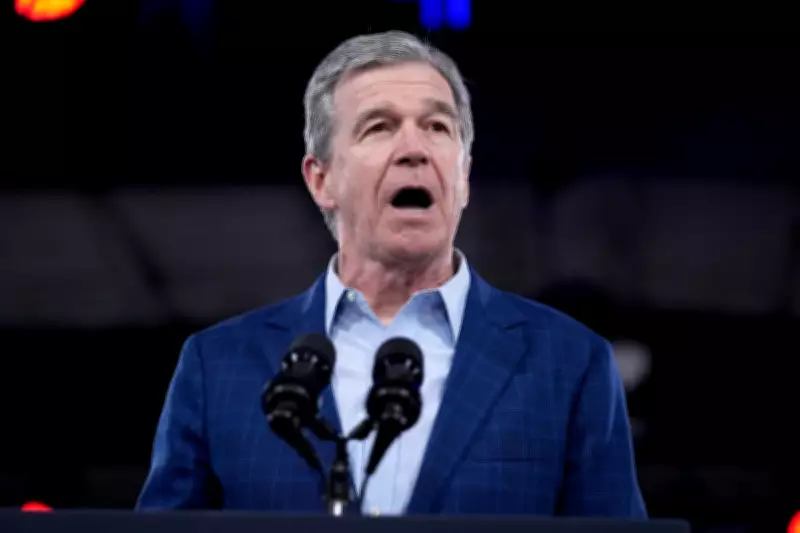
Cooper and Whatley Secure Nominations in North Carolina Senate Primaries
North Carolina is poised for a crucial U.S. Senate contest this autumn, with former Democratic Governor Roy Cooper and former Republican National Committee Chairman Michael Whatley clinching their respective party nominations on Tuesday. These victories establish a high-stakes electoral battle that could ultimately decide which political party controls the Senate chamber in Washington.
Crowded Primary Fields Yield Clear Winners
Both Whatley and Cooper emerged triumphant from crowded primary fields, competing for the seat being vacated by Thom Tillis. Tillis announced last June that he would not seek a third term, creating an open race that has attracted significant national attention. Weeks after Tillis's decision, both candidates declared their intentions, largely bypassing intraparty rivals to focus their campaigns directly on each other from the outset.
Cooper's entry into the race has invigorated Democratic hopes across the state and nation. Democrats are aiming to gain four seats to reclaim the Senate majority this year, with political analysts viewing their most likely path as victories in North Carolina, Maine, Alaska and Ohio. Cooper, a popular two-term governor with 24 consecutive years in statewide office, is seen as a particularly strong contender for Democrats in this crucial battleground state.

Trump's Influence Shapes Republican Nomination
Whatley, a former state GOP chairman, launched his campaign following a crucial endorsement from former President Donald Trump. This endorsement came after Lara Trump, the president's daughter-in-law, opted not to run for the seat. Donald Trump has consistently won North Carolina in all three of his presidential elections, giving Whatley significant credibility with the Republican base.
Tillis's decision not to seek a third term came as the former president called publicly for a primary challenge against him, primarily due to Tillis's opposition to Trump's major tax legislation, particularly the Medicaid cuts contained within that bill. Cooper, 68, formally entered the race weeks after Tillis's announcement, as did Whatley, who was buoyed for the nomination by Trump's strong backing.
Financial and Political Dynamics of the Race
While Cooper currently maintains a significant fundraising advantage over Whatley, both candidates are recognized as skilled solicitors within the donor classes of their respective parties. Political experts predict that a rush of outside money for and against the pair could make this race among the most expensive Senate campaigns in American history.
A Democrat hasn't won a Senate race in usually competitive North Carolina since 2008, but national Republican campaign strategists acknowledge that Cooper's presence makes the seat more difficult for Republicans to hold. Cooper hasn't lost a North Carolina election going back to his first campaign for the state House in the mid-1980s. However, Democrats haven't always successfully translated their state government success to winning federal offices in this closely divided state.
Candidate Backgrounds and Campaign Themes
Whatley, 57, resides outside Charlotte and brings a diverse political background to the race. His career has included working in President George W. Bush's administration, serving former North Carolina Senator Elizabeth Dole, and working as an oil and gas lobbyist before his political appointments.
Cooper and his allies have centered their campaign attacks on Whatley's loyalty to former President Trump and Trump policies that they argue are raising costs on families or harming vulnerable populations. They've linked Whatley to the former president's tariffs, Medicaid spending reductions, and what they characterize as the piecemeal distribution of aid by the Trump administration to mountain communities devastated by Hurricane Helene in 2024.
"I want to make sure that I'm a strong, independent senator who can work with this president when I can, stand up to him when I need to, and recognize that people are struggling right now," Cooper told supporters recently at a Raleigh voting site.

Policy Contrasts and Accusations
Whatley has continued to align closely with Trump, arguing that the former president's initiatives are cutting taxes, reducing wasteful spending, and rebuilding American military strength globally. "I will be a true America First partner to President Trump and deliver real results for North Carolina families," he stated in a recent campaign declaration.
As a sign of Trump's personal interest in the race, the former president brought Whatley onto the stage at Fort Bragg to speak during an event honoring special forces members who participated in the Venezuela operation last month to oust former President Nicolás Maduro.
Whatley blames Cooper for promoting what he calls "an extreme radical-left ideology" that has brought inflation and unfettered immigration to the forefront of national concerns. Whatley, Trump, and other Republicans have accused Cooper of promoting soft-on-crime policies while governor that they claim have led to negative outcomes, particularly referencing last August's fatal stabbing of Ukrainian refugee Iryna Zarutska on a Charlotte light-rail train. The suspect in that case had more than a dozen prior criminal arrests before his most recent charges.
Cooper firmly rejects such accusations and has countered by telling reporters that he has a career of "prosecuting violent criminals and keeping thousands of them behind bars." The stage is now set for what promises to be one of the most closely watched and expensive Senate races in the country this election cycle.