BNP Secures Landslide Victory in Bangladesh's Historic Post-Hasina Election
In a landmark moment for Bangladesh's political landscape, the Bangladesh Nationalist Party (BNP) has declared a decisive win in the country's 13th general election. This election, held on Thursday in Dhaka and across the nation, represents the first democratic vote since a youth-led uprising toppled the autocratic regime of Sheikh Hasina after 15 years in power.
A Peaceful Vote Amid Democratic Renewal
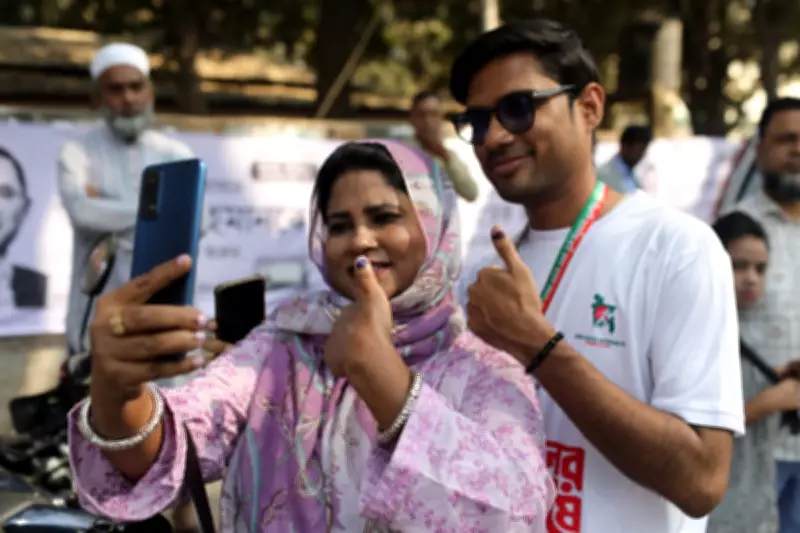
Voting proceeded largely peacefully, with turnout projected to exceed 60%, a significant increase from the 42% recorded in the previous 2024 election. This high participation underscored the election's role as a critical test of Bangladesh's democracy following years of political unrest and repression under Hasina's rule. The parliamentary election followed a student-led uprising that resulted in an estimated 1,400 deaths, according to UN reports, amid a violent state crackdown.
BNP's Commanding Lead and Promises for Change
By early Friday morning, local TV channels reported that the BNP, led by Tarique Rahman, had secured 185 seats in the 300-member Jatiya Sangsad, easily crossing the halfway mark for a simple majority. Party leaders expressed confidence in achieving a two-thirds majority, with predictions of winning up to 200 seats. Salahuddin Ahmed, a prominent BNP committee member, stated, "This victory was expected. It is not surprising that the people of Bangladesh have placed their trust in a party capable of realising the dreams that our youth envisioned during the uprising." He emphasized that the focus now shifts to addressing challenges in building a discrimination-free nation.

The BNP's campaign platform included financial aid for impoverished families, a constitutional limit of ten years for any individual serving as prime minister, economic revitalization through foreign investment, and robust anti-corruption measures. In a post on X, the party confirmed, "The Bangladesh Nationalist Party is going to form the government by winning the majority of seats." The US embassy was among the first to extend congratulations, hailing the outcome as a "historic" election victory.
Contrast with Hasina's Era and Concessions from Rivals
This election was widely regarded as Bangladesh's first free and fair poll in over 17 years, contrasting sharply with the previous three elections under Hasina's regime, which were marred by allegations of vote-rigging, ballot box stuffing, and the harassment and imprisonment of political opponents. Hasina's Awami League party, barred from contesting, denounced the election as a "carefully planned farce" in a statement after polling closed, demanding its cancellation and calling for a new inclusive vote under a neutral caretaker government.
Shafiqur Rahman, head of the Islamist Jamaat-e-Islami, the BNP's main rival, conceded defeat as his party secured only 56 seats. He pledged to engage in "positive politics" rather than opposition for its own sake. The election featured over 2,000 candidates, including many independents, with at least 50 parties contesting seats—a national record. Voting in one constituency was postponed due to a candidate's death.
Referendum on Constitutional Reforms and Regional Implications
Alongside the election, a referendum was held on constitutional reforms, proposing measures such as establishing a neutral interim government for future election periods, restructuring parliament into a bicameral legislature, increasing women's representation, strengthening judicial independence, and introducing a two-term limit for the prime minister. No official outcome has been announced yet.
Hasina's escape to India after a war crimes tribunal sentenced her to death for crimes against humanity has strained relations between Dhaka and New Delhi, potentially opening opportunities for China to expand its influence in Bangladesh. Human rights groups and the UN have documented widespread suppression of dissent under Hasina's rule, including disappearances, torture, and killings in secret jails, with many victims emerging only after her overthrow.

This election outcome is seen as crucial for stability in the Muslim-majority nation of 175 million, following months of anti-Hasina unrest that disrupted daily life and impacted key industries like the garment sector, where Bangladesh is the world's second-largest exporter. As the BNP prepares to form a government, the focus now turns to fulfilling its promises and navigating the complex challenges of post-Hasina governance.