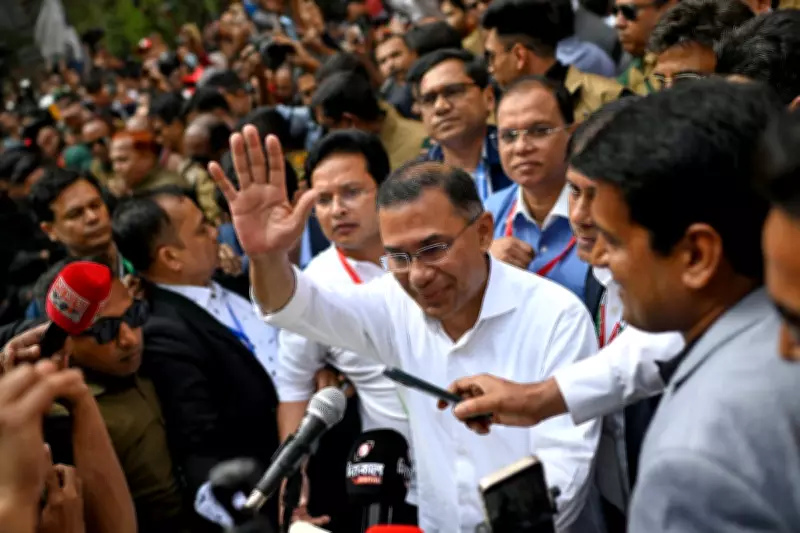
Bangladesh Nationalists Secure Decisive Victory in Historic Post-Uprising Election
The Bangladesh Nationalist Party (BNP) has declared a landslide triumph in the country's first parliamentary election following the transformative 2024 student-led uprising that resulted in the ouster of long-serving prime minister Sheikh Hasina. This pivotal vote, held on Thursday amid heightened security and widespread democratic concerns, marks what many observers describe as Bangladesh's first genuinely competitive election in years.
Overwhelming Parliamentary Majority Secured
According to multiple local television networks and media outlets, the BNP-dominated coalition has secured an overwhelming two-thirds majority in the 300-member parliament. Preliminary counts indicate the coalition captured 209 seats, with the BNP itself winning 151 seats according to Ekattor TV reports. This decisive result comfortably surpasses the halfway mark required to govern independently.
Despite the absence of official confirmation from the Election Commission, the BNP's media unit confidently announced they had obtained sufficient parliamentary seats to form a government without coalition partners. The election witnessed a substantial voter turnout exceeding 60 percent, reflecting significant public engagement in this historic democratic exercise.

Tarique Rahman Poised for Leadership Role
Tarique Rahman, the 60-year-old son of former prime minister Khaleda Zia, is expected to be sworn in as Bangladesh's next prime minister on 17 February. Mr. Rahman returned to his homeland in December after spending seventeen years in self-imposed exile in London, following multiple corruption and criminal cases pursued by the previous Awami League government—charges he has consistently denied as politically motivated.
During his campaign, Mr. Rahman outlined an ambitious platform including financial assistance programs for impoverished families, constitutional amendments to impose a ten-year limit on prime ministerial terms, economic revitalization through foreign investment incentives, and comprehensive anti-corruption measures designed to restore institutional integrity.
International Reactions and Domestic Celebrations
The United States embassy in Dhaka extended congratulations to Mr. Rahman and the BNP, characterizing the outcome as a "historic victory" and expressing anticipation for collaborative efforts toward shared prosperity and security objectives. India, despite recent diplomatic tensions with Bangladesh, was among the first nations to offer congratulations, with Prime Minister Narendra Modi emphasizing continued support for a "democratic, progressive and inclusive Bangladesh."
Celebrations erupted spontaneously outside the Election Commission headquarters as preliminary results indicated the BNP's mounting success. The party issued statements expressing gratitude to voters while urging supporters to avoid organized victory processions, instead encouraging special prayers at mosques, temples, churches, and pagodas nationwide for the country's welfare.
Opposition Concessions and Hasina's Rejection
Shafiqur Rahman, leader of the Islamist Jamaat-e-Islami party that formed the BNP's primary opposition alliance, conceded defeat after his coalition secured merely 68 parliamentary seats. He committed to "positive politics" rather than reflexive oppositionism. The National Citizen Party, comprising youth activists instrumental in Hasina's ouster, managed only five seats from thirty contested.
Former prime minister Sheikh Hasina, currently in self-imposed exile in India, denounced the electoral process as a "carefully planned farce" conducted without her Awami League's participation and lacking genuine voter engagement. She demanded election cancellation, removal of restrictions on her party's activities, and organization of fresh elections under neutral caretaker governance.
Historical Context and Future Implications
This election represents a watershed moment for Bangladesh, which has experienced democratic backsliding, escalating political violence, and erosion of rule-of-law institutions in recent years. For much of the past fifteen years, the BNP remained in opposition, boycotting multiple elections while accusing Hasina's administration of systematic vote manipulation and political repression.

Muhammad Yunus, who led the interim government following Hasina's removal, characterized election day as "like Eid," expressing optimism about "creating a new Bangladesh." The political transition has already influenced regional dynamics, with Hasina's exile to India straining Dhaka-New Delhi relations and potentially creating opportunities for expanded Chinese influence in South Asia.
Millions of Bangladeshi citizens participated in this crucial democratic test, viewing it as an opportunity to transform public protest energy into substantive political reform and restore confidence in democratic institutions after years of turmoil and polarization.