
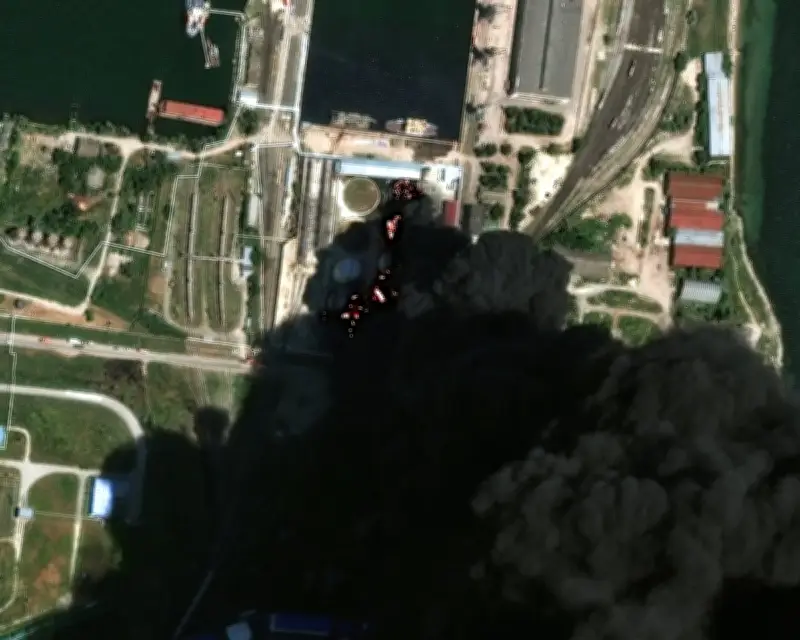
Ukraine has intensified its military campaign against Russian-occupied Crimea, launching a series of strikes designed to increase the cost of Moscow's continued control over the peninsula. The strategy, confirmed by Ukrainian officials, focuses on degrading Russian military capabilities and logistics in the region.
Escalation of Attacks
In recent weeks, Ukrainian forces have targeted multiple Russian military installations in Crimea, including air defense systems, ammunition depots, and command centers. According to the Ukrainian military, these operations aim to disrupt Russia's ability to sustain its occupation and to protect Ukrainian forces operating in southern Ukraine.
“We are systematically destroying the enemy's military infrastructure in Crimea,” said a spokesperson for Ukraine's Southern Defense Forces. “Every strike reduces Russia's capacity to threaten our troops and civilians.”
Strategic Objectives
The intensified attacks are part of a broader Ukrainian strategy to make Crimea a liability for Russia. By striking key assets, Ukraine hopes to force Russia to divert resources to defend the peninsula, weakening its positions elsewhere. Military analysts note that Crimea serves as a critical hub for Russian logistics and air power in the Black Sea region.
“Ukraine is trying to raise the cost of occupation to a point where Russia must reconsider its presence,” said retired Ukrainian general Serhiy Kryvonos. “The goal is to make Crimea untenable for Russian forces.”
Impact on Russian Forces
Recent Ukrainian strikes have reportedly damaged several Russian S-400 air defense systems and a major ammunition depot near Sevastopol. Satellite imagery analyzed by open-source intelligence groups confirms significant damage to military infrastructure. The attacks have also disrupted supply routes, forcing Russia to rely on longer and more vulnerable logistics chains.
“The strikes have degraded our air defense coverage and created logistical bottlenecks,” a Russian military source told independent media. “We are having to reposition assets to compensate.”
Western Support and Weapons
Ukraine's ability to strike deep into Crimea is bolstered by Western-supplied weapons, including long-range missiles and drones. The United States and United Kingdom have provided Storm Shadow and ATACMS missiles, which have been used in recent attacks. However, some Western allies remain cautious about strikes on Crimea, fearing escalation.
“We support Ukraine's right to defend itself, including targeting military objectives in Crimea,” a US State Department official said. “But we continue to monitor the situation closely.”
Russian Response
Russia has condemned the strikes as acts of terrorism and vowed to retaliate. The Kremlin has accused Ukraine of targeting civilian infrastructure, though Ukrainian officials deny this. Moscow has reinforced its air defenses in Crimea and launched missile attacks on Ukrainian energy infrastructure in response.
“These attacks will not go unanswered,” said Russian Defense Minister Andrei Belousov. “We will take all necessary measures to protect our territory and forces.”
Broader Implications
The intensified campaign comes as Ukraine prepares for a potential counteroffensive in the south. By neutralizing Russian assets in Crimea, Ukraine aims to create conditions for advances on the mainland. The strategy also sends a political signal that Ukraine will not cede Crimea, which Russia annexed in 2014.
“Crimea is Ukrainian territory, and we will continue to liberate it by all means necessary,” Ukrainian President Volodymyr Zelenskyy said in a recent address. “The occupation must end.”
As the conflict enters its third year, the battle for Crimea is expected to remain a central focus. The outcome could shape the future trajectory of the war and the broader security landscape in Eastern Europe.




