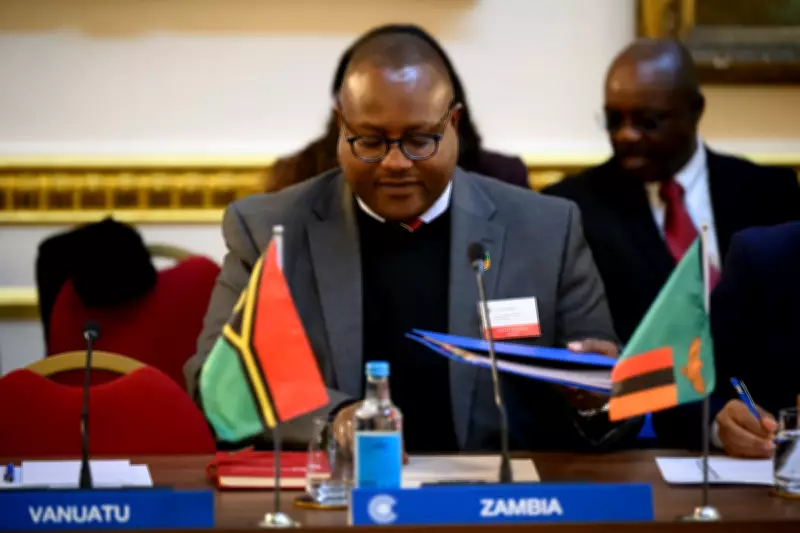
Zambia has accused the United States of attempting to link a $2 billion health assistance deal to access to its critical mineral assets, with officials in Lusaka branding corruption allegations by the US ambassador as 'mischievous' and 'undiplomatic'. The dispute marks a significant rift between the two nations as Washington seeks to reshape its aid strategy in Africa under the Trump administration.
Failed Negotiations Over Data and Minerals
Zambia's Minister of Foreign Affairs, Mulambo Haimbe, stated that negotiations stalled due to what he described as 'unacceptable' data-sharing demands that violate citizens' privacy, as well as the US insistence on preferential treatment for American companies regarding mineral extraction. The deal, initially framed as a health assistance package, would have provided $2 billion to strengthen Zambia's healthcare system.
Haimbe told reporters that the US ambassador, Michael Gonzales, had made corruption allegations against Zambian officials when talks broke down, which the minister dismissed as a tactic to pressure the country into accepting terms that compromise its sovereignty. 'These allegations are mischievous and undiplomatic,' Haimbe said. 'We will not be bullied into signing agreements that undermine our people's privacy and our nation's resources.'

Transactional Approach to Aid
The US strategy under President Donald Trump is reshaping aid to Africa from traditional assistance to more transactional agreements. These often include commercial provisions, domestic financing commitments, and sensitive health data sharing. The new approach aims to reduce donor dependency, promote local ownership, and counter China's growing influence in Africa, particularly concerning minerals vital for green energy technologies.
Zambia holds significant reserves of copper and cobalt, both essential for electric vehicle batteries and renewable energy infrastructure. The US has been seeking to secure access to these critical minerals as part of a broader strategy to reduce reliance on Chinese supply chains.
Replacing PEPFAR and Other Programs
The new US model replaces longstanding programmes like the President's Emergency Plan for AIDS Relief (PEPFAR), which has saved millions of lives across Africa. Critics argue that while PEPFAR focused on health outcomes without commercial strings, the new deals tie health funding to economic and geopolitical objectives.
Other African nations have also expressed concerns. Ghana, Zimbabwe, and Kenya have either rejected or put on hold similar US deals due to worries over data privacy, lack of guaranteed access to medical innovations, and the opaque nature of negotiations. In Ghana, officials cited insufficient clarity on how health data would be used, while Zimbabwe raised concerns about the lack of firm commitments to provide affordable medicines.
A Broader Pattern of Rejection
The Zambian rejection is part of a growing pattern across the continent, where governments are increasingly wary of what they see as conditional aid that undermines national sovereignty. The US insistence on preferential treatment for its companies in mineral sectors has been a particular sticking point, with leaders arguing that such terms amount to economic colonialism.
Analysts suggest that the Trump administration's transactional approach may backfire if it alienates key African partners. 'Countries like Zambia are seeking partnerships, not patronage,' said Dr. Chisala Mwansa, a political analyst at the University of Lusaka. 'When aid is tied to resource access, it raises questions about who truly benefits.'
The Zambian government has reiterated its willingness to negotiate a health deal that respects privacy and sovereignty, but remains firm that it will not accept terms that compromise its national interests. The US embassy in Lusaka has not commented on the specific allegations but has stated that it remains committed to working with Zambia on mutual priorities.