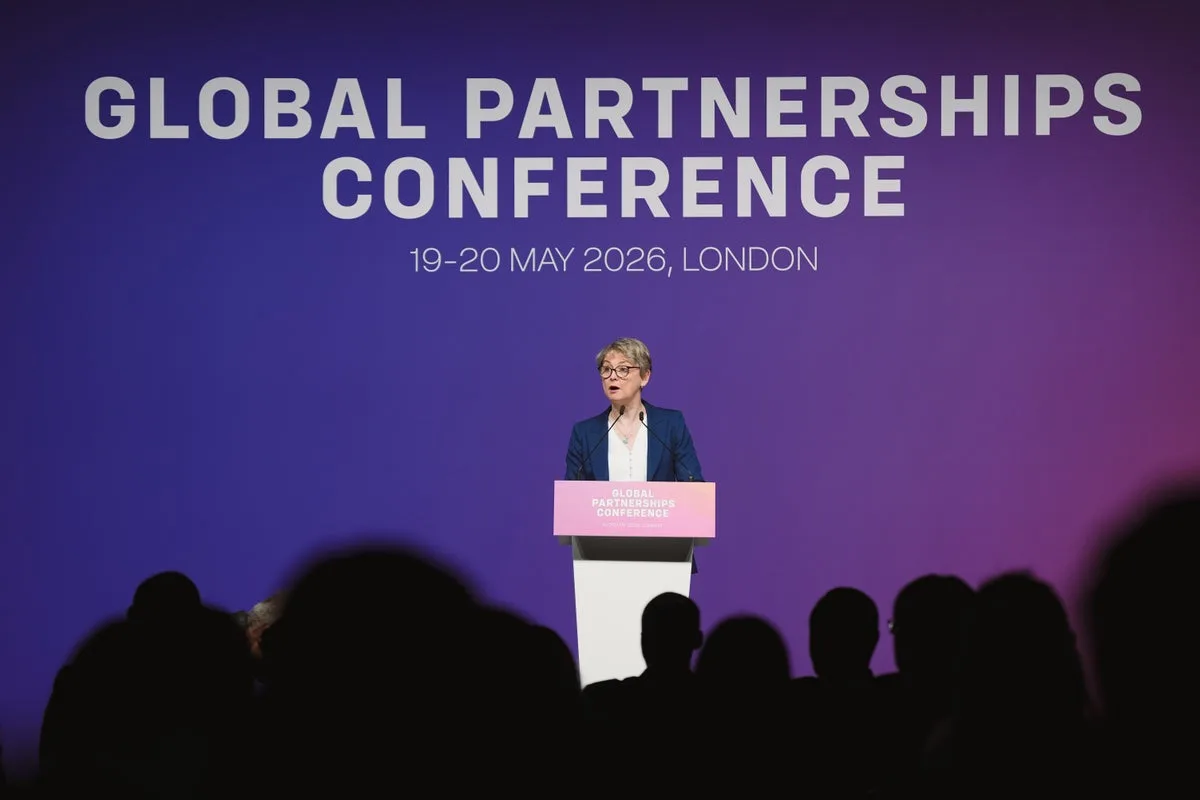
Yvette Cooper on UK Foreign Policy: Navigating Global Crises and Diplomatic Tensions
Foreign Secretary Yvette Cooper, photographed at the Foreign Office in February, has been at the centre of intense diplomatic activity. In an exclusive interview, she reflects on the UK's stance amid the ongoing US-Israeli bombardment of Iran, her meetings with international figures, and the principles guiding British foreign policy.
Security and Solemnity at the Foreign Office
Before Cooper joins the interview in a plush side room at the Foreign Office, an aide draws heavy anti-shrapnel curtains, a stark reminder of the security concerns amid the conflict. Outside, Horse Guards Parade and Downing Street are visible, but the mood is solemn as news reports show oil facilities and desalination plants ablaze in Iran and Gulf states. Over 1,800 people have been killed, including schoolgirls in Minab, south Iran, in what a New York Times investigation suggests was a US precision strike.
Cooper, who became foreign secretary in September, is on a call with the "shocked and angry" Omani foreign minister, one of many from Gulf allies. Meanwhile, officials are airlifting Britons from affected areas. Donald Trump has criticised Prime Minister Keir Starmer for refusing to allow US troops to use British bases for initial strikes, but the two leaders have spoken since the war began.
Diplomatic Engagements and Unrecorded Moments
In the preceding weeks, Cooper travelled to Munich for a security conference, New York to address the UN Security Council, and Washington DC to meet US Secretary of State Marco Rubio. She stressed her focus on Sudan's civil war, calling it "the worst humanitarian crisis of the 21st century," and visited Ukraine to mark the fourth anniversary of Putin's war.
However, when missiles hit Tehran, aspects of these trips took on new significance. For instance, during a meeting with Rubio on February 20, they broke away for a private chat that overran by an hour. Cooper's smile seemed brittle when they emerged for cameras. Until the strikes, they had an "excellent" working relationship, communicating daily on Signal. What was said in those unrecorded minutes remains unclear.
Another incident occurred after Cooper's forceful UN statement on Gaza and the West Bank. She was intercepted by Israeli Foreign Minister Gideon Sa'ar for an "unscheduled bilat," arriving 40 minutes late to a reception with pink patches on her cheeks. They had "disagreements," particularly on aid restrictions to Gaza, but details were scarce.
UK Foreign Policy: Law and Principles
Under the high ceilings of the Foreign Office, Cooper emphasises that UK foreign policy is anchored in international law and the rules-based order. She stresses adherence to the UN charter, which protects British interests and values. This informed Starmer's refusal to join US military operations in Iran initially, though he later allowed limited defensive operations after a drone hit RAF Akrotiri in Cyprus.
When asked if the bombing campaign is illegal, Cooper avoids commenting on allies' legal approaches, saying it's for them to justify based on evidence and intention. Her priority is "de-escalation" and pursuing diplomatic routes. She blames Iran for escalating the conflict but does not use similar language for the US or Israel.
Cooper recalls lessons from the Iraq war, stating that decisions must be based on principles and interests, dealing with the world as it is. She reiterates that the UK would act defensively if British citizens are threatened, such as in Dubai, but acknowledges the complexity of relations with Iran.
Challenges and Political Dynamics
The UK faces a tricky position, with officials not ruling out assistance in strikes on Iranian missile depots. Trump's admonishments of Starmer appear as bullying, but Cooper frames it as a difference in view. She scoffs at critics who think the UK should blindly follow the US, calling it "dogma" rather than sensible policy.
On war crimes, Cooper supports evidence-gathering in Sudan and Ukraine, believing in accountability for atrocities. She also discusses her move from Home Secretary to Foreign Secretary, admitting disappointment at leaving domestic policies like violence against women and girls strategies incomplete.
Controversial Decisions and Personal Reflections
Cooper's decision to proscribe Palestine Action, a group disrupting the UK arms industry over Gaza, sparked controversy. The High Court ruled it unlawful, but she defends it based on security advice. She acknowledges the heavy responsibility of the Home Secretary role, comparing it to health in terms of burden.
In politics since 1997, Cooper has navigated boys' clubs and sexist abuse. She feels "really, incredibly angry" about Peter Mandelson's appointment as US ambassador, calling it an "own goal," and discusses his subsequent sacking and severance issues. She also addresses Andrew Mountbatten-Windsor's arrest, emphasising cooperation with police.
Personal Life and Future Ambitions
Cooper's personal life includes a competitive edge, as noted by her husband Ed Balls. She describes challenges as a parent in Westminster, including being the first minister to take maternity leave. Her family enjoys eccentric holidays, though her children now request something calmer.
While some speculate about leadership ambitions, Cooper positions herself in the "middle" of a centre-left party. She acknowledges the need for Labour to reconnect with voters, as seen in the Gorton and Denton byelection, and stresses the importance of international alliances like NATO.
Ongoing Crisis and Diplomatic Silence
As the Middle East conflict intensifies, Cooper expresses concern about escalation and security risks. She reiterates the UK's pursuit of a negotiated settlement but won't shy away from defending allies. When asked about resigning over offensive action or details of working with national security adviser Jonathan Powell, she doesn't answer.
The interview ends as Cooper goes quiet, presumably dealing with urgent matters. Her focus remains on de-escalation and upholding UK principles in a volatile global landscape.






