
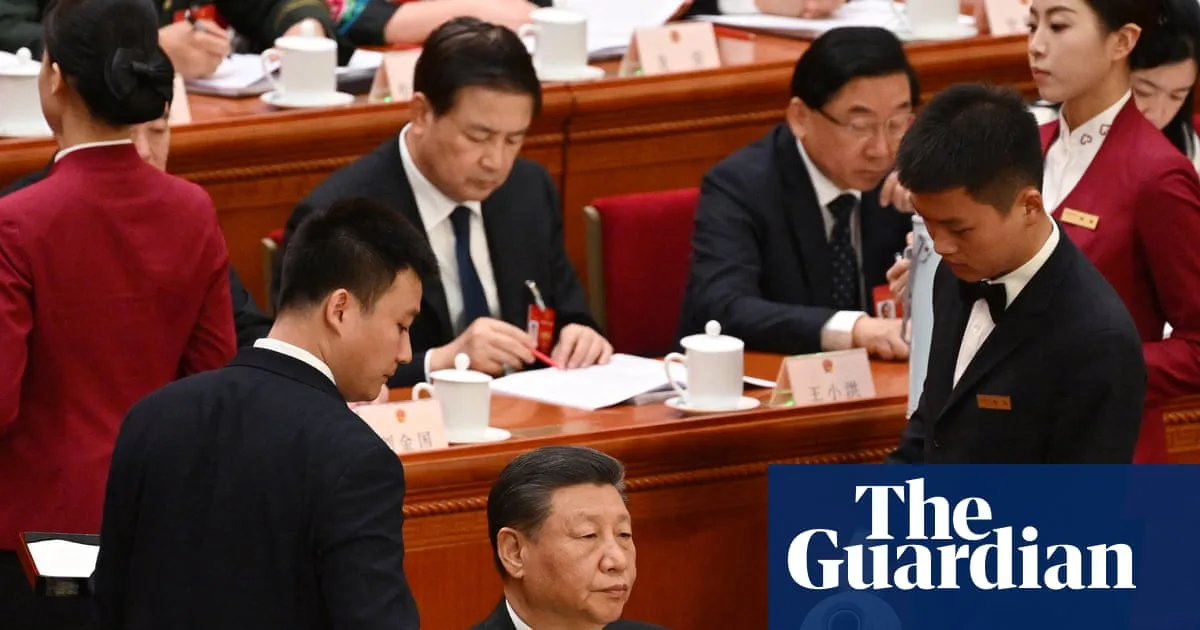
China’s top political advisory body has voted to remove three generals from its ranks, continuing a sweeping military purge ahead of this week’s annual Two Sessions gathering. The advisory body meets on Wednesday, while the National People’s Congress (NPC) – which removed nine generals last week – begins its session on Thursday. The concurrent meetings are among the most important events in China’s political calendar.
The NPC has the power to amend the constitution, appoint officials, enact laws, and approve the budget. In 2018, it scrapped presidential term limits, and in 2023 it elected Xi Jinping to an unprecedented third term. However, the Chinese Communist Party (CCP) remains more powerful than any state organ, and the NPC effectively serves as a rubber-stamp parliament, never having voted down an agenda item.
The military purges cast a shadow over this year’s meetings. Xi recently placed his top general, Zhang Youxia, under investigation for suspected corruption – a highly unusual move amid increasing turmoil in the world’s largest armed forces. A study by the Center for Strategic and International Studies found that more than 100 senior officers have been purged or potentially purged since 2022, a tally described as “staggering”.
“Xi’s military purges will leave empty seats where senior officers once sat – a stark reminder that political loyalty is non-negotiable and that even top generals are expendable if they displease the top leader,” said Neil Thomas, a fellow at the Asia Society thinktank. Despite the upheaval, the opening of the Two Sessions will be marked by pomp and ceremony.
The NPC will release the annual government work report, including the GDP growth target, expected to drop below 5% for the first time. This year’s session also launches the 15th five-year plan (2026-2030), focusing on industrial self-reliance and boosting domestic production of advanced semiconductors to counter US sanctions. Ruby Osman of the Tony Blair Institute noted a likely “mismatch” between short-term goals and the plan’s longer-term emphasis on innovation and shielding from US pressures.
The 2026-2030 window is critical for China’s strategic goals, including Xi’s aim for the military to be capable of a successful assault on Taiwan by 2027. Taiwan is a self-governing island that Beijing claims as part of its territory, and it has not ruled out the use of force for “reunification”. The five-year plan is expected to prioritise technological self-reliance, particularly in artificial intelligence and military applications.




