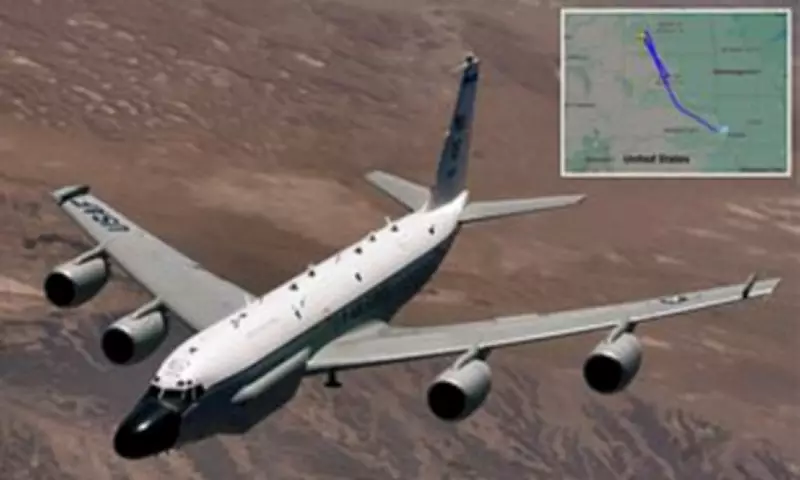
US Spy Aircraft Conducts Mission Over Nuclear Missile Silos
A sophisticated US Air Force Boeing RC-135W Rivet Joint reconnaissance aircraft was observed conducting a significant flight over multiple American states that host the nation's land-based nuclear missile force on Friday. This high-tech spy plane is specifically engineered to provide critical support for theater and national level operations, delivering near real-time intelligence collection, analysis, and dissemination capabilities to military consumers.
Detailed Flight Path and Strategic Locations
According to comprehensive flight tracking data, the jet departed from Offutt Air Force Base located near Omaha, Nebraska, at approximately 9:44 a.m. local time. The aircraft proceeded northward, traversing through the Dakotas in a mission that covered regions of immense strategic importance. The Rivet Joint initially entered South Dakota, flying over central and eastern areas that historically contained Minuteman II missile silos under the jurisdiction of Ellsworth Air Force Base near Rapid City.
The reconnaissance plane then advanced into North Dakota, specifically near Minot, which is recognized as one of the most densely concentrated areas of active missile silos in the entire United States. The 91st Missile Wing stationed at Minot Air Force Base is responsible for overseeing approximately 150 Minuteman III silos dispersed across the rural north-central region of North Dakota, with some installations extending southeast toward Bismarck.

Nuclear Deterrent Context and Broader Implications
The United States currently maintains an arsenal of roughly 400 silo-based Minuteman III intercontinental ballistic missiles across three states: North Dakota, Montana, and Wyoming. These formidable weapons constitute the land-based component of the nation's nuclear deterrent strategy, designed to ensure national security through a credible threat of retaliation.
While military officials have not publicly confirmed the precise objective of Friday's reconnaissance mission, the timing coincides with escalating diplomatic tensions concerning nuclear negotiations with Iran. President Donald Trump expressed clear dissatisfaction with the progress of these talks, stating to reporters as he departed the White House, "I'm not happy with the fact that they're not willing to give us what we have to have. I'm not thrilled with that. We'll see what happens. We're talking later." He further emphasized, "We're not exactly happy with the way they're negotiating. They cannot have nuclear weapons."
Heightened US-Iran Tensions and Regional Dynamics
Relations between the United States and Iran remain notably strained following the latest round of nuclear discussions in Geneva on Thursday, which failed to achieve any substantive breakthrough. American military forces continue to amass in the region, underscoring the persistent volatility. President Trump has explicitly threatened potential military action if Iran refuses to agree to a comprehensive deal that significantly constrains its nuclear program. Conversely, Iran maintains its right to enrich uranium for peaceful purposes and vehemently denies any pursuit of nuclear weapons.
Aircraft Specifications and Historical Missions
The RC-135W Rivet Joint is a formidable intelligence-gathering platform operated by the 55th Wing and 45th Reconnaissance Squadron based at Offutt Air Force Base. During Friday's operation, the aircraft executed four distinct loops, circling above historic Minuteman II missile sites. The Rivet Joint is crewed by more than 30 personnel, including cockpit crew, electronic warfare officers, intelligence operators, and in-flight maintenance technicians, all working in concert to detect, identify, and geolocate electronic signals for immediate intelligence purposes.

This mission follows a pattern of notable reconnaissance activities. Last year, the same Rivet Joint aircraft was tracked on a mysterious operation over the Gulf of California in Mexico, a region infamous as a stronghold for powerful drug cartels. Tracking data from that incident showed the aircraft taking off from Offutt Air Force Base, flying southwest to California, then proceeding south along the western coast of the Baja California peninsula before moving north into the Gulf of California and returning to base. The aircraft remained in international airspace during that mission, avoiding Mexican territorial waters, but operated in an area heavily influenced by the notorious Sinaloa Cartel. US-Mexico relations continue to be strained due to ongoing issues with drug smuggling and illegal immigration into the United States.