Global Leaders Urge Return to Negotiations Following US-Israeli Strikes That Kill Iranian Leader
World leaders have issued urgent calls for calm and a resumption of diplomatic talks after coordinated military strikes by the United States and Israel resulted in the death of Iran's Supreme Leader Ayatollah Ali Khamenei. The unprecedented attack has heightened concerns about potential regional escalation as Iran vows retaliation and international tensions reach critical levels.
Uncertain Future for Iran After Leadership Vacuum
A massive explosion rocked Tehran on Sunday morning as Israeli forces targeted what they described as the "heart" of the Iranian capital. This followed Israeli statements about clearing a path to Tehran the previous day. Meanwhile, Iran continued its retaliation campaign against US military bases in Gulf states, creating a dangerous cycle of violence.
The elimination of Khamenei, who had no designated successor, creates profound uncertainty about Iran's political future and exacerbates existing fears of broader regional conflict. However, the development has also generated hope among Iranians who have endured decades of political repression under the current regime.
International Reactions and Diplomatic Maneuvering
German Chancellor Friedrich Merz addressed the complex situation on Sunday, acknowledging the legal ambiguities surrounding the US-led attack while expressing Germany's alignment with the operation's objectives. "The Federal Government shares the relief of many Iranians that this mullah regime is now coming to an end," Merz stated. "Together with the United States and Israel, we share the interest in ending this regime's terror and stopping its dangerous nuclear and ballistic armament."
Merz outlined four principles for Germany's approach moving forward:
- Establishing a new Middle Eastern order where all neighbors recognize Israel's right to exist
- Pursuing a treaty requiring Iran to abandon its nuclear and ballistic missile programs
- Supporting Iran's future economic development
- Assisting Iranians in freely determining their political future
Security Threats and Military Responses
British Defense Minister John Healey revealed on Sunday that Iranian missile and drone strikes came dangerously close to approximately 300 British military personnel stationed in Bahrain. He further disclosed that two missiles were fired toward Cyprus, where the United Kingdom maintains military bases.
"We don't believe they were targeted at Cyprus, but nevertheless, it's an example of how there is a very real and rising threat from a regime that is lashing out widely across the region, and that requires us to act," Healey told Sky News. He confirmed that British aircraft would intercept any Iranian drones or missiles detected in the region.
Cyprus government spokesman Constantinos Letymbiotis disputed reports of missile threats, stating there was "no indication whatsoever that any threat to the country has occurred."
European Union Emergency Response
Top diplomats from all 27 European Union nations convened an emergency meeting on Sunday to discuss the Iranian crisis and determine the bloc's next steps. EU foreign policy chief Kaja Kallas described the moment as historic, stating, "The death of Ali Khamenei is a defining moment in Iran's history. What comes next is uncertain. But there is now an open path to a different Iran, one that its people may have greater freedom to shape."
Global Diplomatic Appeals
Pope Leo XIV expressed "profound concern" about the US and Israeli strikes, urging both sides to "stop the spiral of violence before it becomes an irreparable abyss." During a United Nations Security Council session on Saturday, Secretary-General António Guterres and numerous member states called for an immediate halt to attacks and a return to negotiations to prevent regional expansion of the conflict.
"The alternative," Guterres warned, "is a potential wider conflict with grave consequences for civilians and regional stability."
Cautious Regional Responses
Many nations, including several Middle Eastern countries cautious about straining relations with the United States, refrained from directly commenting on the joint strikes but condemned Tehran's retaliatory actions. The 22-nation Arab League characterized Iranian attacks as "a blatant violation of the sovereignty of countries that advocate for peace and strive for stability."
Anwar Gargash, an adviser to the United Arab Emirates' president, addressed the Iranian leadership directly: "Return to your senses ... and deal with your neighbors with reason and responsibility before the circle of isolation and escalation widens."
International Condemnation and Legal Concerns
Russian leader Vladimir Putin strongly criticized Khamenei's killing, calling it "a cynical violation of all norms of human morality and international law." Chinese Foreign Minister Wang Yi, in a phone conversation with Russian counterpart Sergey Lavrov, stated that "the blatant killing of the leader of a sovereign state and the incitement of regime change are unacceptable" and violate "international law and the basic norms governing international relations."
Global Protests and Celebrations
The aftermath has sparked contrasting reactions worldwide. In Karachi, Pakistan, at least nine people died during clashes after hundreds of protesters stormed the US Consulate. In Iraq's Sadr City, hundreds marched wearing black and waving flags of Iran-backed militias and red Shiite Muslim vengeance flags to condemn Khamenei's killing.
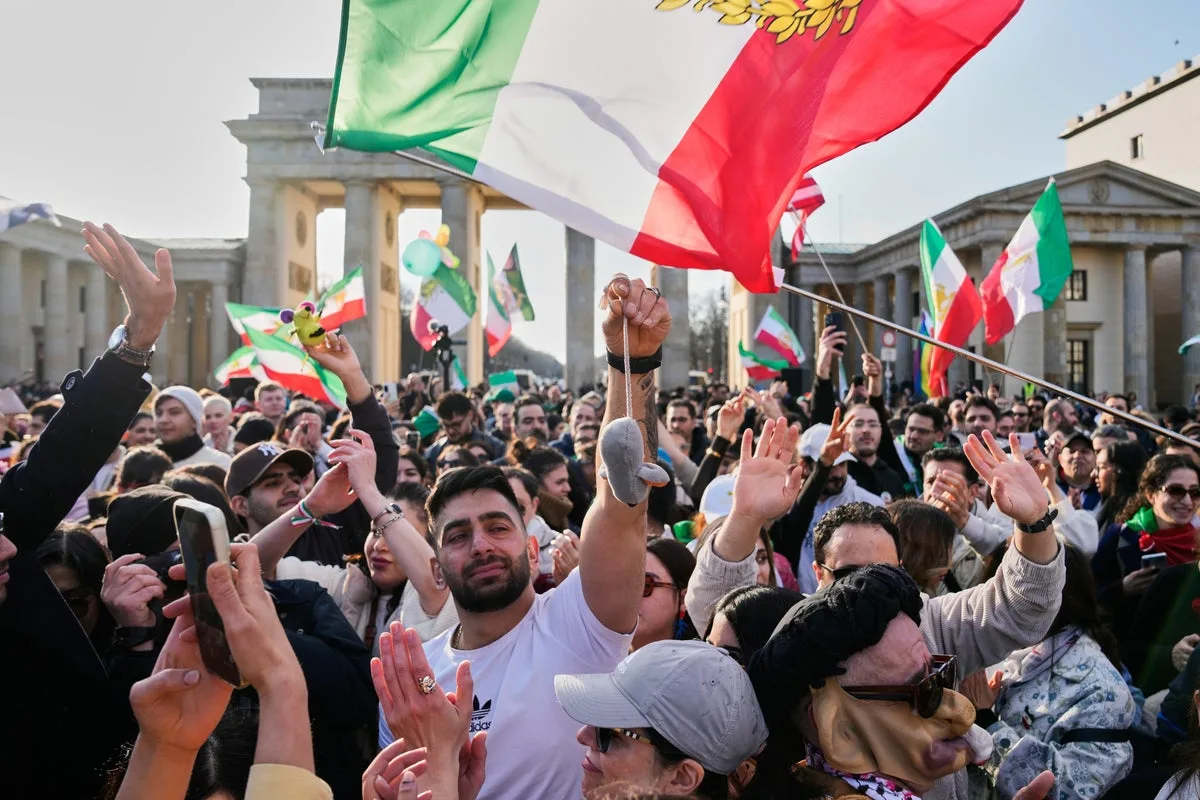
Simultaneously, celebrations erupted among Iranian diaspora communities from New York to Berlin, with demonstrators cheering, dancing, and waving flags of the former Iranian monarchy alongside American and Israeli flags. Hopeful Iranians also gathered in multiple US cities, expressing optimism about potential political change in their homeland.




