

White House Defends Chief of Staff's Wearable Amid Operation Epic Fury Controversy
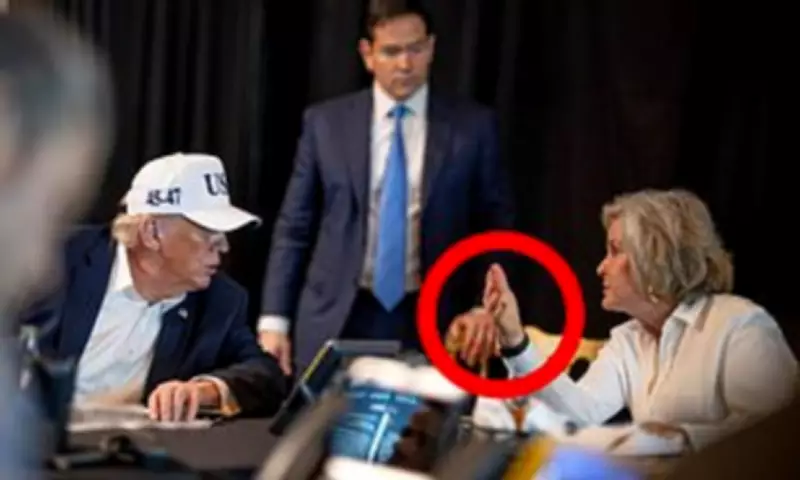
A photograph released from the recent United States military operation in Iran has ignited a significant controversy and prompted intense criticism after White House chief of staff Susie Wiles was spotted wearing what online observers initially believed to be a smartwatch. The device, visible in a widely circulated image, led to immediate accusations of a potential security breach at the highest echelons of government inside President Donald Trump's makeshift Mar-a-Lago Situation Room.
CEO Intervenes to Clarify Device Identity
Within mere hours of the speculation erupting across social media platforms, the chief executive of the company behind the device stepped forward to definitively shut down the mounting rumours. Will Ahmed, founder and CEO of Whoop, wrote on X, 'It's called a whoop,' explicitly identifying the slim black wristband seen in the photograph. 'There's no story here other than a dead ayatollah and a green recovery,' he added, referencing the device's proprietary recovery score metric which analyses physiological data.
Operation Epic Fury and the Photographic Release
The entire controversy erupted shortly after the White House officially released a series of photographs depicting President Donald Trump personally overseeing 'Operation Epic Fury,' the joint United States and Israeli military strike that resulted in the death of Iran's Supreme Leader, Ayatollah Ali Khamenei, alongside several senior Iranian officials. In one particularly scrutinised image, Chief of Staff Susie Wiles is seen engaged in conversation with President Trump while clearly wearing the distinctive black wrist device.

Online users and security commentators were quick to speculate that the device closely resembled an Apple Watch or another form of Bluetooth-enabled smartwatch, types of wearables that are frequently and strictly restricted within classified government environments due to their inherent recording and data transmission capabilities. This prompted serious questions regarding how such a wearable could possibly be present during a top-secret, highly sensitive military operation.
Whoop's Security Credentials and White House Defence
In a swift and public response, CEO Will Ahmed stated unequivocally that the Whoop fitness tracker 'does not include a microphone, GPS, or cellular capability of any kind.' He further emphasised that the device has long been featured on the National Security Agency's officially approved list for personal electronic devices, a point subsequently corroborated by the White House itself.
Whoop, a subscription-based wearable fitness company currently valued at approximately $3.6 billion, manufactures screenless activity trackers specifically engineered to monitor sleep patterns, physical strain, and overall recovery metrics. The band synchronises data wirelessly to a companion smartphone application but notably lacks an integrated display or any form of cellular radio hardware.
The White House moved promptly to defend Chief of Staff Wiles, informing the Daily Mail that Whoop devices are fundamentally 'secure by design' and have been formally cleared by the NSA for wear during classified presidential briefings and sensitive meetings.
Persistent Criticisms and Broader Context
Despite these clarifications, some critics and security experts continued to argue that even officially approved electronic devices can raise legitimate concerns within ultra-secure settings like a Situation Room, where established protocols typically prohibit personal electronics capable of any wireless communication to prevent potential espionage or data leakage.
This specific uproar unfolded against the volatile backdrop of a rapidly escalating military conflict in the Middle East. The photographs released by the White House showed President Trump monitoring the critical operation from what aides described as a temporary, makeshift Situation Room established at his Mar-a-Lago club in Palm Beach, Florida. Critics seized upon both the unconventional location and the visible electronic device as points of contention.

'The president just started a war,' Atlantic staff writer Tom Nichols remarked on X. 'He should be in DC, as should his national security team, and he should have been on TV last night in the Oval Office - and without a dopey grandpa hat.' Others questioned the fundamental security of the Florida setting itself, with one X user noting, 'The 'situation room' at Mar-a-Lago doesn't even have proper walls. You can literally see people listening in. These are just drapes tossed over some ceiling beams. Completely open for people to see and overhear what's going on.'
It was also confirmed that Vice President JD Vance and Director of National Intelligence Tulsi Gabbard were not present in Florida during the execution of the strike; both officials were reportedly inside the authentic, purpose-built White House Situation Room in Washington, D.C., coordinating the operation. The Ayatollah's palace was confirmed destroyed by precision missiles as a central component of the joint US-Israeli military action.





