Administration Officials Offer Contradictory Accounts on Vance's Role
Top Trump administration officials, including President Donald Trump himself, have provided conflicting information about whether Vice President JD Vance will lead crucial peace talks with Iranian officials in Pakistan this week. The confusion emerges less than twenty-four hours before the American negotiating team is scheduled to arrive in Islamabad for what could be a decisive round of diplomacy.
Vance's Participation Remains Unclear Amid Security Concerns
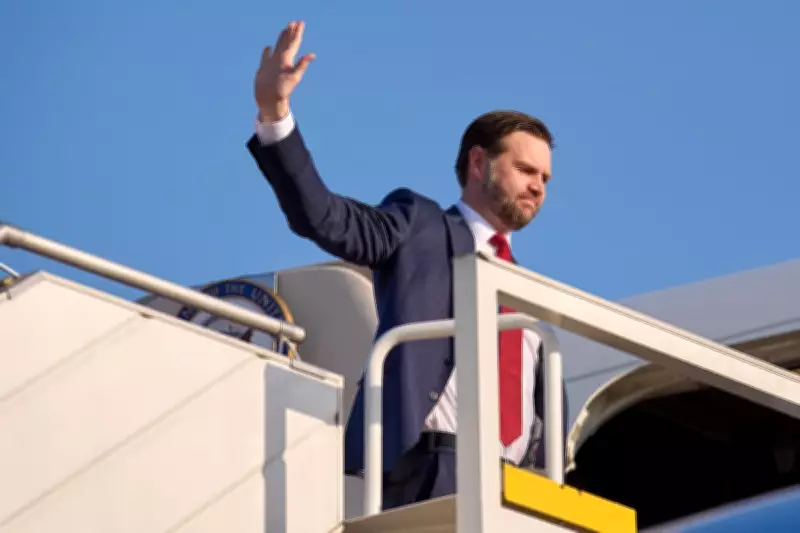
Vance's involvement in the upcoming negotiations has been uncertain for several days following the previous round of talks, which he led but failed to produce an agreement to end the ongoing conflict. Tuesday marks the critical two-week deadline for the U.S.-Iran ceasefire, adding urgency to the diplomatic efforts.
President Trump is closely monitoring Vance's performance in these negotiations with Iran as he considers potential successors for the 2028 presidential election. According to a CNN report citing multiple sources familiar with internal discussions, the president has been actively soliciting opinions about Vance's strengths and capabilities.

Conflicting Statements From the White House
On Sunday morning, President Trump told reporters from multiple outlets, including ABC News and MS NOW, that Vance would not be attending the Islamabad talks due to unspecified security concerns. "It's only because of security," Trump told ABC's Jonathan Karl. "JD's great."
However, unnamed White House officials immediately contradicted the president's statement, informing several networks that Vance would indeed be traveling to Islamabad to participate in the negotiations. This created immediate confusion about the administration's official position.
Further Mixed Messages From Cabinet Members
The contradictory messaging continued during Sunday news programs. Energy Secretary Chris Wright told CNN that Vance would lead the U.S. delegation to Pakistan, while U.N. Ambassador Mike Waltz, during an interview on NBC's Meet the Press, could not confirm whether Vance was leading the latest American delegation. "My understanding from an announcement the president just made is that the team is going over. I'll leave the delegation announcement to the White House," Waltz stated.
Both networks subsequently reported that Vance would be traveling to Islamabad, citing unnamed senior U.S. officials. In a separate call with Axios, President Trump mentioned the participation of special envoys Steve Witkoff and Jared Kushner but did not clarify whether Vance would attend. Axios reported that two U.S. officials separately confirmed Vance would lead the delegation.
White House Offers Vague Explanation
When The Independent asked the White House for confirmation about the vice president's plans, and when CNN inquired about the confusion surrounding Vance's role, a White House official offered only the vague explanation: "Things changed." The administration has not provided any clarification about why security risks that supposedly prevented Vance's attendance were suddenly no longer a concern, or any other reason for this abrupt policy shift.
Vance Maintains Public Silence on Negotiations
The vice president himself has remained quiet about the Iran negotiations since last Tuesday, when he appeared at an event for the conservative youth organization Turning Point USA. During his remarks, Vance acknowledged that young voters might disagree with the administration's Middle East policy but encouraged them to remain politically engaged. "Don't get disengaged because you disagree with the administration on one topic. Get more involved, make your voice heard even more. That is how we ultimately take the country back," he told attendees.
Iran's Response and Escalating Tensions
On Sunday, Tehran reportedly rejected participation in the second round of peace talks after President Trump threatened to strike civilian infrastructure in a Truth Social post earlier that day. "We're offering a very fair and reasonable DEAL, and I hope they take it because, if they don't, the United States is going to knock out every single Power Plant, and every single Bridge, in Iran," he wrote.

During his call with Axios, Trump expressed optimism about the negotiations, stating: "The concept of the deal is done. I think we have a very good chance to get it completed."
Iran's official state news agency, the Islamic Republic News Agency (IRNA), reported that the regime would not participate in the talks despite the U.S. sending a delegation to Pakistan. They cited "U.S. excessive demands and unreasonable, unrealistic requests" as preventing progress, though they did not provide a specific source for this information. However, CNN reported from Iranian sources that a delegation from the country would indeed be present to meet with the American team.
Broader Context of the Conflict
Public opinion polls indicate that a significant portion of Americans question whether the administration has a genuine plan to end the war, despite repeated claims from the president and his allies that victory has already been achieved. The situation remains tense, with Sunday beginning with news that a tanker ship had been fired upon by Iranian Revolutionary Guard Corps (IRGC) forces. The IRGC issued a statement claiming that the Strait of Hormuz would remain closed until the U.S. blockade of Iranian ports was lifted.
President Trump later wrote on Truth Social that U.S. Marines had boarded an Iranian-flagged vessel that attempted to run the blockade. Just days earlier, Trump had declared the U.S. efforts to reopen the strait a success, but now the two countries find themselves essentially at the same diplomatic impasse that existed before talks began. The closure of the Strait of Hormuz by Iranian forces has caused a substantial increase in oil prices that U.S. officials warn will likely persist for months.
Trump and his allies continue to insist that, to end the war, Iran must abandon future ambitions of enriching nuclear material and commit to the complete destruction of its nuclear weapons development program. Iran has consistently refused this demand. Vance confirmed last weekend, upon leaving negotiations with Iran's top diplomats, that this fundamental disagreement remains the primary sticking point in the talks.