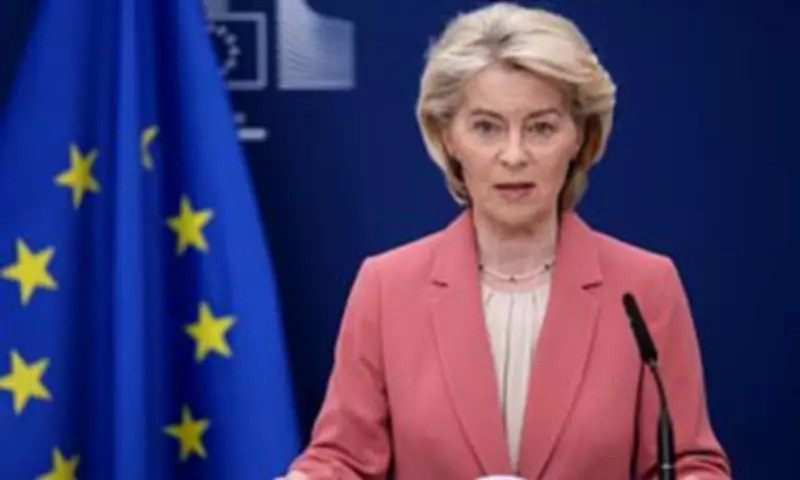
European Commission President Ursula von der Leyen has faced significant criticism for her decision to wait until Monday to convene an emergency meeting addressing the escalating crisis in the Middle East. The conflict erupted across the region over the weekend, yet von der Leyen's response appeared notably delayed, sparking widespread concern and mockery.
Delayed Response Draws Social Media Ridicule
On Saturday, von der Leyen announced via social media, 'Following the ongoing situation in Iran, I am convening a special Security College on Monday.' She emphasised, 'For regional security and stability, it is of the utmost importance that there is no further escalation through Iran's unjustified attacks on partners in the region.' However, this announcement was met with immediate derision online.
Many users questioned the rationale behind European leaders postponing discussions on such a perilous situation. One user sarcastically replied, 'World War 3 is happening live, Europeans: "The war starts on Monday".' Another critic wrote, 'Everything you need to know about European strategic irrelevance in one tweet,' highlighting perceptions of inefficacy in the EU's crisis management.

EU Foreign Ministers Hold Weekend Talks
Despite the delayed formal meeting, foreign ministers from the EU's 27 member states, most of whom are also NATO members, engaged in discussions over the weekend via video link. These talks aimed to assess the volatile situation and coordinate potential responses, though they lacked the high-profile status of an emergency convening by the Commission President.
In a subsequent statement, von der Leyen called for a 'credible transition' in Iran, following calls with several Middle East leaders. She noted that the death of Ali Khamenei had spurred 'renewed hope for the people of Iran,' but warned, 'This moment carries a real risk of instability that could push the region into a spiral of violence.' This added context did little to quell the backlash over the timing of her actions.
The incident underscores growing scrutiny of the European Union's responsiveness to international crises, with critics arguing that delayed interventions could exacerbate regional tensions and undermine global security efforts.