Leaked Footage Reveals Venezuela's Post-Maduro Power Struggle
A remarkable leaked video has provided an unprecedented window into the internal turmoil within Venezuela's ruling regime following the dramatic capture of former president Nicolás Maduro by United States forces. The footage, which documents a nearly two-hour meeting between government officials and regime-friendly influencers, exposes the desperate attempts to maintain control over the political narrative amid extraordinary circumstances.
Rodríguez's Startling Claims of US Ultimatums
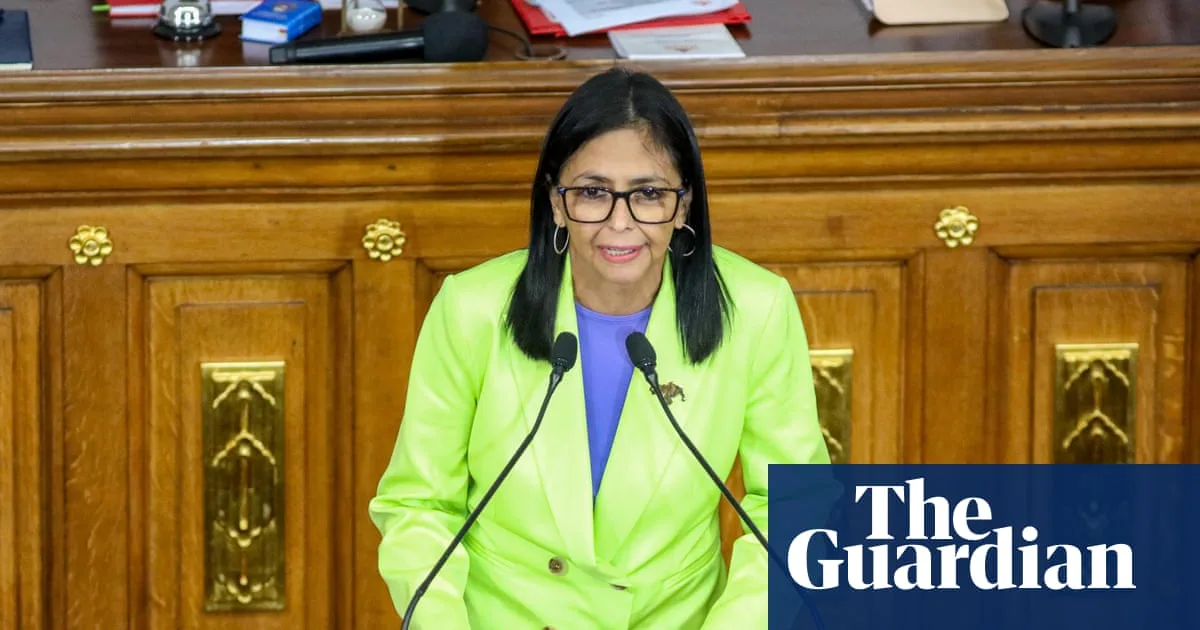
In the recording, interim president Delcy Rodríguez makes extraordinary claims about the immediate aftermath of Maduro's apprehension. Speaking via speakerphone to the assembled influencers, Rodríguez alleges that she and other senior cabinet members were given just fifteen minutes to decide whether to comply with Washington's demands following the operation.
"They gave us fifteen minutes to respond, or they would kill us," Rodríguez states in the leaked audio, referring to herself, interior minister Diosdado Cabello, and her brother Jorge Rodríguez, who serves as congressional president.
The interim leader, who assumed power after the US military action, further reveals that American forces initially claimed Maduro and his wife Cilia Flores had been assassinated rather than captured. Rodríguez asserts that she and her colleagues responded that they were "ready to share the same fate" as their captured leader.
A Regime Scrambling to Maintain Unity
The video, first reported by Venezuelan journalism collective La Hora de Venezuela, captures a regime in crisis management mode just seven days after the seismic event that removed its figurehead. Communications minister Freddy Ñáñez, who facilitated the meeting, can be heard vigorously defending Rodríguez against what he describes as "gossip, rumours, intrigues and attempts at discrediting" her leadership.
Ñáñez presents Rodríguez as "the only guarantee we have" for both potentially securing Maduro's return and navigating the new political landscape. The minister's remarks highlight the regime's acute awareness of potential fractures within the Chavista movement following what many would view as capitulation to American demands.
Strategic Cooperation Amid Public Defiance
Rodríguez's leaked comments reveal the delicate balancing act she has undertaken since assuming power. While publicly maintaining a defiant posture toward the United States, she privately acknowledges cooperating with Washington under duress. "The threats and the blackmail are constant," she tells the influencers, explaining her administration's approach as one of "patience and strategic prudence."
The interim president outlines three clear objectives for her government: preserving peace, rescuing what she terms "our hostages" (presumably referring to Maduro and Flores), and crucially, "to preserve political power." This admission underscores the regime's primary concern with maintaining its grip on authority despite the dramatic change in circumstances.
Contradictory Narratives and Internal Tensions
Political analyst Margarita López Maya, a retired professor at Venezuela's Central University, suggests Rodríguez may be constructing a narrative specifically to maintain cohesion among the regime's base. "Everyone knows that Maduro's removal could only have happened with internal complicity," López Maya observes, highlighting the credibility challenges facing the interim administration.
The meeting footage reveals officials' concerns about "purists" within the Chavista movement who might accuse them of betrayal. Ñáñez attempts to frame cooperation with Washington as consistent with existing policy, claiming that selling oil to the United States "has always been our plan" rather than representing a concession.
An Unchanged Regime Amid Transformation
Despite the dramatic geopolitical shift, analysts note that the regime's fundamental characteristics appear unchanged. Following the video leak, Ñáñez was appointed environment minister in a cabinet reshuffle, while his successor created social media accounts purportedly aimed at combating "fake news campaigns."
López Maya identifies two possible paths forward for Venezuela: "a democratic transition" or the continuation of authoritarian rule with economic concessions. The regime appears to be pursuing the latter option, attempting to "buy time" while maintaining power through what the analyst describes as "an authoritarian option with some economic openings."
The leaked video provides compelling evidence of a regime simultaneously cooperating with its former adversary while desperately working to maintain its revolutionary credentials and internal unity. As Rodríguez prepares for a reported visit to Washington, the contradictions within Venezuela's political landscape appear more pronounced than ever.






