Poll Reveals Widespread Opposition to Iran Military Action Among US Voters
A significant majority of American voters express opposition to the recent military strikes in Iran, with a substantial portion fearing retaliatory terrorist attacks on United States soil, according to a newly released Quinnipiac University poll. The survey, conducted over the weekend, indicates that 53 percent of voters are against the military action, while only 40 percent support it. This sentiment cuts across party lines, revealing deep divisions in public opinion.
Partisan Divides and Public Anxiety Over Security
The poll highlights stark partisan differences in attitudes toward the conflict. 89 percent of Democrats and 60 percent of independents oppose the strikes, contrasting sharply with 85 percent of Republicans who support them. Beyond mere opposition, a striking 77 percent of voters believe it is either very likely or somewhat likely that the military action will result in a terrorist attack within the United States. This fear underscores broader anxieties about national security repercussions.
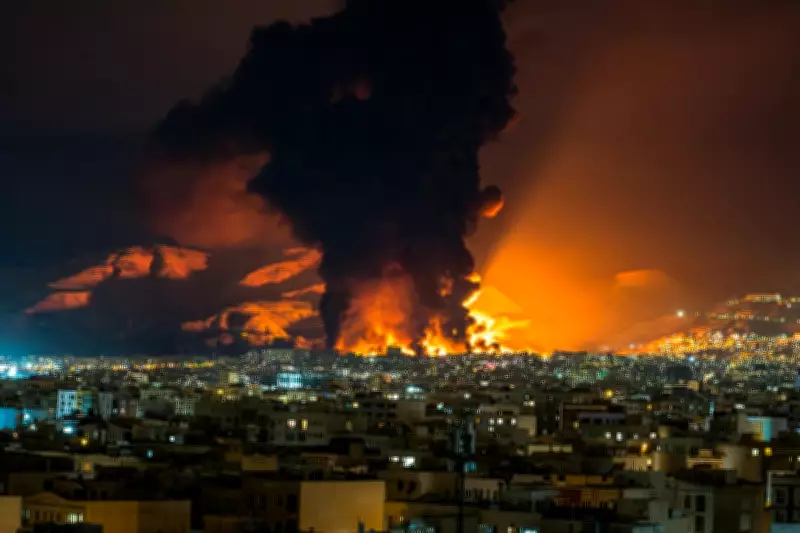
Furthermore, 55 percent of voters do not believe Iran posed an imminent threat to the US prior to the strikes, with only 39 percent perceiving such a danger. This suggests that many Americans question the justification for the military intervention, which began over a week ago as a joint operation between the US and Israel.

Human Cost and Leadership Statements
The conflict has already exacted a heavy human toll. According to officials in Iran cited by the Associated Press, more than 1,200 people have been killed in the country since the strikes commenced. Among the casualties is the late Ayatollah Ali Khamenei, whose son, Ayatollah Mojtaba Khamenei, has now assumed the role of Iran's supreme leader. On the American side, seven US service members have lost their lives in the war, as confirmed by recent reports.
President Donald Trump has addressed the situation, warning of potential casualties while asserting that his administration has taken steps to minimize risks. "The Iranian regime seeks to kill. The lives of courageous American heroes may be lost, and we may have casualties," Trump stated. However, in a later interview with CBS News, he claimed the war is "very complete, pretty much," citing Iran's diminished military capabilities.
Economic Impacts and Public Concerns
The military action has triggered significant economic consequences, particularly in the energy sector. Oil prices have surged to over $100 a barrel, leading to increased gas prices that consumers are now bearing. The Quinnipiac poll reflects this concern, with 74 percent of voters expressing worry that the Iran war will cause oil and gas prices to rise. This economic strain adds another layer of public discontent with the ongoing conflict.
Approval Ratings and Uncertain Timeline
Public approval of key figures remains low amid the turmoil. President Trump's approval rating stands at 37 percent, largely unchanged from last month, with only 38 percent approving of his handling of the Iran situation. Similarly, Defense Secretary Pete Hegseth holds a 37 percent approval rating. Hegseth has emphasized a decisive approach, telling reporters, "We have only just begun to fight and fight decisively."
Voters are divided on the conflict's duration. 18 percent believe it will end in weeks, 32 percent anticipate months, and 26 percent think it will last longer than a year, indicating widespread uncertainty about the war's trajectory. This ambiguity, coupled with the high opposition and fear of terrorism, paints a picture of a nation deeply apprehensive about the military engagement in Iran and its far-reaching implications.