

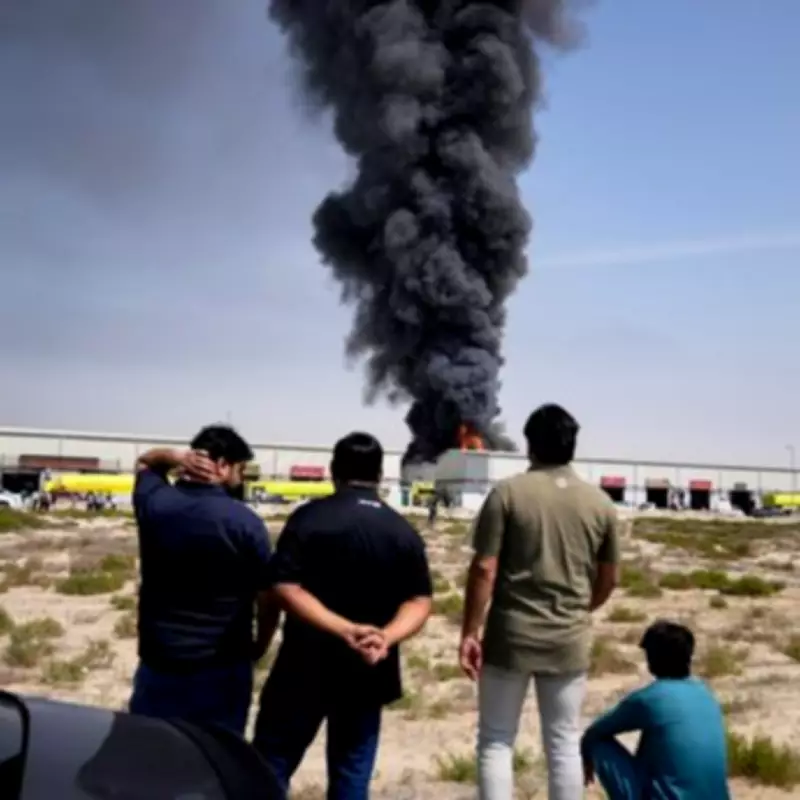
The US State Department has issued a stark and urgent warning to American citizens residing in or visiting 14 Middle Eastern nations, advising them to "DEPART NOW" due to escalating "serious safety risks" as tensions with Iran intensify following ongoing missile attacks. This directive, which includes countries such as the United Arab Emirates (UAE) and Qatar, comes amid a fourth consecutive day of hostilities, prompting fears of a broader regional conflict.
Emergency Measures and Evacuation Assistance
In response to the crisis, the State Department has activated an emergency task force dedicated to enhancing security at US diplomatic facilities across the region and providing assistance to American nationals. While government-organised evacuation flights have not been formally arranged, officials are actively helping US citizens secure spots on available commercial transportation services to facilitate their exit from the Middle East.
Official Communications and Public Alerts
Secretary of State Marco Rubio personally conveyed the "DEPART NOW" message to Americans in the Middle East via a post on X, emphasising that "your safety and security is our number one priority." Additionally, Mora Namdar, Assistant Secretary for Consular Affairs, reinforced this alert on social media, urging citizens to utilise commercial means for departure and providing emergency contact numbers for State Department assistance, including +1-202-501-4444 from abroad and +1-888-407-4747 from the US and Canada.

Namdar also advised Americans to enrol in the Smart Traveller Enrollment Program (STEP) at http://step.state.gov to receive the latest security updates from the nearest US embassy or consulate, ensuring they stay informed amidst the volatile situation.
Regional Impact and Travel Disruptions
The heightened tensions have led to significant disruptions across the Middle East, with weekend airspace closures stranding hundreds of thousands of travellers. Major transit hubs, including Dubai and Abu Dhabi, have been compelled to cease operations, paralysing some of the world's busiest aviation corridors and exacerbating the challenges for those seeking to leave the region.
Military Objectives and Strategic Statements
During a press briefing on Monday, Secretary Rubio outlined the US military objectives, stating that the mission aims at "the destruction of their ballistic missile capabilities, and their ability to manufacture them, as well as the threat posed by their navy to global shipping." He further expressed hope for a political change in Iran, noting, "We would not mind, we would not be heartbroken, and we hope that the Iranian people can overthrow this government and establish a new future for that country."
Rubio revealed that the US launched pre-emptive strikes against Iran on Saturday, citing intelligence that Israel planned an attack which would have triggered Iranian retaliation targeting US forces. He explained, "We knew that if we didn't pre-emptively go after them before they launched those attacks, we would suffer higher casualties and perhaps even higher those killed."
Political Context and Ongoing Operations
Former President Donald Trump weighed in on the conflict, claiming without evidence that had he not withdrawn the US from the 2015 nuclear deal brokered under Barack Obama, Iran would now possess a nuclear weapon. In a post on Truth Social, Trump asserted, "If I didn't terminate Obama's horrendous Iran Nuclear Deal (JCPOA), Iran would have had a Nuclear Weapon three years ago." He also indicated that US strikes against Iran would persist for as long as necessary to neutralise the threat, suggesting the conflict could extend for weeks or longer, stating, "Whatever the time is, it's OK, whatever it takes."
List of Affected Countries
The State Department's warning applies to American citizens in the following 14 countries and regions:
- Bahrain
- Egypt
- Iran
- Iraq
- Israel, the West Bank and Gaza
- Jordan
- Kuwait
- Lebanon
- Oman
- Qatar
- Saudi Arabia
- Syria
- United Arab Emirates
- Yemen
As the situation continues to evolve, the US government remains focused on safeguarding its citizens while navigating the complex geopolitical landscape of the Middle East.






