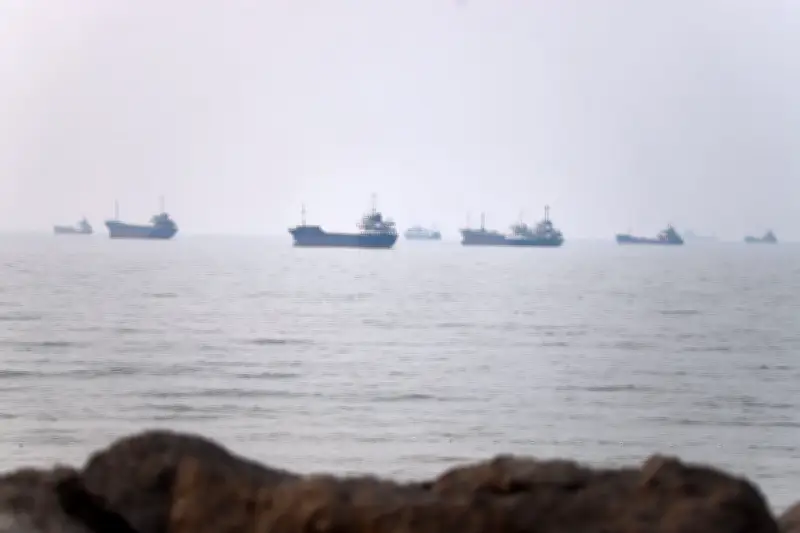
US forces have launched strikes against Iran for the sixth consecutive day, the American military confirmed, as the White House stated it could hit the country "anytime, anywhere, any place." The latest attacks aimed to "further degrade Iranian military capabilities," according to the military, as raids intensified.
White House Confirms Talks but Warns of Consequences
The US administration confirmed it is in talks with Tehran, but White House press secretary Karoline Leavitt said President Donald Trump would not allow ships to be fired on in the Strait of Hormuz without the regime "paying a consequence for that." The ongoing clashes over the contested Gulf waterway, vital to global energy supplies, have fueled concerns of a return to full-blown conflict.
Leavitt stated: "Iran very much continues to talk to the United States of America and express that they want to make a deal with us because they are suffering devastating blows on behalf of our United States military. The reason for the recent strikes over the course of the last several days is because Iran violated the memorandum of understanding that we struck with them. Specifically, in the memorandum of understanding that they signed, they were not to fire on commercial vessels moving through the Strait of Hormuz, and unfortunately, they have made the tragic decision, for them, to do that."
She added: "President Trump is not going to sit by and allow these active acts of terrorism to take place in the Strait without ensuring Iran pays consequences for that, and that's what we are witnessing right now. We're talking to them, but again, the president is not going to allow them to fire on ships in the Strait without paying a consequence for that."
Escalating Conflict Over Strait of Hormuz
The escalating violent struggle over the channel, triggered by Iran attacking cargo ships, led Trump to declare a ceasefire over and reimpose a naval blockade of Iranian ports. This has already resulted in one ship being disabled by American missile fire for reportedly trying to break through. The strait had been open before the war launched by the US and Israel on February 28.
In response to the offensive, Tehran effectively closed the waterway to maritime traffic, disrupting global oil and gas supplies and driving up fuel and food prices. Despite the initial ceasefire deal with the US, known as the memorandum of understanding, Iran continued to exert leverage over the sea route by demanding ships seek permission to transit, raising the threat of future charges and attacking vessels. Tehran claims it controls the channel, while the US and other countries dispute this, citing international law on freedom of navigation.
Iranian Military Warns of 'Red Line'
Iranian military spokesman Colonel Ebrahim Zolfaghari said: "Under no circumstances and in no way will we allow America, as a foreign and extra-regional country, to interfere in the Strait of Hormuz. This is Iran's invincible red line."
Leavitt also denied the White House was sending mixed signals over Iran, with Trump describing the regime as "scum" and a waste of time to deal with, while Vice President JD Vance was critical of people who opposed negotiations with Tehran. She said: "I can tell you the president, vice president are on the exact same page about where we are right now in this conflict."
Denial of School Strike Responsibility
Pressed over Trump's continued insistence that the US military was not responsible for a strike on an Iranian school at the start of the war, which killed more than 100 children, despite evidence it was a tragic mistake by American forces, Leavitt said: "Well, that's the president's opinion." She said the Defense Department was "investigating the matter" and added: "I think the president feels that way because he knows that our military always acts in good faith and absolutely never target civilians or children. Unlike the other side of this conflict, Iran, who is well known for killing women and children and innocent people in their country for a very long time."