The United States has publicly accused Russia of a "dangerous and inexplicable escalation" in its ongoing war against Ukraine, issuing a stark condemnation at the United Nations Security Council. This forceful rebuke comes as the administration of President Donald Trump attempts to advance negotiations aimed at securing a peace deal.
UN Showdown Over Hypersonic Missile Strike
U.S. deputy ambassador to the United Nations, Tammy Bruce, singled out a particularly provocative Russian action during an emergency Security Council session on Monday, 13 January 2026. She highlighted Moscow's launch of a nuclear-capable Oreshnik ballistic missile the previous week, which was fired perilously close to Ukraine's border with NATO member Poland.
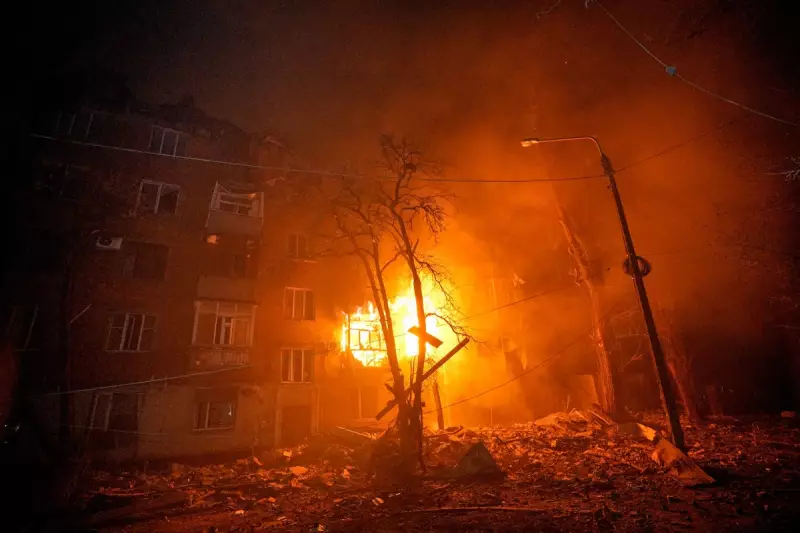
The meeting was convened by Ukraine following a massive overnight Russian bombardment on Thursday, 9 January. That attack involved hundreds of drones and dozens of missiles, including the powerful new hypersonic Oreshnik, which Moscow has now used only twice. Ambassador Bruce stated that the United States deplores the staggering number of casualties and condemns Russia's intensifying strikes on Ukrainian energy infrastructure and other civilian targets.

Peace Efforts Stalled Amid Rising Tensions
This military escalation occurred against a complex diplomatic backdrop. Just days prior, Ukraine and its allies had reported major progress on a future defence agreement, intended to protect the country if a U.S.-brokered peace deal is finalised. Simultaneously, relations between Moscow and Washington chilled further after Russia condemned a U.S. seizure of an oil tanker in the North Atlantic.
Ambassador Bruce framed Russia's actions as a direct contradiction to the potential for peace. "At a moment of tremendous potential, due only to President Trump’s unparalleled commitment to peace around the world, both sides should be seeking ways to de-escalate," she argued. "Yet Russia’s action risks expanding and intensifying the war." She also reminded Moscow that it had voted for a Security Council resolution calling for an end to the conflict nearly a year ago.
Maximalist Demands and Mutual Recriminations
The diplomatic impasse appears entrenched. Russia's U.N. Ambassador, Vassily Nebenzia, placed the blame squarely on Kyiv, stating that until Ukrainian President Volodymyr Zelenskyy agrees to "realistic conditions for negotiations," Russia will continue its military campaign. "Each vile attack on Russian civilians will elicit a stiff response," he warned the council.
Ukraine's representative, Ambassador Andriy Melnyk, countered by asserting Russia's growing vulnerability, citing a slowing economy and declining oil revenue. He dismissed Moscow's projection of strength as "smoke and mirrors, completely detached from reality." European leaders joined the U.S. in condemning the use of the Oreshnik missile as "escalatory and unacceptable."
The stark exchange at the UN underscores the widening gulf between the two sides, even as the Trump administration signals support for a new, hard-hitting sanctions package designed to cripple the Russian economy. With Moscow showing no public willingness to soften its maximalist demands, the path to peace remains fraught with danger and diplomatic deadlock.