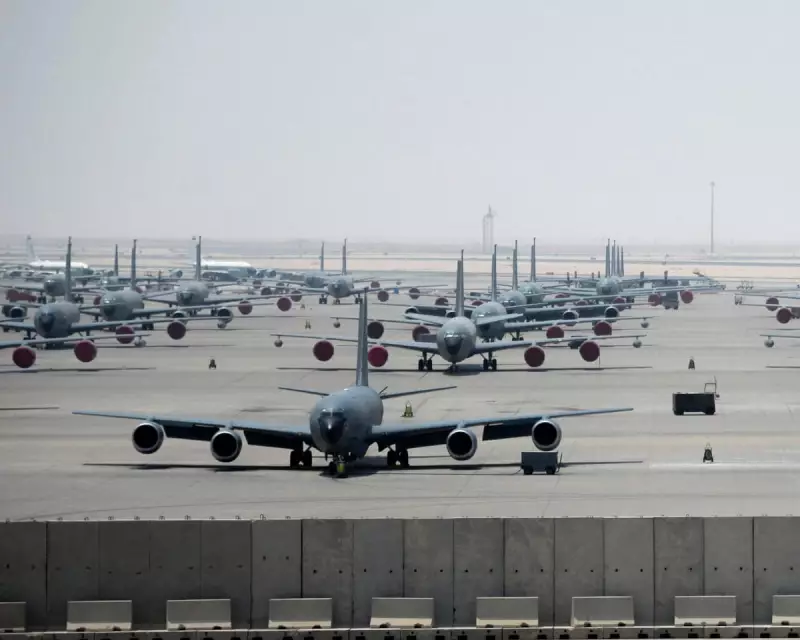
The United States withdrew key personnel from its strategic Al Udeid airbase in Qatar this week, as regional tensions escalated over the potential for American military action against Iran. The move coincided with a concerted diplomatic effort by several Middle Eastern allies, who urgently counselled the White House against launching strikes.
Gulf Diplomacy Averts Immediate Strike
Saudi Arabia, Qatar, Turkey, and Oman engaged in last-minute lobbying with the Trump administration, warning that any US attack could trigger a major and uncontrollable conflict across the region. These longstanding US allies expressed deep fears about the consequences. Their interventions appear to have been influential in persuading President Donald Trump to hold off on a military assault for the moment.
In a significant move, Saudi Arabia's reluctance led it to deny the US use of its airspace for mounting attacks. The diplomatic conversations continued on Thursday, with Saudi Foreign Minister Prince Faisal bin Farhan holding phone discussions with his counterparts from Iran, Oman, and Turkey.

A Complex Regional Landscape
Iran remains politically isolated from many Gulf states due to several factors. These include its support for regional proxy networks, known as the axis of resistance, its stance on Palestine, and territorial disputes over islands in the Gulf claimed by the United Arab Emirates. However, Iranian Foreign Minister Abbas Araghchi has been actively working to mend fences, undertaking a series of visits to Arab capitals that have reportedly improved relations.
The Saudi-Iranian relationship, once the most fraught in the Middle East, has been on a tentative recovery path for three years. All Gulf states are acutely aware of the disruption Iran could cause to vital maritime traffic in the Gulf. Araghchi has recently sought to persuade them that Iran poses less of a risk to regional stability than Israel, a argument given weight by an Israeli airstrike on Doha in September.
Vulnerability of US Assets and Regional Anxieties
The withdrawal of personnel from Al Udeid, the largest US airbase in the region, underscores a strategic vulnerability. Static American land and naval bases, designed to project power, become potential targets during heightened tensions. Iran has openly threatened to hit US bases if attacked.
Regional reactions to Iran's internal protests also reveal complex allegiances. While many Arab states resent Iranian interference in Lebanon, Iraq, and Yemen, few would welcome the precedent of an authoritarian regime being toppled by popular unrest, fearing it could inspire similar movements at home.
Qatar's foreign ministry spokesperson, Majed al-Ansari, emphasised the need for dialogue, stating the region's challenges require a return to the negotiating table. Echoing this, Turkish Foreign Minister Hakan Fidan called for the US and Iran to resolve their issues, whether through mediators or direct talks.