The United States has officially initiated the second phase of its ambitious strategy to end the war in Gaza, pressing forward despite unresolved critical issues surrounding Hamas and the future governance of the devastated territory.
The Path from Ceasefire to Reconstruction
On Wednesday, US officials confirmed the move into the next stage of the plan. The first phase, enacted in October 2025, centred on halting hostilities, returning hostages, and ramping up humanitarian aid. However, its fragility has been exposed by persistent violence and the failure to recover the remains of one final Israeli hostage.
Steve Witkoff, Donald Trump's special envoy, argued it was now time to advance. The core of phase two is the establishment of a "transitional technocratic Palestinian administration" to manage Gaza's disarmament and the monumental task of reconstruction.

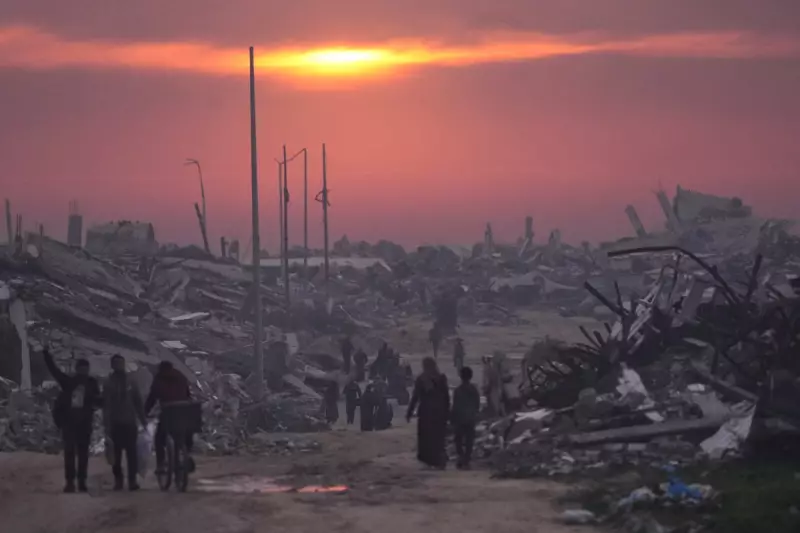
According to a sobering 2024 UN report, rebuilding Gaza could take until at least 2040, potentially stretching for decades. The UN Development Programme estimated in October that the two-year conflict produced 55 million tons of rubble, with reconstruction costs potentially reaching $70 billion.
Who Will Govern Gaza?
The proposed transitional administration, described as apolitical and technocratic, will consist of 15 members. Mediators from Egypt, Qatar, and Turkey named Ali Shaath, a former Palestinian Authority deputy minister, as its head.
Shaath stated the committee's immediate priority would be urgent relief, including housing for displaced civilians. He controversially suggested clearing rubble by pushing it into the sea to create new land, claiming this process could be completed within three years.
This local body will be overseen by an international "Board of Peace". Invitations have been sent to prospective members, though the US has not publicly disclosed the full list. Nickolay Mladenov, the former UN Middle East envoy, is expected to represent the Board on the ground.
Starmer's Potential Role and Ongoing Uncertainties
Reports indicate that British Prime Minister Keir Starmer has been offered a position on the Board of Peace. According to the BBC, UK diplomats are seeking clarification on the Board's role, and Starmer has not yet made a decision. Furthermore, former Prime Minister Tony Blair is reportedly being considered for a separate committee, potentially alongside Witkoff and Trump's son-in-law, Jared Kushner.
Significant questions loom. While Hamas and the rival Fatah group have both endorsed the list of technocratic committee members, Hamas has not agreed to disarm. A US official acknowledged Israel's scepticism that Hamas will relinquish weapons and stated Washington must bridge differences, engaging with Hamas on demilitarisation and with Israel on potential amnesty programmes.
Palestinian Vice President Hussein Al-Sheikh welcomed the plan's progression but stressed that Gaza's institutions must be linked to the Palestinian Authority in the West Bank under "one system, one law and one legitimate weapon."
As the US forges ahead, the success of phase two hinges on navigating the disarmament of Hamas and uniting disparate factions behind a new, temporary authority facing a reconstruction challenge of historic proportions.